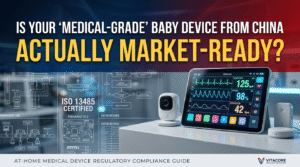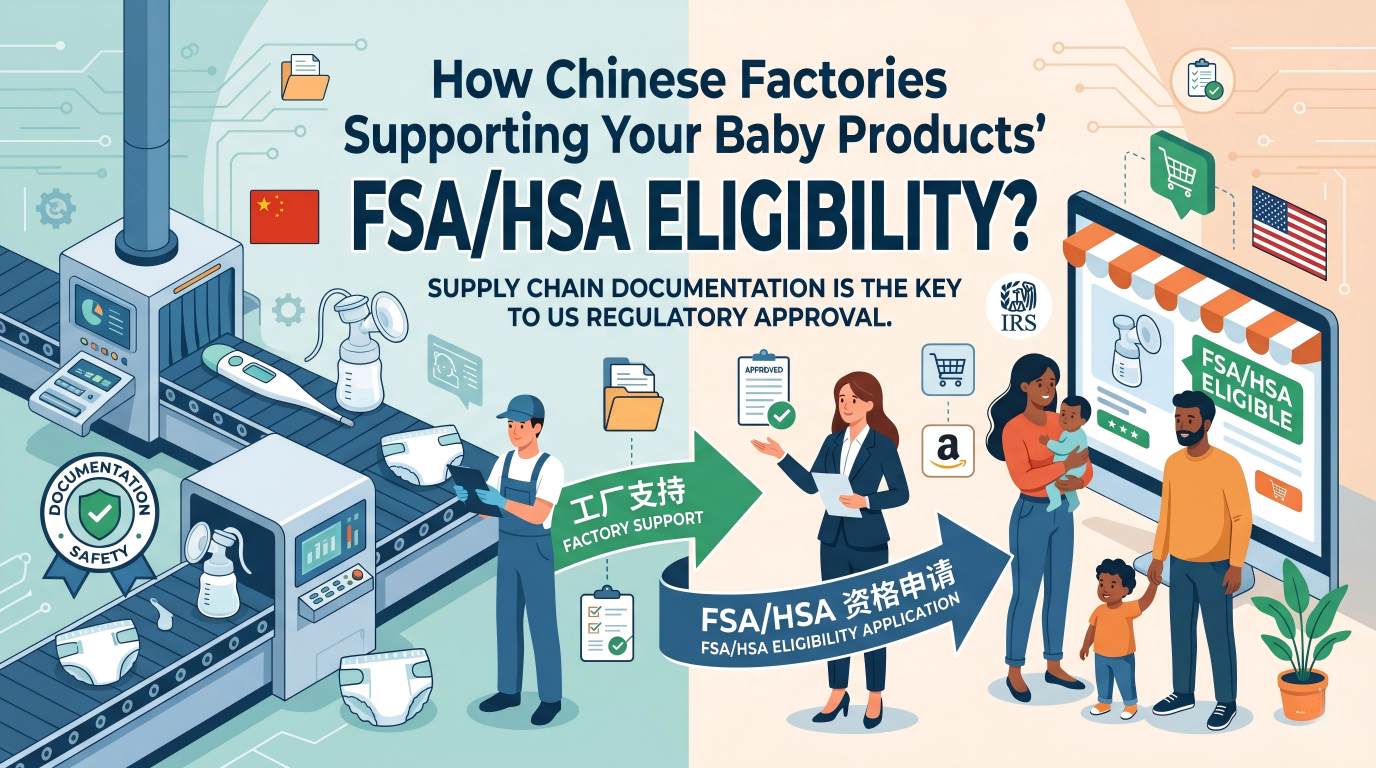
Are you trying to sell "medical-grade" baby products from China in the US market? You might be risking your entire investment if you misunderstand who is responsible for FSA/HSA eligibility.
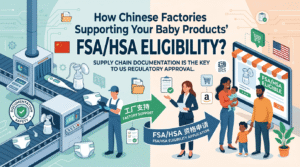
To have a product eligible for FSA/HSA, the US-based buyer—not the Chinese factory—must secure approval through a third-party administrator (TPA). The factory's critical role is to supply the detailed product documentation, safety reports, and traceability records required for the buyer's application.
I see the confusion all the time. A US buyer, often a new Amazon seller, finds a Chinese supplier who claims their product is "FSA/HSA-ready." The buyer gets excited, places a large order, and then finds out they can't legally make that claim on their listing. This mistake can be costly, leading to lost sales or even account suspension. The problem isn't usually with the product itself; it's a misunderstanding of the process. It's a US-based regulatory process, not a factory certification. Let's break down who does what, so you can avoid these pitfalls.
What Are the Most Common Misunderstandings About FSA/HSA Eligibility?
Your supplier says their product is "medical-grade" and ready for FSA/HSA sales. But what does that really mean? Believing marketing terms without verification can lead to big financial losses.
The most common myths are that "medical-grade" materials automatically qualify a product, that Chinese factories can apply directly for eligibility, and that safety certificates like a CPC are the same as FSA/HSA approval. These are three very different things, and confusing them is a major risk.
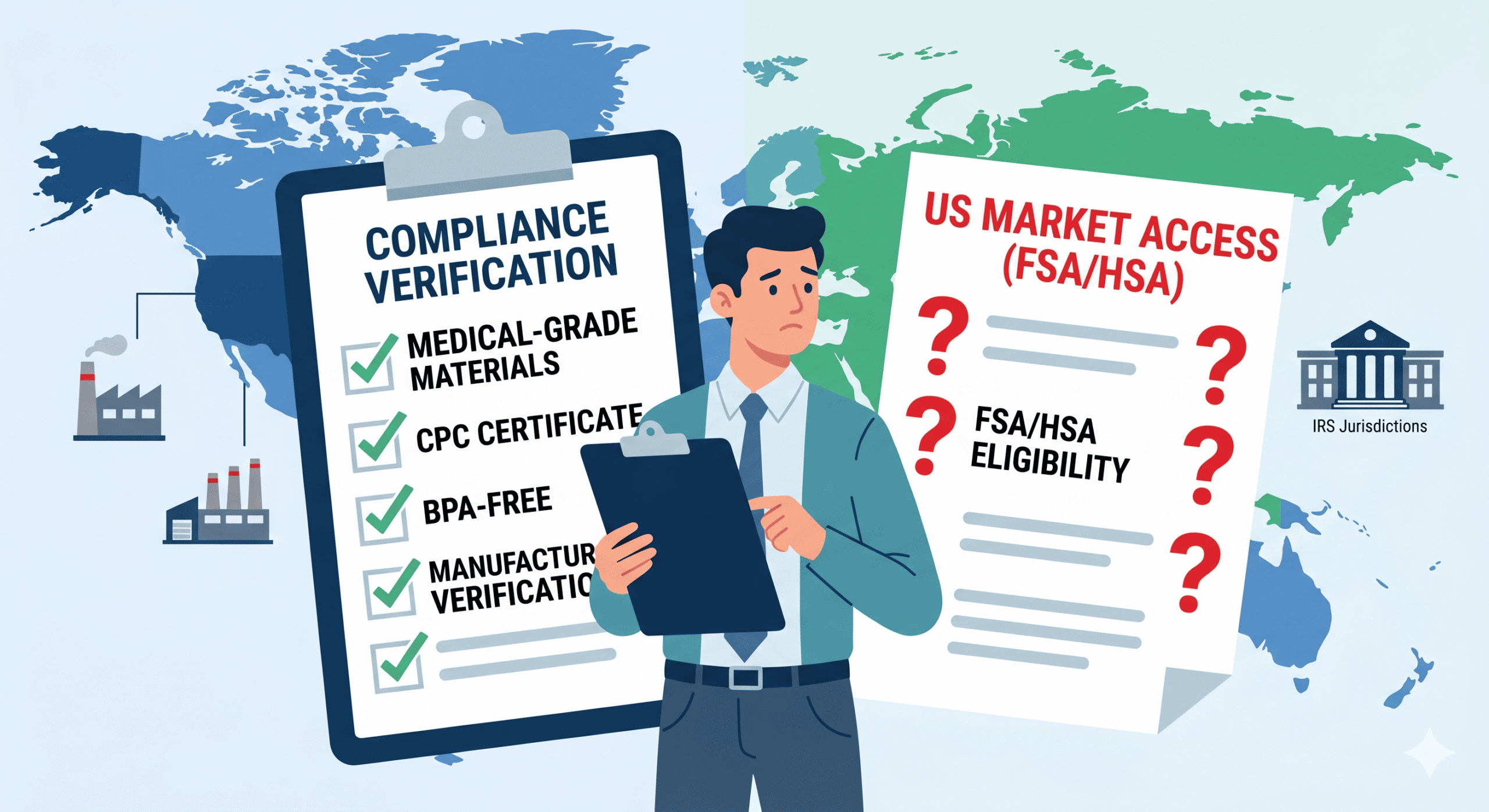
In our experience coordinating these processes for clients, these misconceptions cause the most trouble. It's crucial to separate manufacturing standards from tax-related eligibility. A factory might use the best materials and have all the safety papers in order, but that doesn't give them the authority to grant a product a specific tax status in another country. That power lies with US-based entities. Here’s a deeper look at why these myths are so persistent and what the reality is.
Myth 1: "Medical-Grade" Means FSA/HSA-Eligible
This is the number one point of confusion. "Medical-grade" is a manufacturing term. It refers to the quality and biocompatibility of a material, like medical-grade silicone in a baby teether. FSA/HSA eligibility, on the other hand, is a tax designation determined by the US Internal Revenue Service (IRS). It applies to products that qualify as a medical expense. A product can be made of medical-grade materials but not be considered a medical expense. For example, a breast pump is a qualified medical expense. A baby teether, even if made from the highest-grade silicone, is generally not.
Myth 2: Factories Can Apply Directly
A Chinese factory cannot apply for or grant FSA/HSA eligibility. The entire FSA/HSA system is part of the US tax code and is managed by employers and third-party administrators (TPAs). For a product to become eligible, a US-based legal entity (that's you, the buyer or brand owner) must work with a TPA to get the product approved and listed in their system. The factory is a supplier in this chain, not the applicant. We've had to explain this to both suppliers and buyers many times to get everyone on the same page.
The Reality Check: Standards vs. Tax Status
| Concept | What It Really Means | Its Role in FSA/HSA |
|---|---|---|
| Medical-Grade | A material or manufacturing quality standard. | May be a product feature, but does not grant eligibility. |
| Safety Certificate (CPC/CE) | Proves a product is safe for its intended market. | A prerequisite for selling, but unrelated to FSA/HSA tax status. |
| FSA/HSA Eligibility | A tax designation for products considered medical expenses. | Granted by TPAs based on IRS rules; requires a US applicant. |
So What Is the Factory's Real Role in the FSA/HSA Process?
Now you know your supplier can't get FSA/HSA approval for you. So what should you expect from them? A good supplier is your partner in documentation, not a regulatory body.
A reliable Chinese factory's true value is in preparing a complete and accurate documentation package. This includes detailed product specifications, manufacturing process records, quality control reports, and full material traceability. They act as the backbone of your application, providing the hard evidence your US entity needs.

Think of your factory as your evidence provider. When your TPA in the US asks for proof that a baby thermometer meets certain accuracy standards or that a breast pump is made without BPA, you don't create that proof. You get it from your factory. A prepared, professional factory will have this information ready. Their role isn't to get the approval, but to make it possible for you to get the approval. We've built our business on being the bridge that makes this communication seamless, ensuring the factory provides exactly what our clients' US legal teams need.
The Documentation Package
A good factory should be able to provide a comprehensive set of documents. This isn't just a simple invoice. It’s the core evidence for your application. This package must include:
- Bill of Materials (BOM): A complete list of all raw materials used in the product. This is essential for verifying claims like "BPA-free."
- Manufacturing SOPs: Standard Operating Procedures that outline the production process. This demonstrates consistency and quality control.
- Quality Control Reports: Records from inspections done during and after production.
- Traceability Records: Batch or lot numbers that allow a single unit to be traced back to its production run and the raw materials used. This is critical for audits and recalls.
- Existing Certifications: Any relevant safety or material certifications, such as a Children's Product Certificate (CPC) for the US market or FDA registration if applicable.
The Coordination Partner
The factory is also a coordination partner. I remember a case with a client who was selling smart baby monitors. The TPA needed proof of the data encryption standards to ensure user privacy, which they considered part of the product's medical-use function. The factory had this information but didn't realize its importance for an FSA/HSA application. Our role was to translate the TPA's technical request into a clear, actionable task for the factory's engineering team. We helped bridge that communication gap, getting our client the exact document they needed for final approval. This is the real value of a good supply chain partner.
How Can Buyers Avoid FSA/HSA Compliance Failures and Account Suspensions?
You're ready to launch a new baby product on Amazon. But making an unverified FSA/HSA claim can get your listing suspended or worse. You can avoid this with a simple due diligence checklist.
To avoid failure, you must own the process. Verify supplier claims by asking for specific documentation, not just promises. Set up your US legal entity early, and talk to a TPA before you advertise your product as FSA/HSA eligible. This protects you and your business.
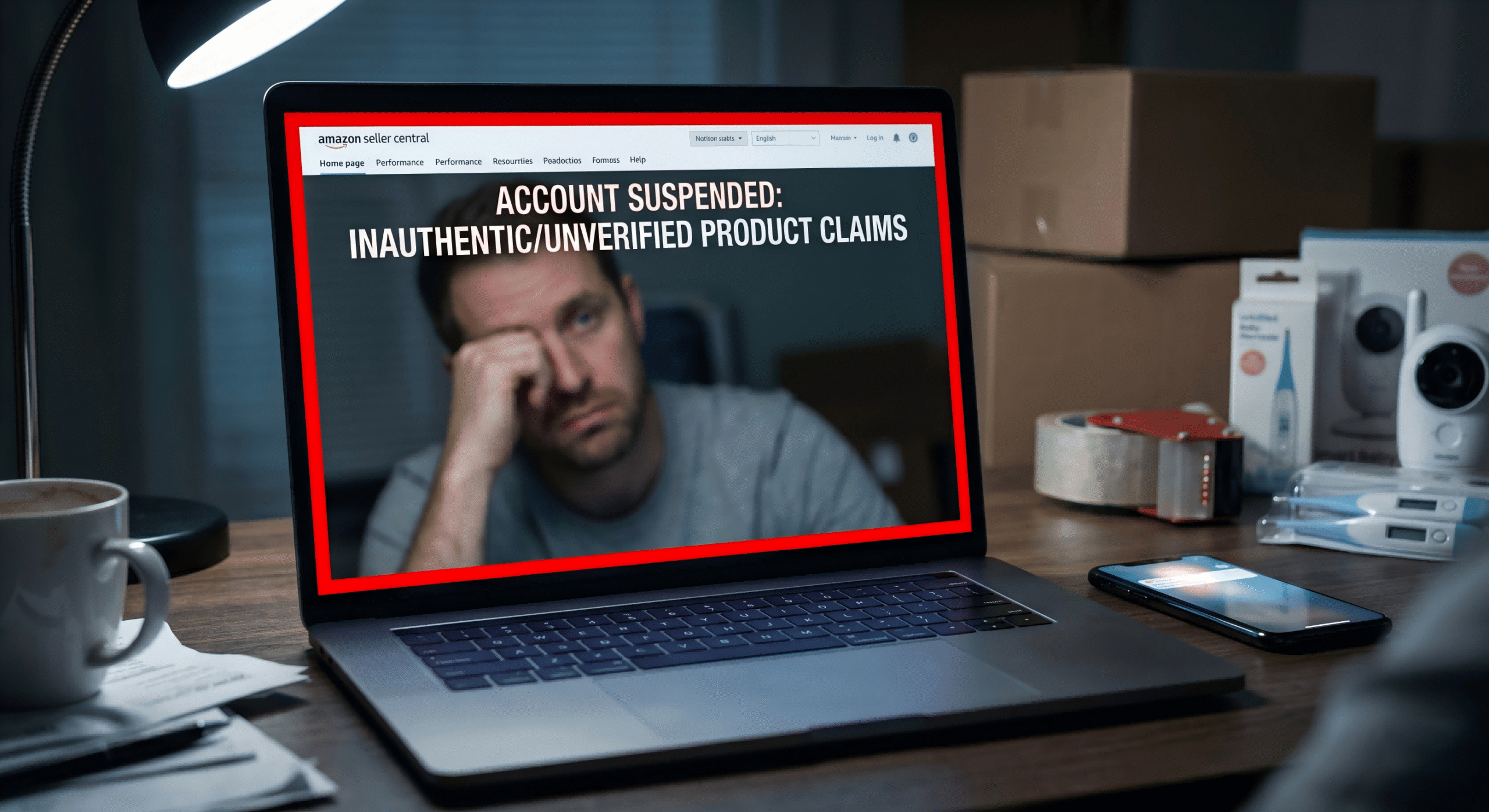
The risk is very real. We have seen clients get into trouble over this. One seller listed their new baby nasal aspirator as FSA/HSA eligible based only on the factory's verbal promise. A competitor reported them, and Amazon immediately suspended their listing pending verification. They had to scramble to get the right paperwork from the factory, which wasn't prepared. The process took weeks, and they lost thousands in sales during their peak launch window. This all could have been avoided with some upfront questions and a clear understanding of the process.
Your Pre-Order Due Diligence Checklist
Before you place a large order, run through these steps. This simple checklist will save you from major headaches down the road.
- Question the Claim: When a supplier tells you their product is "FSA/HSA eligible," your first question should be: "What specific documentation can you provide to support my US entity's application to a TPA?" If they hesitate or offer vague promises, that's a red flag. A prepared supplier will know what you're asking for.
- Identify the Product Category: Look at IRS Publication 502, which lists qualified medical expenses. Does your product, like a breast pump or a thermometer, clearly fall into one of these categories? If your product is a fringe item, like a special "breathing" monitor or a weighted blanket for babies, the path to eligibility may be more difficult and require more extensive proof.
- Request a Sample Documentation Set: Ask for an example of their traceability records or a past quality control report. A professional factory will have these files organized and ready to share. A factory that cannot produce these samples likely does not have the robust systems needed to support your application.
- Plan for Your US Entity: Remember, the application is your responsibility. You will need a US business entity to work with a TPA and to be the legal importer of record. Your factory cannot do this for you. Plan for this step in your business setup from the beginning.
Conclusion
FSA/HSA eligibility is a US-buyer-led process. Your Chinese supplier is a vital partner for providing documentation, not the approver. Understanding this distinction is the key to your success.