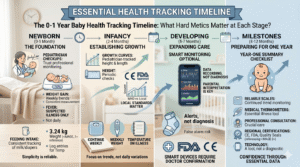
Worried about tracking your baby's health? The market is full of gadgets, creating pressure to measure everything. It's confusing and can cause more anxiety than peace of mind.
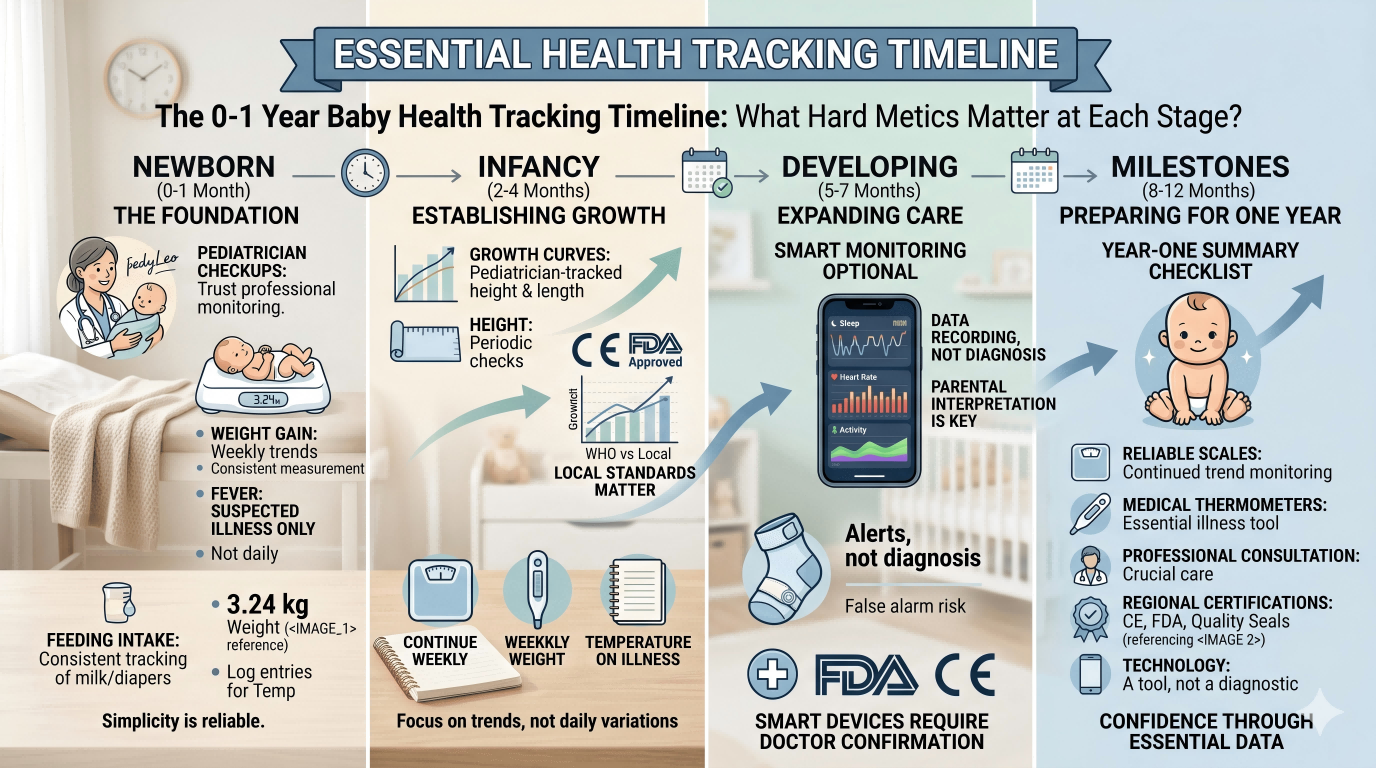
The most important health metrics for a baby's first year are weight gain trends, core body temperature for fever, and feeding intake. Focus on tracking these consistently with reliable tools, rather than measuring many different things daily, which can create unnecessary stress.

As a procurement professional in the baby products industry, I talk to B2B buyers every day. They are deciding what to stock on their shelves, whether in a European supermarket or a Middle Eastern online store. Their customers—new parents—are asking them the same questions I see you asking online. They want to know what they really need. The confusion is universal. Everyone wants to do what's best for the baby, but the line between medical necessity and clever marketing has become incredibly blurry. This article is about clearing that fog. I want to walk you through the real buying decisions you face at each stage, based on hundreds of conversations I've had with clients trying to serve new parents just like you. Let's separate the essential data from the digital noise.
What Key Health Metrics Should You Actually Track in the First Year?
You see smart scales and thermometers everywhere. This makes you feel like you need to track your baby's weight and temperature daily. But this often just leads to worry.
Focus on tracking weight trends over weeks, not daily fluctuations. For temperature, you only need accurate readings when you suspect a fever. Consistent tracking of these key metrics with simple, reliable tools is what truly matters for your baby's health.
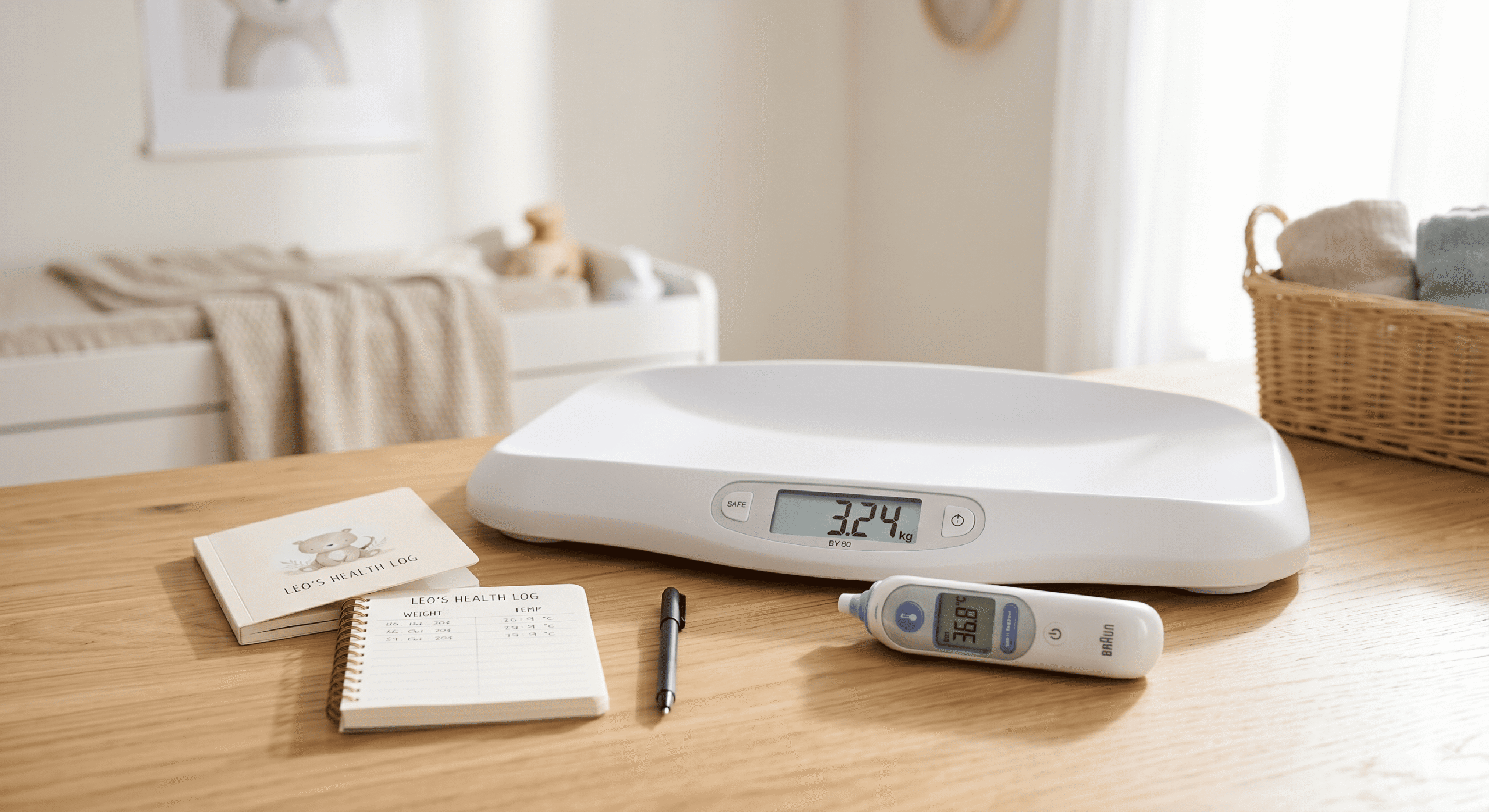
When we consult with our clients, a common point of confusion is frequency versus necessity. A buyer for a chain of stores in Europe once asked me, "Do we need to stock daily weight-tracking scales? Parents are asking for them." This question gets to the heart of the problem. While technology allows for daily tracking, medical professionals look for trends over time. A baby's weight can fluctuate daily due to feeding or a diaper change. Seeing a small dip can cause a lot of parental anxiety, but it's usually meaningless. What your pediatrician needs to see is a steady growth curve over weeks and months. This is why we advise our clients to stock reliable, accurate digital scales but to educate their customers that weekly or bi-weekly tracking is more than enough. The same logic applies to temperature. You don't need to take a healthy baby's temperature every day. You need a fast, accurate thermometer for when they feel warm or seem unwell, so you can give your doctor precise information.
Here’s a breakdown to help you distinguish what matters:
| Metric | Why It's a Key Buying Decision | Practical Tracking | What to Look for in a Product |
|---|---|---|---|
| Weight | Pediatricians use weight trends to assess growth and nutrition. | After the first few weeks, tracking weekly or every two weeks is sufficient. | Accuracy and Consistency. You don't need Wi-Fi. You need a scale that gives the same reading if you weigh the baby twice. |
| Temperature | This is the most critical metric when a baby is sick. | Only when you suspect illness (e.g., baby feels hot, is fussy, not eating). | Speed and Accuracy. An infrared forehead or in-ear thermometer that gives a reading in a few seconds is a lifesaver with a fussy, sick baby. |
| Height/Length | It is a long-term indicator of healthy development. | This is typically measured by a doctor during check-ups every few months. | A simple measuring mat is fine, but this is not a metric you need to track frequently at home. It's difficult to do accurately. |
How Do Regional Standards Change What Health Products You Should Buy?
You found the perfect baby health tracker online. But is it suitable for your country? Different regions have different medical standards and regulations, which can be very confusing for buyers.
Yes, regional standards matter a lot. For example, growth charts used by doctors can differ (WHO vs. local), and product safety marks like the EU's CE certification for medical devices are mandatory in some areas. Always check for local compliance.
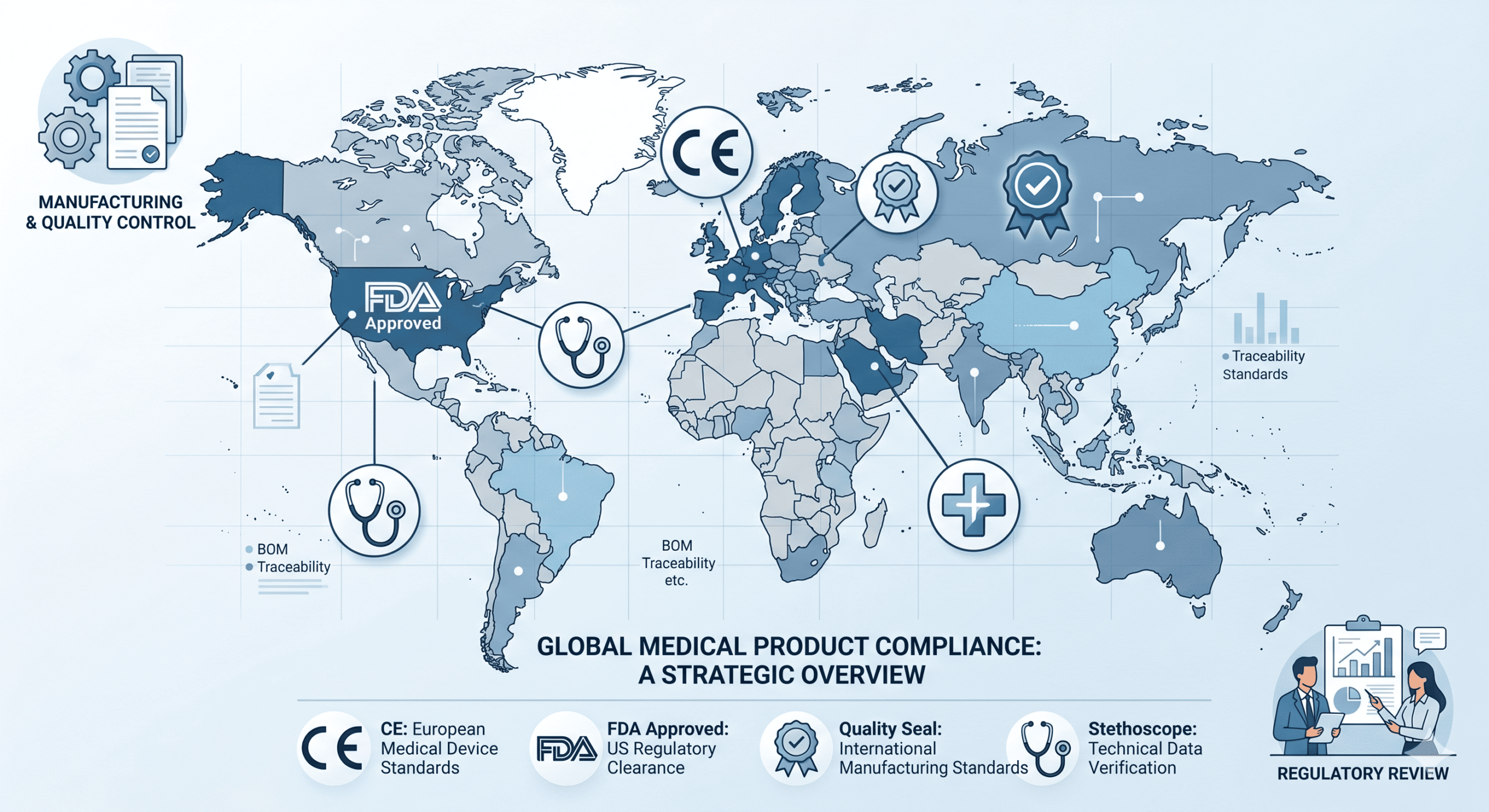
I remember a long conversation with a new online retailer based in Dubai. He wanted to source a large batch of digital thermometers. His main concern was not the price, but the specifications. He asked, "I see some with CE marking and some without. My customers are from across the Middle East and North Africa. What do I need?" This is a critical question for any B2B buyer. The CE mark on a thermometer indicates it meets the European Union's standards for a medical device. This means it has undergone testing for accuracy and safety. For a retailer in the EU, selling a thermometer without this mark is illegal. For the retailer in Dubai, it was a mark of quality and reliability that his customers would recognize and trust. It's not just about regulations; it's about customer confidence. This also applies to things like growth charts. While many smart scales come with apps that plot your baby's weight, the chart they use might be based on American or WHO data. A local pediatrician in India or China might use a country-specific growth chart. The device just provides the number; the context comes from a local professional.
Here’s how these differences impact your purchasing decisions:
Device Certification
- European Union: Look for the CE mark on products like thermometers and scales that are marketed for medical use. This is a legal requirement and a guarantee that the product meets specific safety and performance standards.
- United States: The equivalent is FDA clearance or approval. While many products we source are made in China, those intended for the US market must meet these FDA requirements.
- Other Regions: Many countries in the Middle East and along the Belt and Road Initiative recognize and trust CE marking as a sign of quality, even if it's not a local legal mandate. As a buyer, offering CE-marked products can be a significant selling point.
Data Interpretation
- Growth Charts: Your smart scale might plot your baby on a WHO growth chart. This is a good general guide. However, your local doctor will be the one to tell you if your baby's growth is on track according to local or national standards, which might account for genetic and nutritional differences in the population. The device gives you data; the doctor provides the interpretation.
Are Smart Baby Monitors and Health Trackers Worth the Investment?
You see ads for smart socks that track heart rate and oxygen. It seems like the ultimate peace of mind. But do these devices deliver on their promise, or just more data to worry about?
Smart monitors are excellent data recorders, but they are not diagnostic tools. They can alert you to changes, but they cannot tell you what those changes mean. Parents must still interpret the data and decide when to consult a doctor.
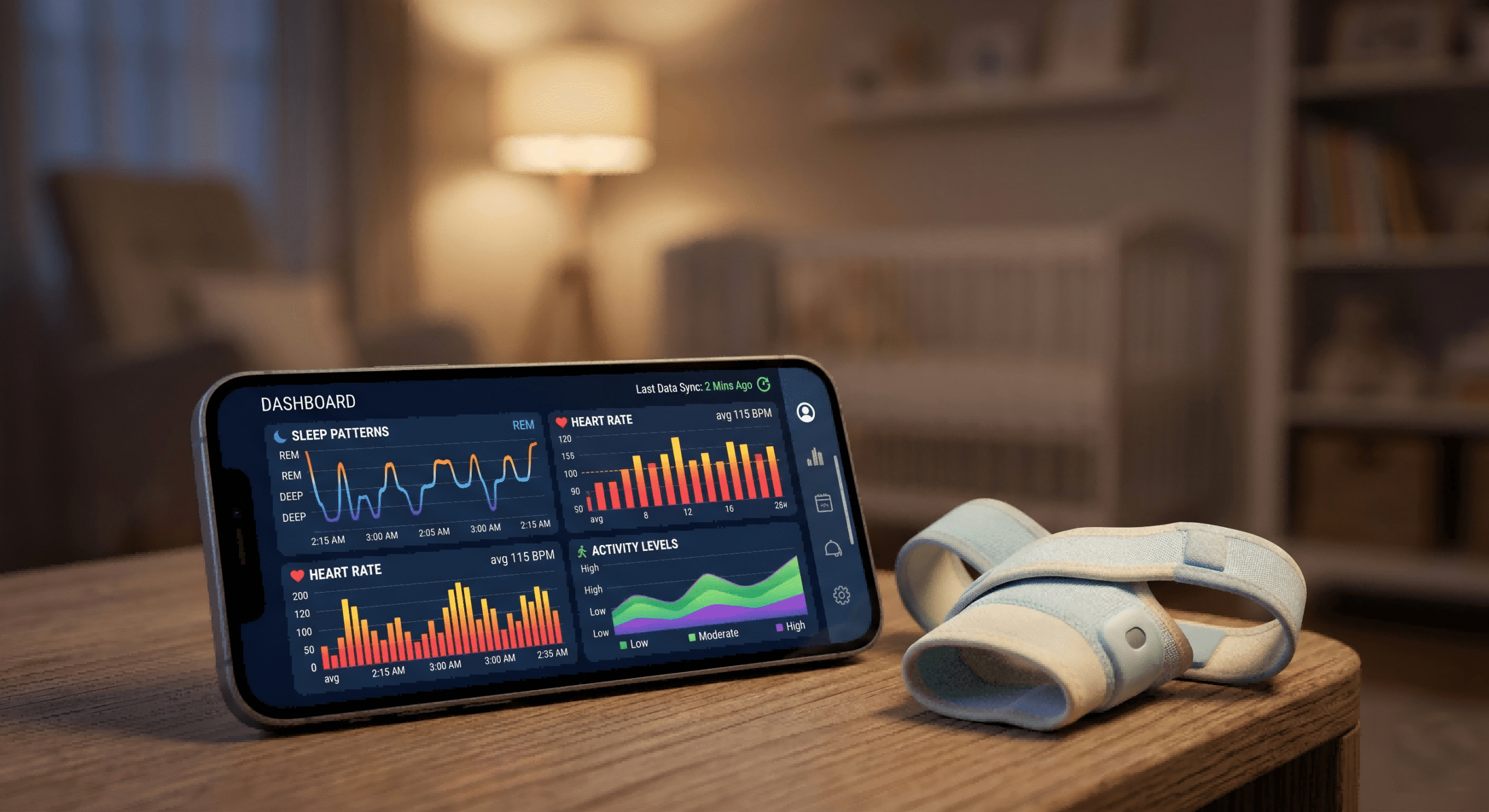
In our client conversations, especially with those catering to tech-savvy parents, the rise of "smart" baby products is a huge topic. A client who runs several e-commerce sites asked me, "What is the real value of a breathing monitor? Will it prevent SIDS?" This is the toughest question. The answer is no. These devices are not classified as medical devices that prevent conditions. They are consumer electronics designed for monitoring and alerting. They are very good at what they do: collecting data. A smart sock can record heart rate and oxygen levels and alert you if the numbers fall outside a pre-set range. A smart camera can detect motion or the lack of it. But the device doesn't know why the numbers changed. It doesn't know if it's a real medical issue or if the sensor just slipped. The "smart" part is the recording and alerting, not the diagnosis. That critical thinking part still falls on the parent and, most importantly, the pediatrician. The real value for many parents is reducing the need to constantly check on the baby, which can help with their own sleep and anxiety. But it's crucial to understand the tool's limits.
Here’s what a smart device does and doesn’t do:
| Feature | What It Does (The Technology) | What It Doesn't Do (The Reality) |
|---|---|---|
| Breathing/Heart Rate Monitoring | Tracks movement or pulses per minute and alerts if the numbers go outside a set range. | It cannot diagnose a medical condition like apnea or prevent SIDS. It can also produce false alarms, causing anxiety. |
| "Smart" Analysis | The app can create graphs showing sleep patterns, heart rate trends, etc. | The app cannot tell you if a sleep pattern is "good" or "bad" for your specific child. It's just data. |
| Fever Alert | Some monitors have built-in thermometers that can alert you if the temperature rises. | It doesn't replace the need for an accurate, dedicated medical thermometer to confirm a fever reading before calling a doctor. |
The decision to buy a smart monitor is personal. It's a trade-off between the potential for peace of mind and the risk of data anxiety.
Conclusion
Focus on the essential metrics: weight trends, temperature, and feeding. Choose simple, reliable tools and understand their purpose. This empowers you to make confident decisions for your baby's health.