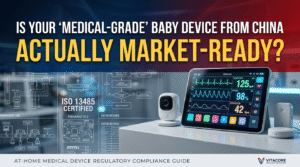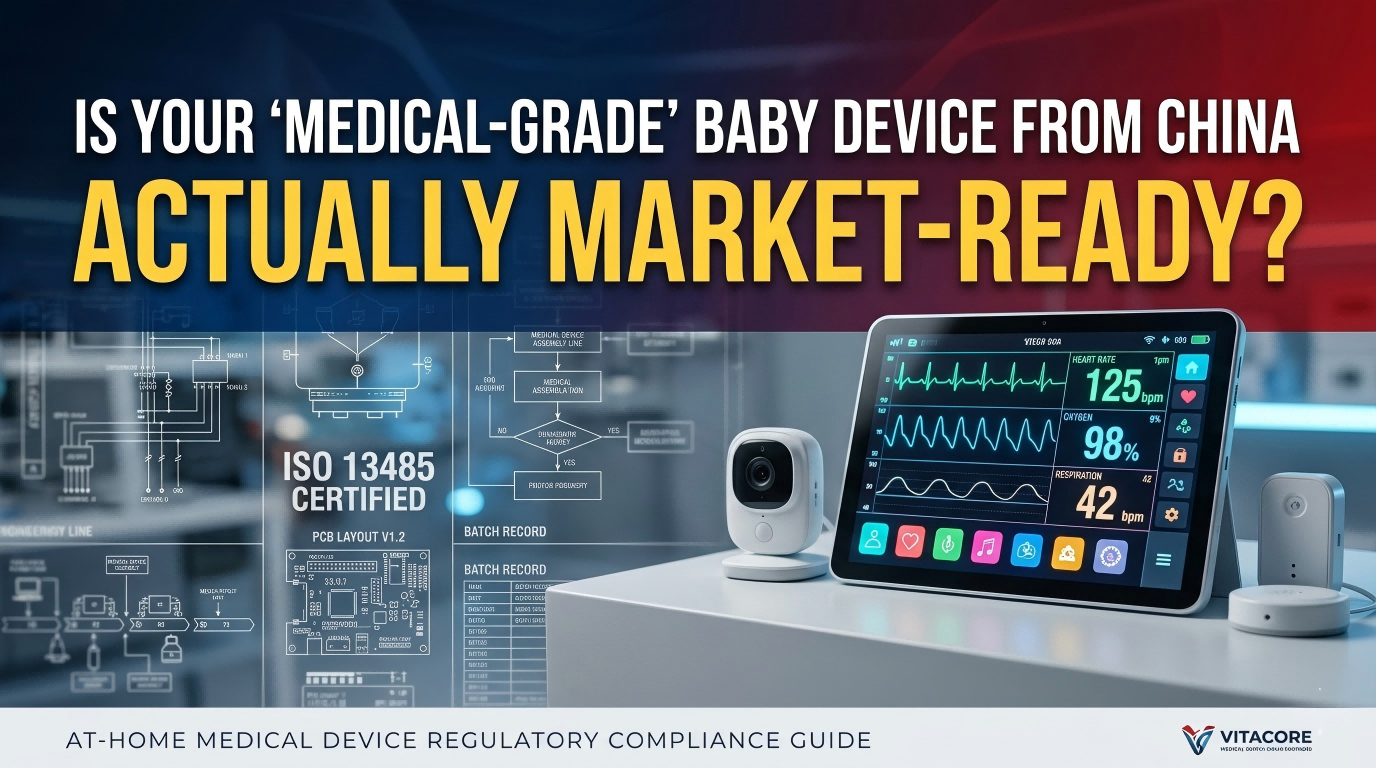
Sourcing a new at-home baby medical device is exciting, but the fear of regulatory delays and unreliable suppliers is real. You need a partner who can navigate the complexities of compliance.
The real barrier isn't technology; it's a fundamental misunderstanding. Buyers think a "certifiable" factory is market-ready, while factories underestimate the systemic overhaul needed to shift from consumer-grade products to true medical-grade production. This gap is where projects fail.
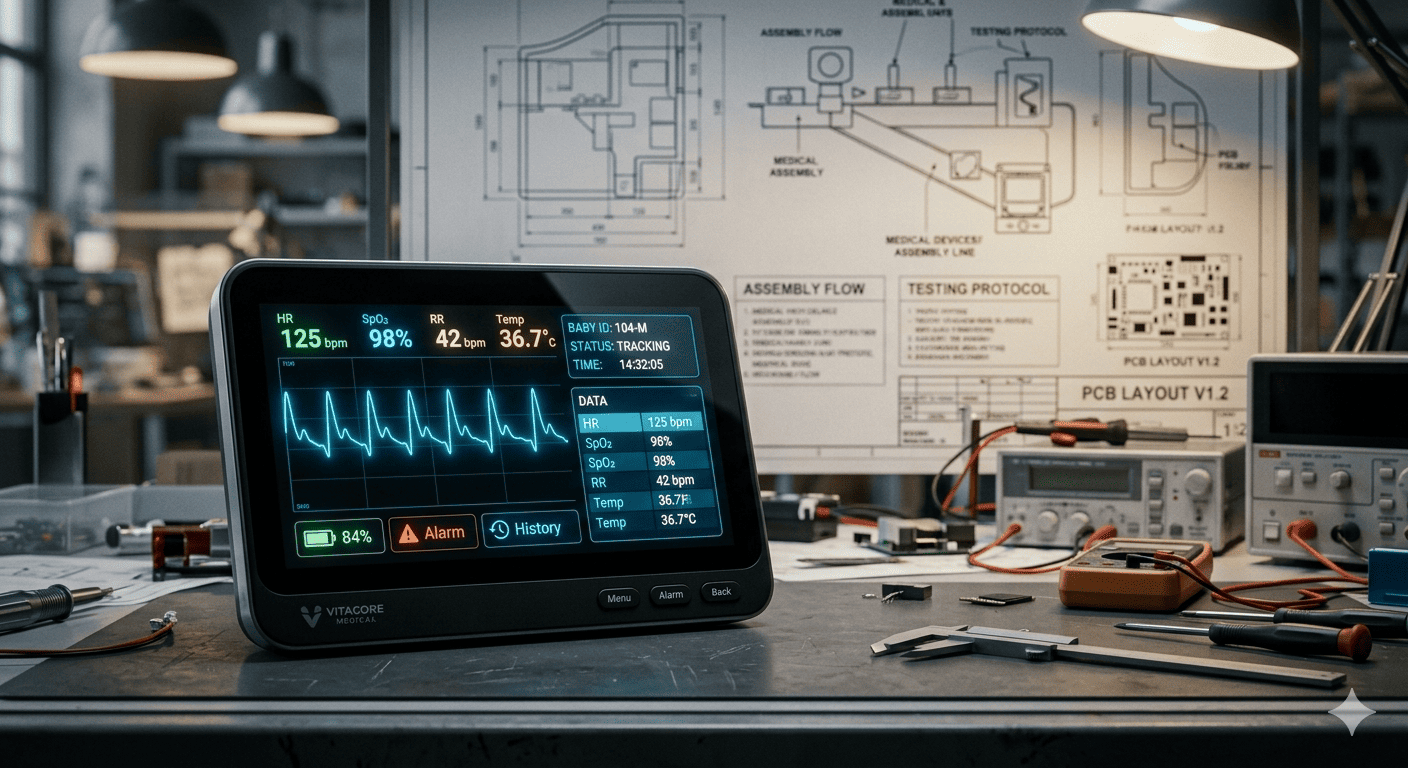
As a procurement partner on the ground in China, I sit between international buyers and local factories every day. I see the initial excitement, the confident promises, and then, too often, the frustrating delays. The problem usually starts with a simple, but dangerous, assumption. Buyers believe that if a factory can produce a device that meets certain technical specs, the rest is just paperwork. But the journey from a consumer electronics assembly line to a validated medical device production system is a huge leap. Let’s break down the real questions you should be asking before you sign any contract.
If a Factory Can Get Certified, Isn't That Good Enough?
You found a factory that promises they can get the CE or FDA certification for your device. It feels like the biggest hurdle is already overcome. But is it?
No. A one-time certificate is dangerously different from maintaining a medical-grade Quality Management System (QMS). The real risk isn't passing the first test, but whether the factory can consistently produce compliant products for years without failing a surprise audit or a batch recall.

In my experience matching suppliers, the buyers who later face delays are the ones who focus solely on "getting the certificate." They see it as a finish line. In reality, it's the starting line for years of production. A factory might be able to pull together the resources and documentation to pass a single audit for one product. But can they do it again for batch number 10, or batch number 100, two years from now? This is where the difference between a consumer-grade and a medical-grade production system becomes critical. Based on factory disclosures during our audit preparations, the gap is enormous. A medical-grade QMS, often under ISO 13485, demands a level of control that consumer electronics factories simply don't have.1
Here’s a look at what that really means:
| Feature | Consumer-Grade Promise | Medical-Grade Reality |
|---|---|---|
| Traceability | "We can trace the main components." | Must trace every critical component and process step to a specific product batch, essential for recalls.2 |
| Validation | "We tested it, and it works." | Requires formal validation protocols for every process, from software updates to sterilization.3 |
| Supply Chain | "We use reliable suppliers." | Demands a qualified supplier list, where each supplier is audited and approved for medical-grade materials.4 |
| Consistency | The product works as advertised. | The product must be manufactured identically, batch after batch, for years, with any change documented and re-validated. |
The buyers who succeed are the ones who ask, "Show me your Quality Management System. How do you handle a component change? What does your batch record look like?" These questions reveal a factory's true capability far better than a promise of certification.
Can't They Just Adjust the Parameters to Meet Medical Specs?
The factory sales rep shows you their popular baby monitor and says they can easily modify it to meet medical standards. It sounds fast and affordable, which is exactly what you want.
This is one of the biggest red flags in our industry. "Parameter adjustments" ignore the foundational structure of medical device manufacturing. True compliance involves segregated production lines, validated processes, and rigorous documentation that cannot be 'adjusted' into existence.
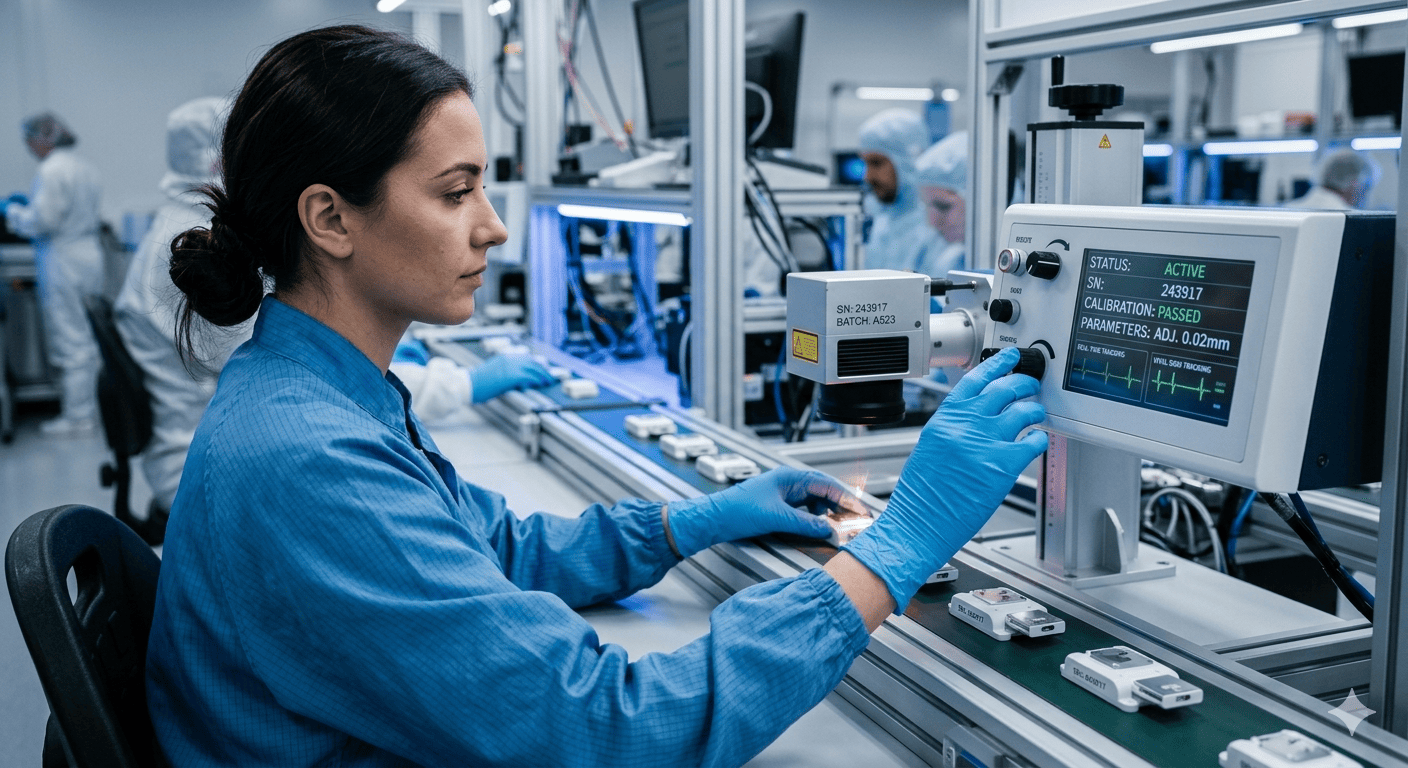
I hear this promise in meetings all the time. A buyer sees a sleek consumer product and is told, "We can make this medical for you." To the salesperson, this might mean using a more accurate sensor or changing a software setting. But to a regulatory body, it means something entirely different. A true medical device cannot be built on the same line, with the same people, using the same processes as a simple consumer gadget. In the projects I've managed, we've had to educate both sides on this reality. A consumer-product OEM attempting certification for the first time is a very different partner than a factory that already holds medical device licenses and has dedicated, physically separate production areas.
Here's the deep dive on what "adjusting parameters" glosses over:
- Risk Management File: A medical device requires a comprehensive file that analyzes every possible risk, from material biocompatibility to software bugs.5 This isn't something you can create after the fact; it must guide the design from day one.
- Process Validation: Every single manufacturing step must be formally validated.6 This means proving, with data, that your process for sealing the device casing or sterilizing a component consistently produces the same result. You can't just "tweak" a process without re-validating it, which costs time and money.
- Material Control: For a medical device, you must have certificates of conformity for every material that touches the user, proving it's safe.7 A consumer electronics factory might switch plastic suppliers to save costs. In medical manufacturing, such a change would trigger a major re-validation project.
When a factory offers to "adjust" a consumer product, the question to ask is: "Will this be produced on a new, dedicated, and validated medical device assembly line?" If the answer is vague, you are taking on a massive commercial risk.
How Do I Balance a Great User Experience with Strict Medical Rules?
You want a device that parents will love—one that is intuitive, beautifully designed, and easy to use. But you are worried that making it too "slick" or feature-rich will create regulatory nightmares.
The conflict isn't really about design versus compliance; it's about regulatory classification. Specific features and marketing claims can instantly move your product from a simple consumer good to a highly regulated medical device. Understanding where that line is for your target market is everything.

This is where I see the most confusion, as it's a risk that falls directly on you, the buyer and brand owner. A factory in China might not know the specific nuances of the EU's Medical Device Regulation (MDR) or what claims are permissible in the Middle East. They will build what you ask them to build. The problem is, a seemingly small feature can have huge commercial consequences. For example, a baby monitor that simply streams video is a consumer product. But a monitor that includes software to analyze breathing patterns and sends an alert for "abnormal" events is almost certainly a medical device.
This isn't a design philosophy debate; it's a legal and financial one. The wrong feature or a single word in your marketing can trigger a different, much more difficult, regulatory pathway.
- Intended Use is Key: The most important document you will create is your "intended use" statement. This defines what your product does. Does it simply "display temperature" or does it "aid in the diagnosis of fever"? The first is information; the second is a medical claim.
- Feature Creep, Regulation Creep: I once had a client who wanted to add a "low oxygen alert" to their smart baby sock. The factory said, "No problem, it's just a software update." We had to pause the entire project. We brought in a regulatory consultant who confirmed that this single feature would classify the product as a Class II medical device in Europe8, adding over a year to the timeline and requiring clinical data the client didn't have9.
- The Buyer Owns the Claim: The factory builds the device, but you, the brand owner, are legally responsible for the claims you make on the packaging and in your advertising10. A factory's claim that a feature is a "home-use exemption" is not a legal defense. You must get your own independent regulatory advice for your target market.
Don't ask your factory "Can you build this feature?" Ask your regulatory advisor "If we build this feature, what are the consequences?"
Conclusion
Sourcing at-home baby medical devices is not about finding a certified product. It’s about vetting a compliant partner. Focus on their systems, not just their specs, to succeed.
"ISO 13485:2016 - Medical devices — Quality management systems", https://www.iso.org/standard/59752.html. ISO 13485 specifies requirements for a quality management system where an organization needs to demonstrate its ability to provide medical devices and related services that consistently meet customer and applicable regulatory requirements, including requirements for design controls, risk management, and traceability that exceed typical consumer product standards. Evidence role: definition; source type: institution. Supports: the specific requirements of ISO 13485 for medical device quality management systems. Scope note: The source establishes ISO 13485 requirements but does not directly compare them to consumer electronics manufacturing practices. ↩
"Medical Device Tracking - FDA", https://www.fda.gov/medical-devices/postmarket-requirements-devices/medical-device-tracking. Regulatory frameworks such as FDA 21 CFR Part 820 and EU MDR Article 27 require medical device manufacturers to establish and maintain procedures for traceability that enable identification of devices by lot or batch number and facilitate effective recalls when necessary. Evidence role: general_support; source type: government. Supports: regulatory requirements for traceability in medical device manufacturing to support recalls. ↩
"[PDF] Process Validation: General Principles and Practices | FDA", https://www.fda.gov/files/drugs/published/Process-Validation--General-Principles-and-Practices.pdf. FDA guidance on process validation and ISO 13485 clause 7.5.6 require manufacturers to validate processes where the resulting output cannot be verified by subsequent monitoring or measurement, including sterilization processes and software, with documented validation protocols and acceptance criteria. Evidence role: general_support; source type: government. Supports: the requirement for formal validation of manufacturing processes in medical device production. ↩
"Industry Resources on Third-Party Audit Standards and FSMA ... - FDA", https://www.fda.gov/food/importing-food-products-united-states/industry-resources-third-party-audit-standards-and-fsma-supplier-verification-requirements. ISO 13485 clause 7.4 requires organizations to establish processes for the selection, evaluation, and monitoring of suppliers based on their ability to provide products that meet requirements, including documented criteria for supplier approval and periodic re-evaluation. Evidence role: general_support; source type: institution. Supports: requirements for supplier qualification and control in medical device manufacturing. ↩
"[PDF] Risk Basics for Medical Devices - FDA", https://www.fda.gov/media/163912/download. ISO 14971 establishes requirements for a risk management process throughout the lifecycle of medical devices, requiring manufacturers to identify hazards, estimate and evaluate associated risks, control these risks, and monitor the effectiveness of controls, covering aspects from materials to software. Evidence role: general_support; source type: institution. Supports: the requirement for comprehensive risk analysis in medical device development. ↩
"[PDF] Process Validation: General Principles and Practices | FDA", https://www.fda.gov/files/drugs/published/Process-Validation--General-Principles-and-Practices.pdf. FDA's Quality System Regulation (21 CFR 820.75) requires validation of processes where results cannot be fully verified by subsequent inspection and testing, and ISO 13485 extends this to require validation of processes for production and service provision where output cannot be verified by monitoring or measurement. Evidence role: general_support; source type: government. Supports: requirements for validation of manufacturing processes in medical device production. Scope note: Regulatory requirements focus on processes where output cannot be fully verified, rather than literally every manufacturing step. ↩
"Use of International Standard ISO 10993-1, "Biological evaluation of ...", https://www.fda.gov/regulatory-information/search-fda-guidance-documents/use-international-standard-iso-10993-1-biological-evaluation-medical-devices-part-1-evaluation-and. ISO 10993 series provides a framework for evaluating the biocompatibility of medical devices, requiring manufacturers to characterize materials and conduct appropriate biological evaluations based on the nature and duration of body contact, with documentation demonstrating material safety. Evidence role: general_support; source type: institution. Supports: requirements for biocompatibility evaluation of materials in medical devices that contact patients. ↩
"[PDF] MDCG 2021-24 Rev.1 Guidance on classification of medical devices", https://health.ec.europa.eu/system/files/2021-10/mdcg_2021-24_en_0.pdf. Under EU MDR Annex VIII, devices intended to monitor physiological processes are generally classified as Class IIa or higher, with classification depending on factors including whether the device is intended for monitoring vital physiological parameters where variations could result in immediate danger to the patient. Evidence role: general_support; source type: government. Supports: EU classification rules for monitoring devices with diagnostic or physiological monitoring functions. Scope note: Specific classification would depend on the complete intended use and risk profile; oxygen monitoring for infants could potentially be Class IIb rather than Class IIa depending on the specific application. ↩
"How are medical devices regulated in the European Union? - PMC", https://pmc.ncbi.nlm.nih.gov/articles/PMC3326593/. EU MDR Article 52 and Annex XIV require clinical evaluation for all medical device classes, with Class IIa and IIb devices requiring notified body involvement for conformity assessment, which typically extends development timelines due to technical documentation review, clinical evaluation assessment, and quality management system audits. Evidence role: general_support; source type: government. Supports: clinical evaluation and conformity assessment requirements for Class II medical devices in the EU. Scope note: Timeline estimates vary significantly based on device complexity, manufacturer preparedness, and notified body capacity; 'over a year' is a general estimate rather than a regulatory requirement. ↩
"Product Liability and Medical Device Regulation: Proposal for Reform", https://www.ncbi.nlm.nih.gov/books/NBK218294/. Regulatory frameworks including FDA 21 CFR Part 801 and EU MDR Article 10 establish that the manufacturer (defined as the entity placing the device on the market under its name) is responsible for ensuring labeling and claims comply with applicable requirements and accurately reflect the device's intended use and performance. Evidence role: general_support; source type: government. Supports: manufacturer responsibility for medical device labeling and claims. ↩