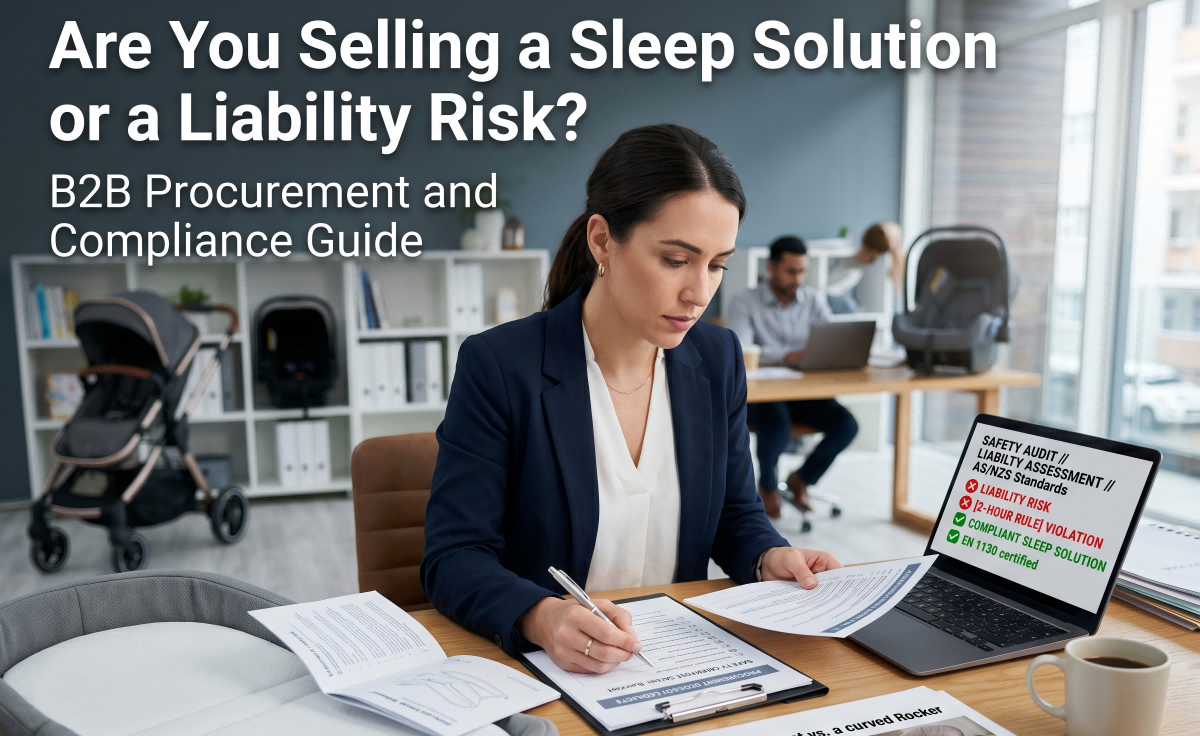
Problem: You see similar-looking infant products and assume they are the same. Agitation: This confusion can lead to customer complaints and serious liability. Solution: You must understand the strict safety rules.
Infant capsules, rockers, and some carrycots are NOT safe for prolonged sleep. They are transport or temporary supervision devices. Ignoring the widely accepted "2-hour rule1" in your product descriptions and manuals creates a significant and avoidable liability risk for your business as a retailer or distributor.
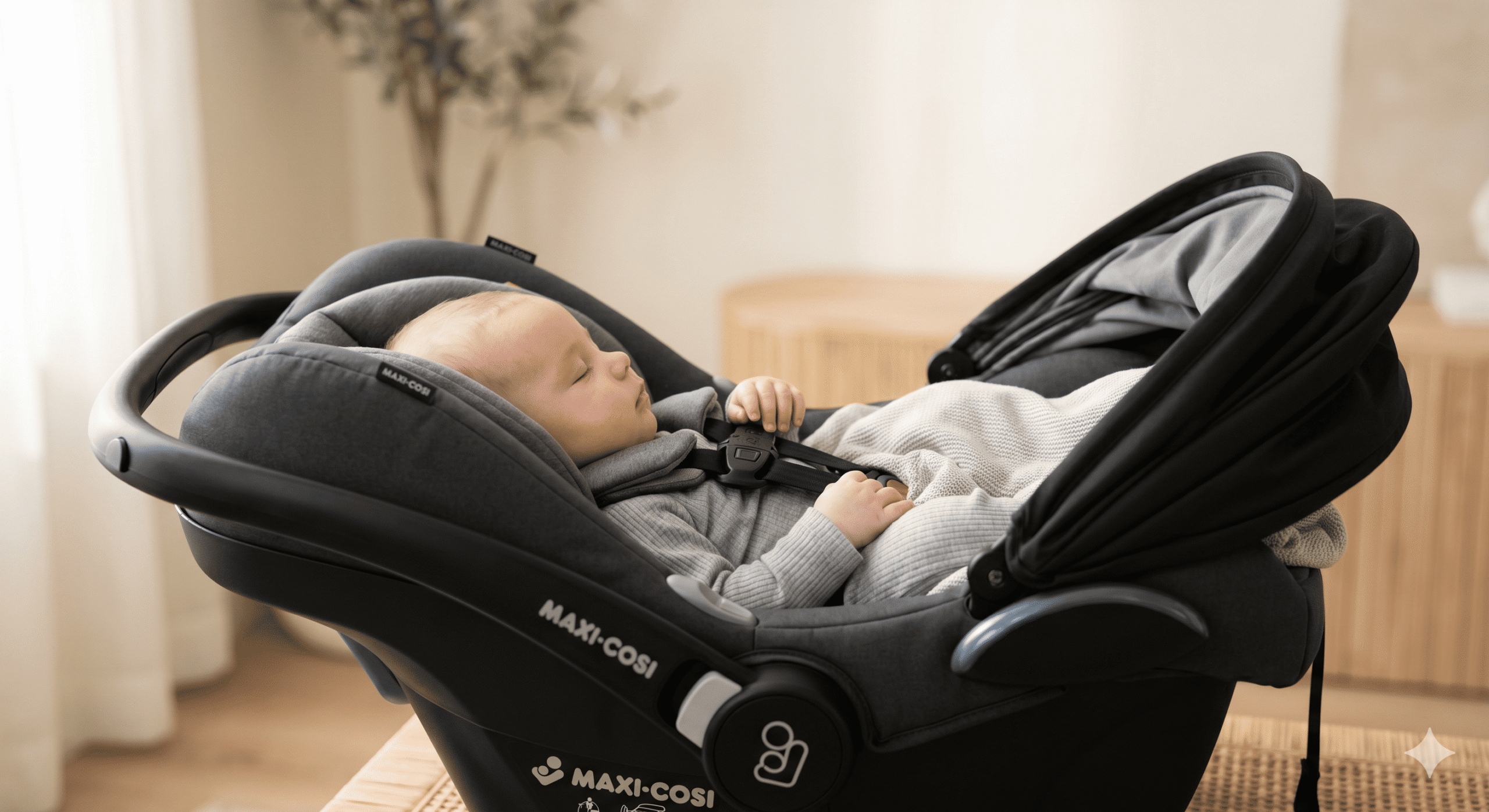
It's easy to get confused. Many of these products look comfortable, and a sleeping baby seems like a sign of success. I remember handling a complaint from a very upset customer whose baby had developed a flat spot on their head2. The parent blamed the rocker they bought, which they had been using for overnight sleep. The retailer was my client, and they were shocked. They thought they were selling a cozy, safe product. This experience taught me a hard lesson: for B2B purchasers, the difference between a "sleep surface" and a "transport device" isn't just a feature—it's a critical legal distinction. Let's look at why this matters for your business.
Why do capsules and carrycots have a 2-hour sleep limit?
Problem: You sourced a product that meets all the right safety standards. You think you're covered. Agitation: But a customer complains after their baby was left in it for hours. Solution: The 2-hour rule isn't just a suggestion; it's a core safety principle.
The 2-hour rule exists because many portable infant products place a baby in a curved or inclined position. This posture can compress the baby's chest and airway, potentially affecting breathing3. These items are designed for transport or temporary, supervised use, not as a primary sleep environment like a firm, flat cot.
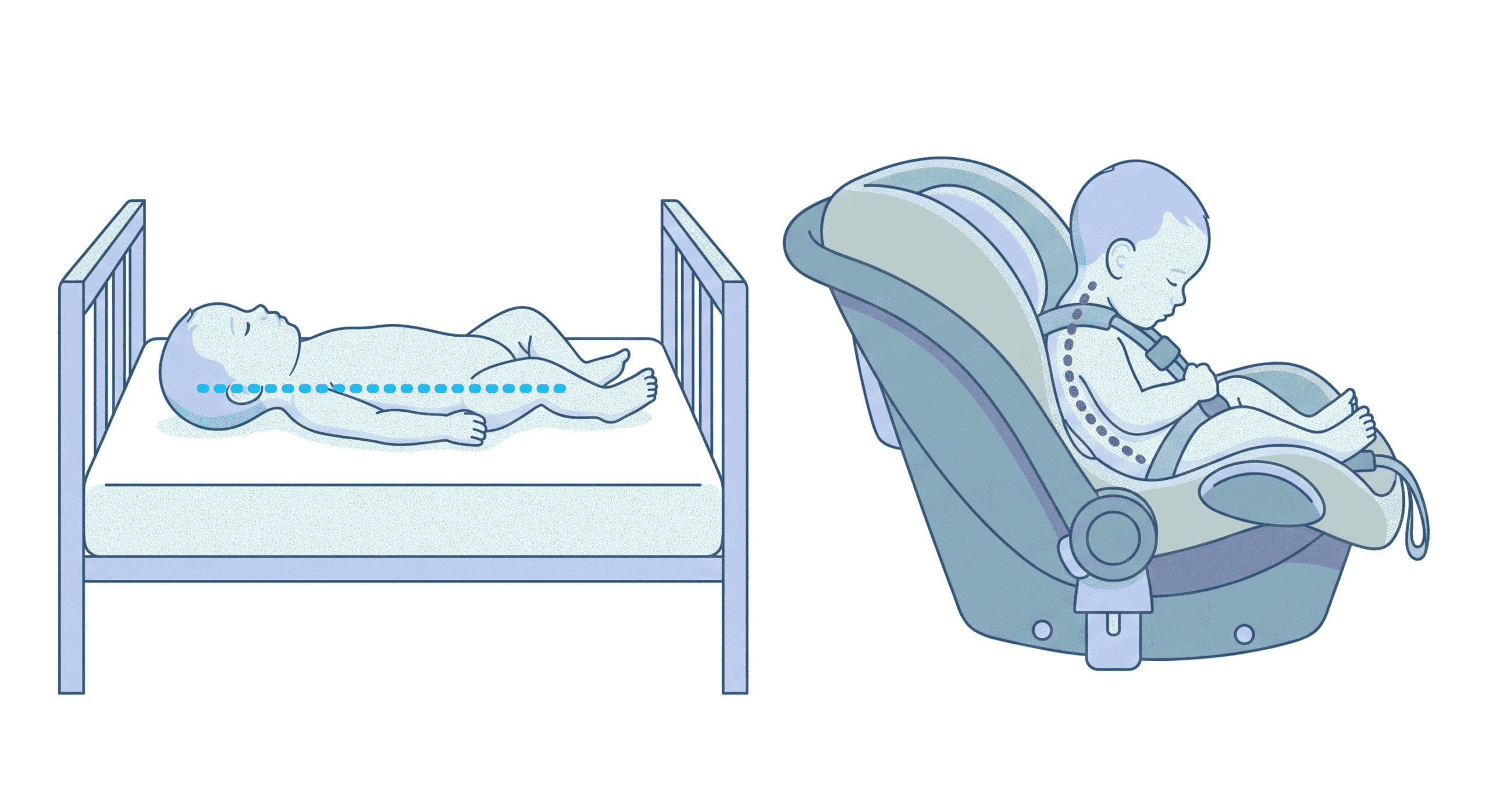
When I work with clients, I emphasize that product categories are not interchangeable. It’s my job to help them see the risks hidden in the product details. A factory might tell you a product is "safe," but what they mean is it's safe for its intended purpose. A car seat capsule is safe for transport. A rocker is safe for supervised rest. A carrycot might be safe for naps, but only if it has a firm, flat base and breathable sides. Confusing these categories is a common mistake for buyers. I've seen it lead directly to complaints. The core issue is that the design dictates the safe usage time.
Here is a simple breakdown I use to help my clients understand the differences:
| Product Category | Primary Use | Key Design Feature | Recommended Max Continuous Use |
|---|---|---|---|
| Infant Capsule | Car Travel / Transport | Curved, semi-reclined position | 2 Hours |
| Infant Rocker | Supervised Rest / Play | Inclined seat, often with motion | 2 Hours |
| Carrycot | Portable Naps / Transport | Often has a handle, may be flat or slightly inclined | 2 Hours (unless certified for overnight sleep) |
| Bassinet/Crib | Overnight & Unsupervised Sleep | Firm, flat surface with high, breathable sides | No Time Limit |
This table isn't medical advice. It's a procurement guide. As a buyer, your responsibility is to source the right product and, more importantly, label it with the correct instructions to protect both the end-user and your business.
Does meeting a safety standard make it safe for unlimited sleep?
Problem: A supplier shows you a certificate for standard EN 14664, proving their carrycot is "safe." Agitation: You assume this means it's as good as a crib and market it without time warnings. Solution: You must understand that standards are a baseline, not a full endorsement5.
No. Meeting a standard like EN 1466 or an ASTM equivalent6 only confirms the product passed specific tests for its intended use. It does not override fundamental safety principles, like the 2-hour rule for non-flat surfaces. Compliance is your starting point, not a license to omit crucial warnings.
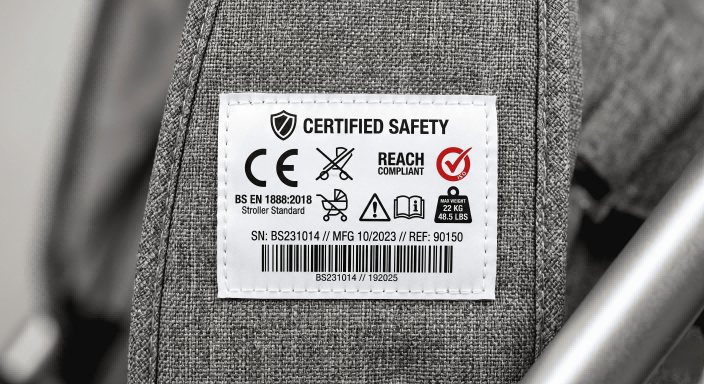
Think of it this way: a car tire passes many safety tests. But that doesn't mean you can drive on it forever without checking the air pressure. The standard proves it was made correctly, but it doesn't replace the need for proper use and maintenance. The same logic applies to infant products. A compliance certificate for a rocker (which tests for things like stability and material toxicity) does not transform it into a safe overnight bed. I have had to explain this many times to frustrated clients facing a safety complaint. They will wave a certificate at me and say, "But the factory said it was compliant!" My answer is always the same: the factory's compliance doesn't protect you if your marketing or user manual created a false expectation of safety. When you fail to pass on the necessary time-limit warnings, the liability shifts from the manufacturer to you, the seller7. My role is to prevent that from happening by ensuring your documentation is as solid as the product itself.
How can you protect your business from product misclassification liability?
Problem: You need to source infant products to stay competitive, but the risk of liability seems high. Agitation: One wrong product description could lead to a damaging recall or lawsuit. Solution: The answer is a clear procurement process that prioritizes correct classification and warnings.
Protect your business by making product classification and user documentation a critical part of your procurement strategy. Insist that suppliers provide clear "intended use" statements and time limits. Then, ensure your own marketing, packaging, and manuals clearly state these limits, especially the 2-hour rule.
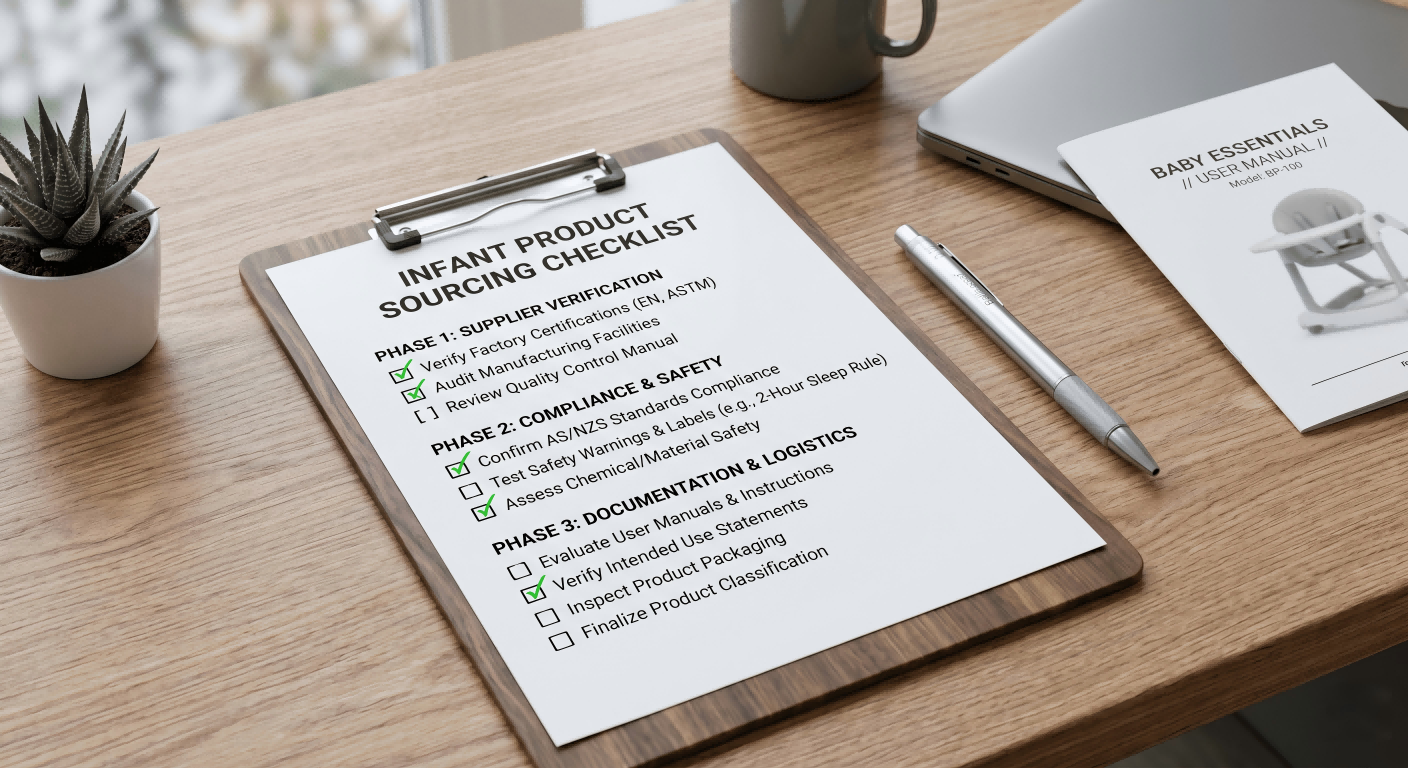
This is about creating a paper trail that protects you. It's about showing you did your due diligence. I once worked with a buyer for a large online store who was about to list a popular baby rocker. The lifestyle photos from the supplier showed a baby sleeping peacefully, and they wanted to use "perfect for nap time" in the product title. I immediately advised against it. That simple phrase implies it's a dedicated sleep product, which it wasn't. We changed the wording to "for supervised rest and quiet time" and added a bold warning in the description and manual: "Do not use for more than 2 hours at a time. Not intended for overnight sleep." This small change in language was a huge change in liability. It shifted the product from being a potential risk to a compliant and responsibly sold item.
Here is the checklist I give my clients to use during sourcing:
- [ ] Verify Product Category: Ask the supplier directly: Is this for transport, temporary supervision, or overnight sleep? Get their answer in writing.
- [ ] Demand "Intended Use" Documentation: Don't just accept a certificate. Request the official document that defines the product's intended use, scope, and limitations.
- [ ] Audit User Manuals: Does the manual explicitly state time limits for use? If it's vague or missing, you must add a clear warning before selling it.
- [ ] Review Your Marketing Copy: Check your website, ads, and in-store displays. Are you accidentally calling a rocker a "portable bed" or a capsule a "cozy napper"? Find and fix these red flags immediately.
Conclusion
Understanding product categories and time limits is not just about infant safety; it's about protecting your business. Correct classification and clear warnings are your best defense against product liability.
"Protecting Infants and Toddlers from Positional Asphyxia: Car Seats ...", https://extension.okstate.edu/fact-sheets/protecting-infants-and-toddlers-from-positional-asphyxia-car-seats-and-sling-carriers. Pediatric safety research has documented concerns about prolonged positioning in semi-reclined infant devices, though specific time recommendations vary by organization and product type. Evidence role: expert_consensus; source type: research. Supports: that pediatric safety organizations recommend time limits for infant positioning devices. Scope note: The exact '2-hour' threshold may represent industry practice rather than a universally codified medical standard ↩
"Diagnosis and treatment of positional plagiocephaly - PMC - NIH", https://pmc.ncbi.nlm.nih.gov/articles/PMC7206465/. Pediatric research identifies extended time in car seats, bouncers, and similar devices as contributing factors to positional plagiocephaly, alongside other variables such as sleep position and tummy time frequency. Evidence role: mechanism; source type: research. Supports: that prolonged time in positioning devices is a recognized risk factor for positional plagiocephaly. ↩
"Positioning for acute respiratory distress in hospitalised infants and ...", https://pmc.ncbi.nlm.nih.gov/articles/PMC7144689/. Clinical studies have measured reduced oxygen saturation and altered respiratory patterns in infants positioned in car safety seats compared to supine positioning, particularly in preterm infants. Evidence role: mechanism; source type: paper. Supports: that semi-reclined positioning can affect infant respiratory function. Scope note: Research focuses primarily on car seat positioning during transport rather than all curved infant products ↩
"EN 1466:2023 - Carry Cots and Stands Safety Requirements and ...", https://standards.iteh.ai/catalog/standards/cen/728bd9a6-37ac-454f-bd2f-3f73595175c9/en-1466-2023?srsltid=AfmBOopY66Ql58oTYjIriUn7sulNV68SwsKMOg23rsfkbARc_SmZyRo5. EN 1466 specifies safety requirements and test methods for carry cots and stands, covering aspects such as structural integrity, stability, and materials, but does not address sleep duration recommendations. Evidence role: definition; source type: government. Supports: the scope and requirements of EN 1466. ↩
"General Use Products: Certification and Testing | CPSC.gov", https://www.cpsc.gov/Business--Manufacturing/Testing-Certification/General-Use-Products-Certification-and-Testing. Product safety standards typically define minimum performance requirements and test methods for specific hazards, but compliance does not guarantee a product is safe under all conditions or exempt from additional regulatory requirements or warnings. Evidence role: general_support; source type: government. Supports: that safety standards establish minimum performance criteria. ↩
"Soft Infant and Toddler Carriers Business Guidance | CPSC.gov", https://www.cpsc.gov/Business--Manufacturing/Business-Education/Business-Guidance/Soft-Infant-and-Toddler-Carriers. ASTM International maintains multiple voluntary safety standards for infant products including carriers and bassinets, which address structural safety, materials, and labeling requirements. Evidence role: general_support; source type: institution. Supports: that ASTM International publishes safety standards for infant carrier products. Scope note: Direct equivalence between specific EN and ASTM standards varies by product category and may not be one-to-one ↩
"products liability | Wex | US Law | LII / Legal Information Institute", https://www.law.cornell.edu/wex/products_liability. Under product liability law, retailers and distributors may be held liable for failure to warn of known product risks, even when the product was manufactured by a third party, particularly when they are in a position to provide adequate warnings to consumers. Evidence role: general_support; source type: education. Supports: that sellers can face liability for inadequate product warnings. Scope note: Liability allocation varies significantly by jurisdiction and specific circumstances of each case ↩