I've watched dozens of buyers place their first major order for maternal and infant products, only to contact me weeks later with a crisis. The products looked perfect on the screen. The supplier seemed responsive. The price was right. But when the container arrived, something was wrong. The material felt different. The certifications were missing. The delivery missed the peak season. These weren't bad luck stories. They were predictable failures that happened because buyers skipped critical checkpoints in the purchasing process.
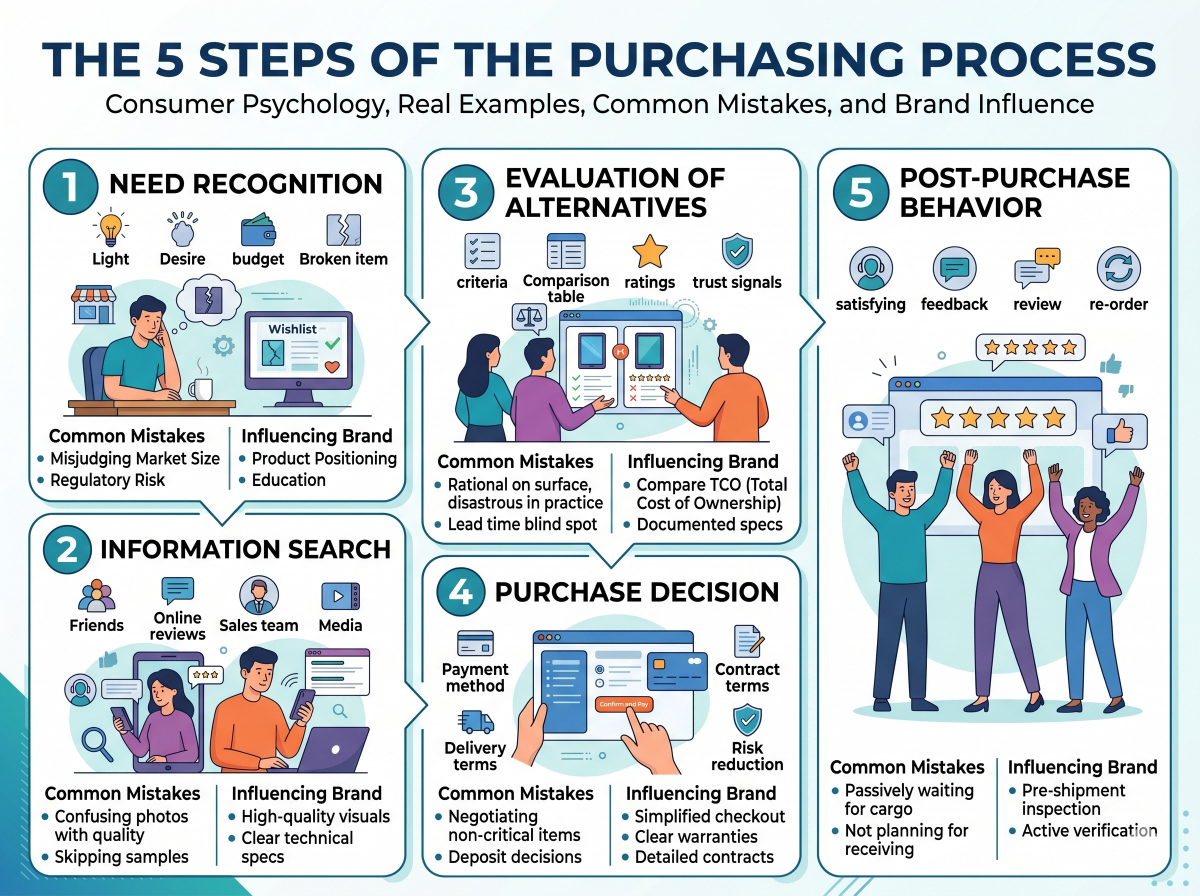
The purchasing process has five stages: need recognition, information search, evaluation of alternatives, purchase decision, and post-purchase behavior.1 But most B2B buyers don't fail because they skip a stage—they fail because they treat each stage as a paperwork exercise instead of a risk checkpoint. The buyers who succeed don't just follow the steps. They ask the right questions at each stage before moving forward.
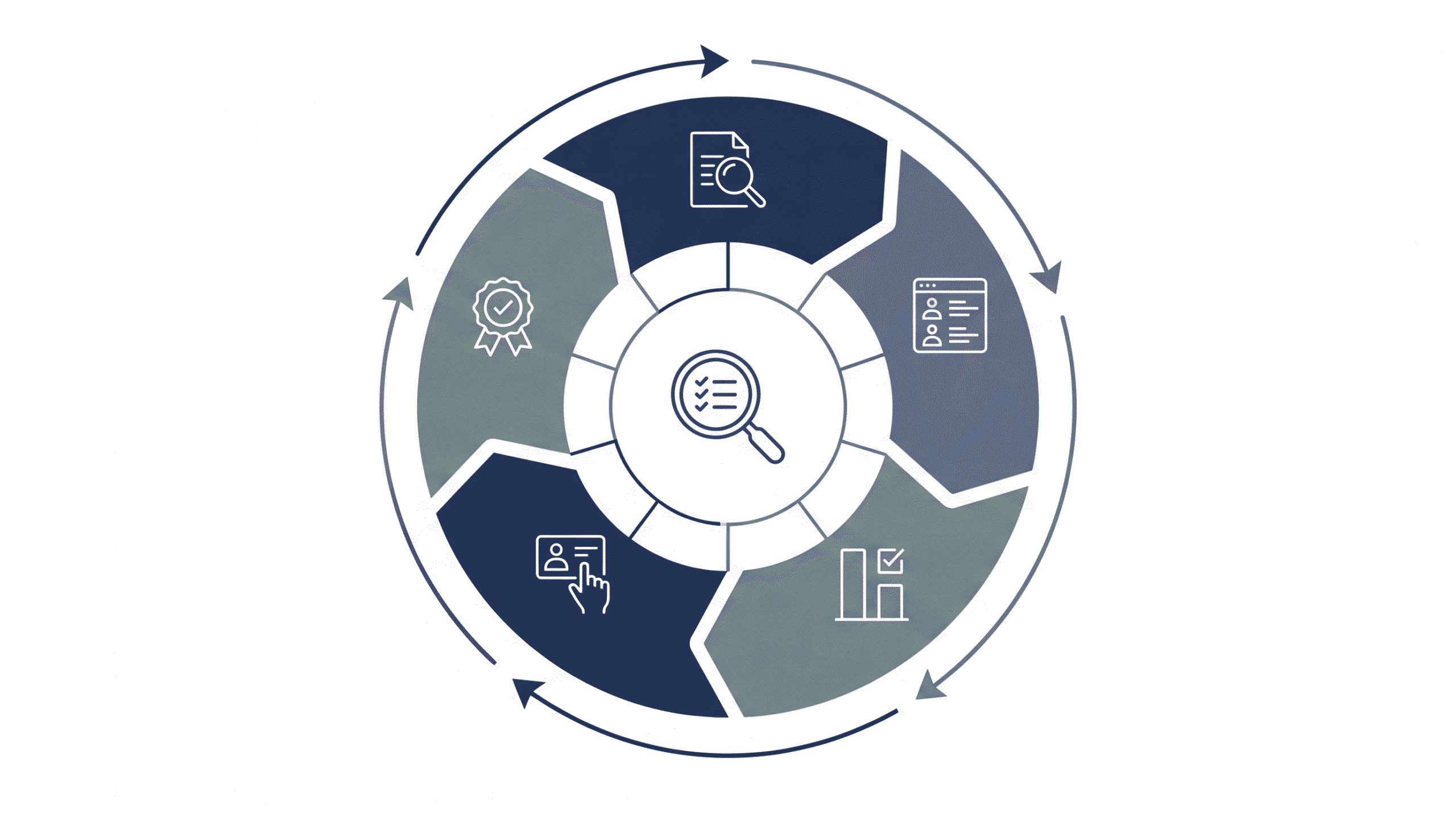
I work with buyers across Europe, the Middle East, and Belt and Road markets who source maternal and infant products. Most are first-time entrepreneurs or online platform buyers. They follow the same five-stage process, but the ones who make costly mistakes share a pattern: they focus on what looks good instead of what matters operationally. Let me walk you through each stage and show you where buyers go wrong.
Stage 1: Need Recognition—What Problem Are You Actually Solving?
Need recognition sounds simple. You identify a gap in your market. You decide to fill it. But I've seen buyers recognize the wrong need. They see demand for baby bottles and assume any baby bottle will work. They don't ask: What safety standards does my market require? What price range can my customers afford? What shipping timeline fits my sales calendar?
Need recognition is when a buyer identifies a gap between their current state and desired state.2 For B2B buyers in maternal and infant products, this means recognizing not just product demand but also regulatory requirements, budget constraints, and delivery deadlines. Buyers who skip this clarity end up ordering products that cannot legally enter their market or cannot arrive in time for peak sales periods.

I once worked with a buyer targeting supermarkets in Germany. He recognized demand for organic baby food containers. He found a supplier with attractive pricing. But he didn't recognize another need: German retailers require specific food-grade certifications and material traceability documentation3. When his order arrived, the supermarket chain rejected it. He had recognized product demand but not regulatory need. The entire order sat in a warehouse for months.
Common Mistakes at the Need Recognition Stage
The biggest mistake buyers make here is confusing product demand with market fit. They see competitors selling a product and assume they can sell it too. But they don't verify:
- Does my target market have specific safety or certification requirements?
- What is my realistic budget including inspection, shipping, and compliance costs?
- When do I actually need the products delivered to match my sales cycle?
First-time buyers and online platform buyers often skip these questions because they feel urgent. They see an opportunity and want to move fast. I understand that pressure. But buyers who take two days to clarify their full need save months of costly mistakes.
Another mistake is assuming the supplier will tell you what you need. Suppliers are good at answering questions. But they cannot read your mind. If you don't ask about certification requirements, they won't volunteer that information. If you don't mention your delivery deadline, they won't warn you that production takes eight weeks.
How Suppliers Help at This Stage
The suppliers I trust most are the ones who ask buyers uncomfortable questions. They say: "You want to sell this in France? Let me check what certifications you need." Or: "You need delivery by November? Let me confirm our production schedule first." These suppliers are not trying to slow you down. They are preventing you from ordering something you cannot use.
Good suppliers also help buyers understand hidden needs. They explain: "This product requires quality inspection before shipping. That adds one week and $300 to your timeline and budget." Or: "This material is cheaper, but it doesn't meet EU toy safety standards. You'll need to upgrade to this material instead." That's not upselling. That's preventing a customs seizure.
Stage 2: Information Search—What Photos Cannot Show You
Information search is where buyers gather data about potential products. Most buyers start on supplier websites or B2B platforms. They look at product photos, read descriptions, and compare prices. This is where the first major disconnect happens. Buyers think good photos equal good products. They don't.
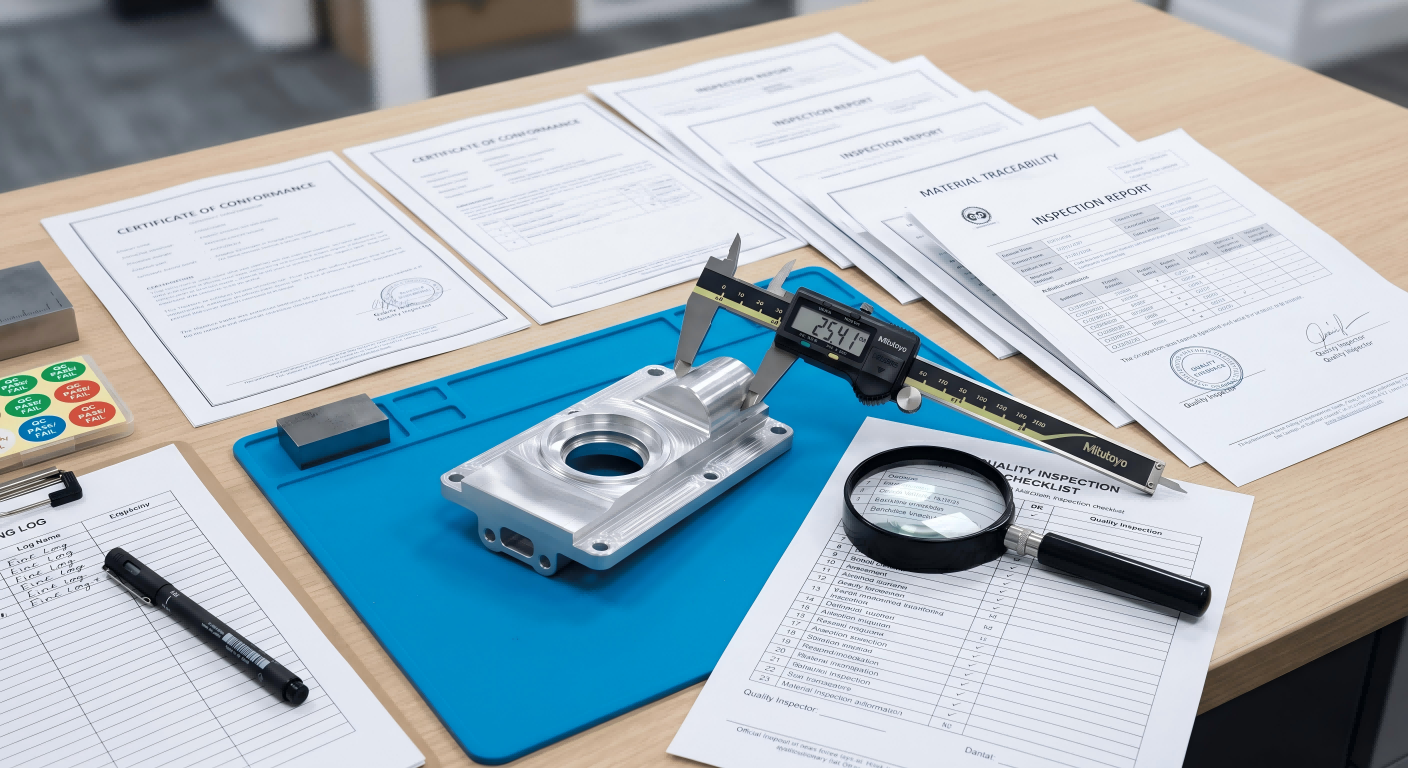
Information search involves gathering data from internal sources, personal sources, commercial sources, and public sources.4 For B2B buyers, the critical error is over-relying on commercial sources like supplier websites and platform listings without verifying information through personal sources like sample testing or public sources like certification databases. Photos show design. They do not show material safety, real texture, packaging durability, or compliance documentation.5
I've seen this pattern dozens of times. A buyer finds a baby stroller on Alibaba. The photos are beautiful. The description says "European standard." The price is competitive. The buyer feels confident and moves to the next stage. But the photos don't show that the fabric dye hasn't been tested for heavy metals. The description doesn't specify which European standard. The price doesn't include the cost of getting that standard verified.
Three months later, the buyer contacts me because their cargo was detained at customs. The stroller failed safety testing. The supplier insists the product is fine. The buyer is stuck with unsellable inventory. This entire crisis started at the information search stage. The buyer gathered the wrong information.
What Information Actually Matters
When I help buyers evaluate suppliers, I push them to demand information beyond what's visible:
| What Photos Show | What Photos Don't Show | What You Should Request |
|---|---|---|
| Product design and color | Material composition and safety | Material safety data sheets (MSDS) |
| Size and dimensions | Real texture and durability | Physical samples for testing |
| Packaging appearance | Packaging structural integrity | Packaging stress test reports |
| Production facility exterior | Production capacity and quality control | Factory audit reports or inspection certificates |
Buyers tell me: "But the supplier said they have all the certifications." That's not enough. Suppliers can say anything. You need to see the actual documents. You need to verify the certificate numbers in public databases. You need to confirm that the certification covers the specific product you're ordering, not just the factory's other products.
The Sample Gap
The most common information gap is skipping samples. Buyers feel pressure to decide quickly. They see competitors launching similar products. They worry that ordering samples will slow them down or cost too much. So they order a full container based on photos.
I've never seen this work well. Never. The buyers who skip samples always discover problems later. The material feels different than expected. The color doesn't match. The packaging is weaker than it looked. The product dimensions are slightly off. These aren't catastrophic problems individually. But together, they make the product unsellable in quality-conscious markets.
Samples cost $50-200 and take one week to arrive. A failed container costs $10,000-50,000 and takes six months to resolve.6 The math is obvious. But buyers keep making this mistake because they confuse speed with efficiency.
How Suppliers Help at This Stage
Suppliers who take information search seriously send samples automatically. They provide certification documents without being asked. They share factory audit reports. They explain exactly what standards their products meet and what standards they don't meet.
I worked with a buyer who needed baby bottles for the Middle East market7. The supplier sent samples with a detailed breakdown: "This material meets EU food-grade standards and FDA approval. It does not yet have Halal certification. If you need Halal, we can apply for it, but that adds four weeks to production." That clarity prevented a major problem. The buyer discovered his customers required Halal certification. He could delay his launch or find another supplier. Either way, he knew before placing the order.
Stage 3: Evaluation of Alternatives—The Hidden Costs Buyers Ignore
Evaluation of alternatives is where buyers compare different suppliers and products. This is where I see the most dangerous shortcuts. Buyers create spreadsheets. They list suppliers, products, unit prices, and minimum order quantities. Then they pick the cheapest option. This is rational on the surface. It's disastrous in practice.
Evaluation of alternatives means comparing suppliers across multiple criteria: product quality, price, delivery time, certification compliance, production capacity, and after-sales support.8 The critical mistake B2B buyers make is evaluating on unit price alone while ignoring the total cost of ownership—quality inspection fees, certification expenses, shipping delays, failed orders, and time spent resolving problems.

I once reviewed a buyer's evaluation spreadsheet. He was comparing three suppliers for baby diapers. Supplier A: $0.15 per unit. Supplier B: $0.18 per unit. Supplier C: $0.22 per unit. He was ready to choose Supplier A. I asked him: "Did you check their production capacity?" He hadn't. Supplier A could only produce half his order quantity on time. The other half would ship two months late, missing his peak season. The $0.03 per unit savings would cost him $15,000 in lost sales.
What to Actually Evaluate
Here's what I push buyers to compare:
- Unit price: Obviously important, but only one factor.
- Certification compliance: Does the supplier have the exact certifications your market requires? Can they provide proof?
- Production capacity: Can the supplier actually produce your full order on schedule? What happens if they're already backlogged?
- Sample approval: Did you test their samples? Did the samples pass your quality standards?
- Delivery timeline: When will production start? How long does production take? What's the realistic shipping time to your market?
- Payment terms: What's the deposit percentage? When is final payment due? What happens if there's a quality problem?
- After-sales support: What happens if something goes wrong? Does the supplier have experience resolving issues in your market?
First-time buyers and online platform buyers often evaluate only the first two criteria. They assume the other factors will work out. They won't.
The Lead Time Blind Spot
The mistake I see most often is ignoring lead time. Buyers ask: "How much per unit?" They don't ask: "When can you actually deliver?" Then they're shocked when their peak season order arrives after peak season ends.
I worked with a buyer preparing for Christmas sales in European supermarkets. He placed his order in October. The supplier said production takes four weeks. The buyer assumed delivery by late November. But he didn't ask when production would start. The supplier had three other orders ahead of his. Production didn't start until mid-November. Shipping took another three weeks. The products arrived in mid-December. By then, supermarkets had finalized their holiday inventory. He missed the entire season.
This wasn't the supplier's fault. The buyer never asked about production queue or shipping time. He assumed "four weeks production" meant "four weeks until delivery." That assumption cost him $30,000.
The Certification Cost Surprise
Another evaluation gap is certification costs. Buyers compare unit prices and think they're comparing total costs. They're not. Getting products certified for EU, UK, or Middle East markets costs money. If Supplier A charges $0.15 per unit but has no certifications, and Supplier B charges $0.18 per unit with full certifications, Supplier B is actually cheaper. Getting certifications later costs $2,000-10,000 and delays delivery by 6-12 weeks.9
Buyers targeting regulated markets need to ask: "Do you already have the certifications I need? Can I see the actual certificates? Are these certificates valid for the products I'm ordering?" If the answer is no or unclear, the "cheap" supplier just became expensive.
How Suppliers Help at This Stage
The best suppliers help buyers understand total cost, not just unit price. They say: "Our price is $0.18 per unit, which includes quality inspection before shipping. Competitor X charges $0.15 but doesn't include inspection. If you pay for inspection separately, it costs $0.05 per unit. So we're actually cheaper."
Or they say: "We can meet your November deadline, but only if you pay the deposit by next week. If you delay, we can't guarantee the timeline." That clarity helps buyers make real decisions instead of guessing.
Stage 4: Purchase Decision—When the Wrong Priorities Cause Permanent Problems
Purchase decision is when buyers finally place the order. Most buyers feel relieved at this stage. They've done the research. They've chosen a supplier. Now they just need to send payment and wait. But I've seen more orders fail at this stage than any other. Why? Because buyers finalize the wrong details and skip the critical ones.
The purchase decision stage involves finalizing the supplier, negotiating terms, and completing the transaction.10 For B2B buyers, the critical error is focusing on negotiating unit price or deposit percentage while failing to document quality standards, delivery penalties, and dispute resolution procedures. These undocumented details become catastrophic when problems arise.

I once mediated a dispute between a buyer and supplier. The buyer ordered baby clothing for a UK retailer. The sample was soft, high-quality fabric. The contract specified unit price, quantity, and delivery date. It didn't specify fabric standards or quality acceptance criteria. When the bulk order arrived, the fabric was rougher and thinner than the sample. The buyer said: "This isn't what I approved." The supplier said: "This meets industry standards. You never specified exact fabric requirements." Both were technically right. The contract was useless. The buyer lost his retail contract and $25,000.
This happens because buyers rush the purchase decision. They've spent weeks researching and evaluating. They're tired. They just want to finish. So they sign contracts that look professional but contain no operational protections.
What Your Contract Must Include
Here's what I insist buyers document before sending any payment:
- Exact product specifications: Not just "baby bottle" but "240ml BPA-free PP baby bottle with silicone nipple, meeting EU Standard EN 14350."
- Sample reference: "Product quality must match approved sample dated [date], reference number [number]."
- Quality acceptance criteria: "Products must pass inspection by [third-party inspection company] before shipping. Inspection standards: [specific standards]."
- Delivery timeline with penalties: "Production completion by [date], shipping by [date]. Late delivery penalty: [percentage] of order value per week."
- Certification requirements: "Supplier must provide [specific certifications] before shipping. Failure to provide certifications results in order cancellation and full refund."
- Payment terms tied to milestones: "30% deposit upon contract signing, 40% upon production completion and inspection approval, 30% upon shipping."
- Dispute resolution: "Disputes resolved through [specific arbitration method] in [location]."
First-time buyers think this level of detail is excessive. They worry it will offend the supplier. I tell them: Good suppliers appreciate this clarity. Bad suppliers avoid it. If a supplier refuses to document basic standards, you're about to have a disaster.
The Deposit Decision
Buyers often debate: Should I pay 30% deposit or negotiate it down to 20%? This is the wrong question. The right question is: What happens if something goes wrong? If the supplier disappears or ships defective products, can I recover my deposit? Do I have documentation that proves what I ordered?
I've seen buyers lose $10,000 deposits because they paid before finalizing specifications. The supplier claimed: "You only said baby bottles. You didn't specify the exact type." The buyer had no documentation. The money was gone.
The safe approach is: Pay the deposit only after signing a detailed contract that both parties have reviewed and agreed to. If a supplier demands immediate payment before documentation, walk away. That's not normal business. That's a red flag.
How Suppliers Help at This Stage
Professional suppliers provide detailed contracts automatically. They say: "Here's our standard contract. Please review the specifications section and confirm these match your requirements." They welcome quality inspection clauses. They suggest: "Let's add a pre-production sample approval step so you can verify everything before we start full production."
These suppliers understand that clear contracts protect both parties. If the buyer is satisfied, they'll reorder. If disputes arise, the contract resolves them quickly. Suppliers who rush you through this stage or resist documentation are signaling future problems.
Stage 5: Post-Purchase Behavior—The Mistakes That Determine Your Next Order
Post-purchase behavior covers everything after the order is placed: production monitoring, quality inspection, shipping tracking, receiving goods, and evaluating satisfaction. Most buyers think this stage is passive. They believe their job is done. They wait for the container to arrive. This is when the most preventable disasters happen.
Post-purchase behavior involves monitoring order progress, verifying quality before shipping, and evaluating supplier performance.11 The critical error B2B buyers make is treating this stage as a waiting period instead of an active verification process. Buyers who skip pre-shipment inspection, ignore production updates, or fail to plan for receiving and testing products discover problems only after it's too late to fix them.

I worked with a buyer who ordered baby monitors for Middle East retailers. He paid the deposit. He waited. Eight weeks later, the supplier said: "Your order is ready to ship." The buyer approved shipping. The container arrived. During customs inspection, half the monitors failed electromagnetic compatibility testing12
"Buyer decision process - Wikipedia", https://en.wikipedia.org/wiki/Buyer_decision_process. ↩
"Consumer Behavior – Marketing Principles From The River City", https://pressbooks.library.vcu.edu/marketingprinciples/chapter/chapter-2-consumer-behavior/. ↩
"Food Contact Materials - Food Safety - European Commission", https://food.ec.europa.eu/food-safety/chemical-safety/food-contact-materials_en. ↩
"[PDF] An Examination of Consumer Online Search Behavior", https://faculty.ist.psu.edu/jjansen/academic/asist_bulletin_paid_search/02_chiang.pdf. ↩
"Trends of Using Sensory Evaluation in New Product Development in ...", https://pmc.ncbi.nlm.nih.gov/articles/PMC7922510/. ↩
"The impact of container shipping costs on import and consumer prices", https://www.oecd.org/en/publications/the-impact-of-container-shipping-costs-on-import-and-consumer-prices_957f0c0c-en.html. ↩
"Ministry of Health Issues Draft Ban on the Use of BPA in Infant Food ...", http://www.cecc.gov/publications/commission-analysis/ministry-of-health-issues-draft-ban-on-the-use-of-bpa-in-infant. ↩
"A Multi-Attribute Decision Method under Uncertainty Environment ...", https://pmc.ncbi.nlm.nih.gov/articles/PMC7796048/. ↩
"Regulatory Status of Components of a Food Contact Material - FDA", https://www.fda.gov/food/packaging-food-contact-substances-fcs/determining-regulatory-status-components-food-contact-material. ↩
"Buyer decision process - Wikipedia", https://en.wikipedia.org/wiki/Buyer_decision_process. ↩
"A retentive consumer behavior assessment model of the online ...", https://pmc.ncbi.nlm.nih.gov/articles/PMC8556610/. ↩
"Electromagnetic Compatibility (EMC) Directive", https://single-market-economy.ec.europa.eu/sectors/electrical-and-electronic-engineering-industries-eei/electromagnetic-compatibility-emc-directive_en. ↩