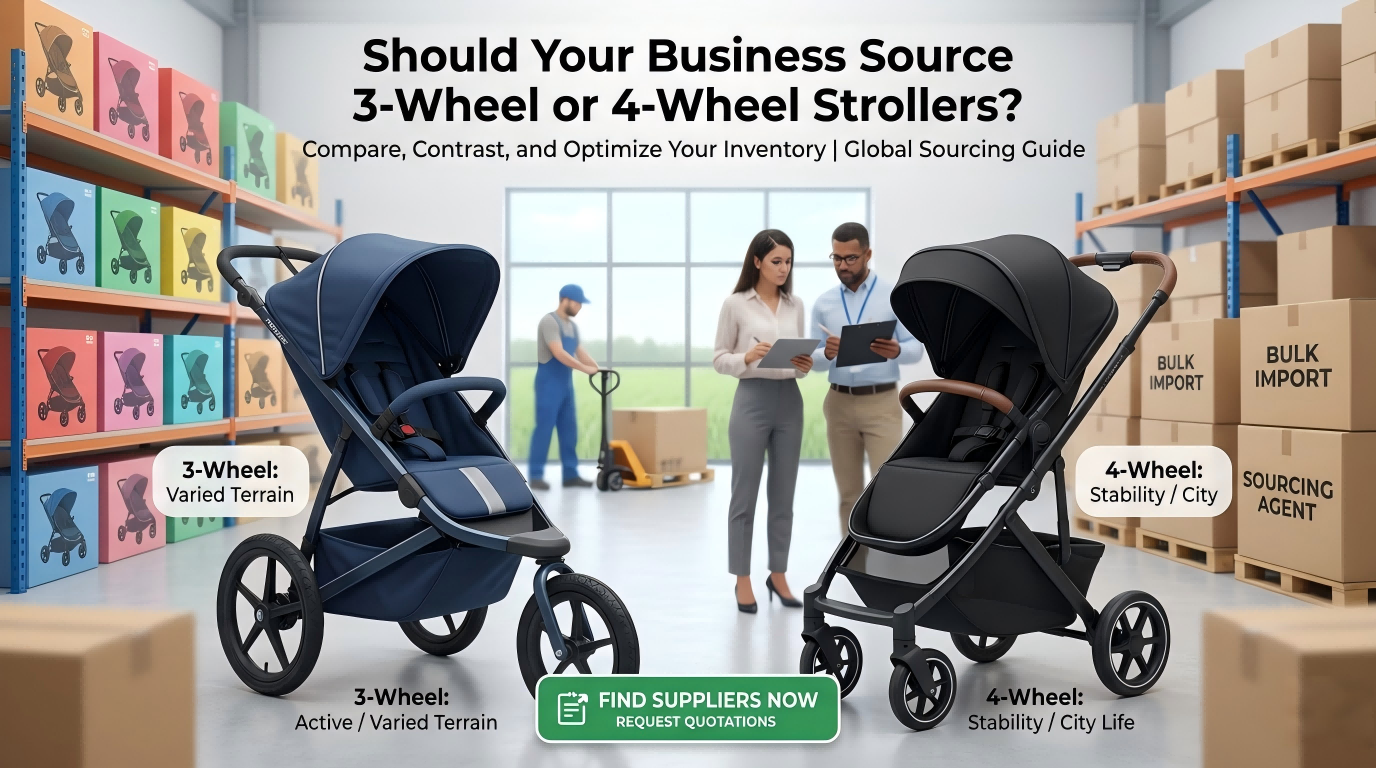
Struggling to decide between 3-wheel and 4-wheel strollers for your inventory? A wrong choice can lead to customer complaints and unsold stock, directly impacting your bottom line.
The best choice depends entirely on your target market. 3-wheel strollers offer superior maneuverability for active customers on varied terrain1. 4-wheel strollers provide stability and storage2, making them ideal for urban families navigating smooth surfaces and tight spaces. Match the stroller to the customer's lifestyle.

I've been sourcing maternal and infant products since 20153, and I've seen countless buyers get stuck on this exact question. They compare technical specs for hours, but they miss the most important point. This isn't just about the number of wheels; it's a strategic decision about market fit. A choice that ignores your customer's daily reality is a recipe for returned products and wasted investment. Let's break down how to make the right decision for your business, based on my direct experience with factory audits and analyzing customer return data across different markets4.
Why Do Buyers Choose the Wrong Stroller Structure?
Are you worried that a simple sourcing mistake could lead to a wave of customer returns? It happens more often than you think, usually because the decision was based on a common myth.
Buyers often make mistakes by treating wheel count as a fashion choice, asking "which is better" without context, or assuming 3-wheelers are inherently unstable. The right approach is to start with a deep analysis of your market's terrain and your target customer's lifestyle.
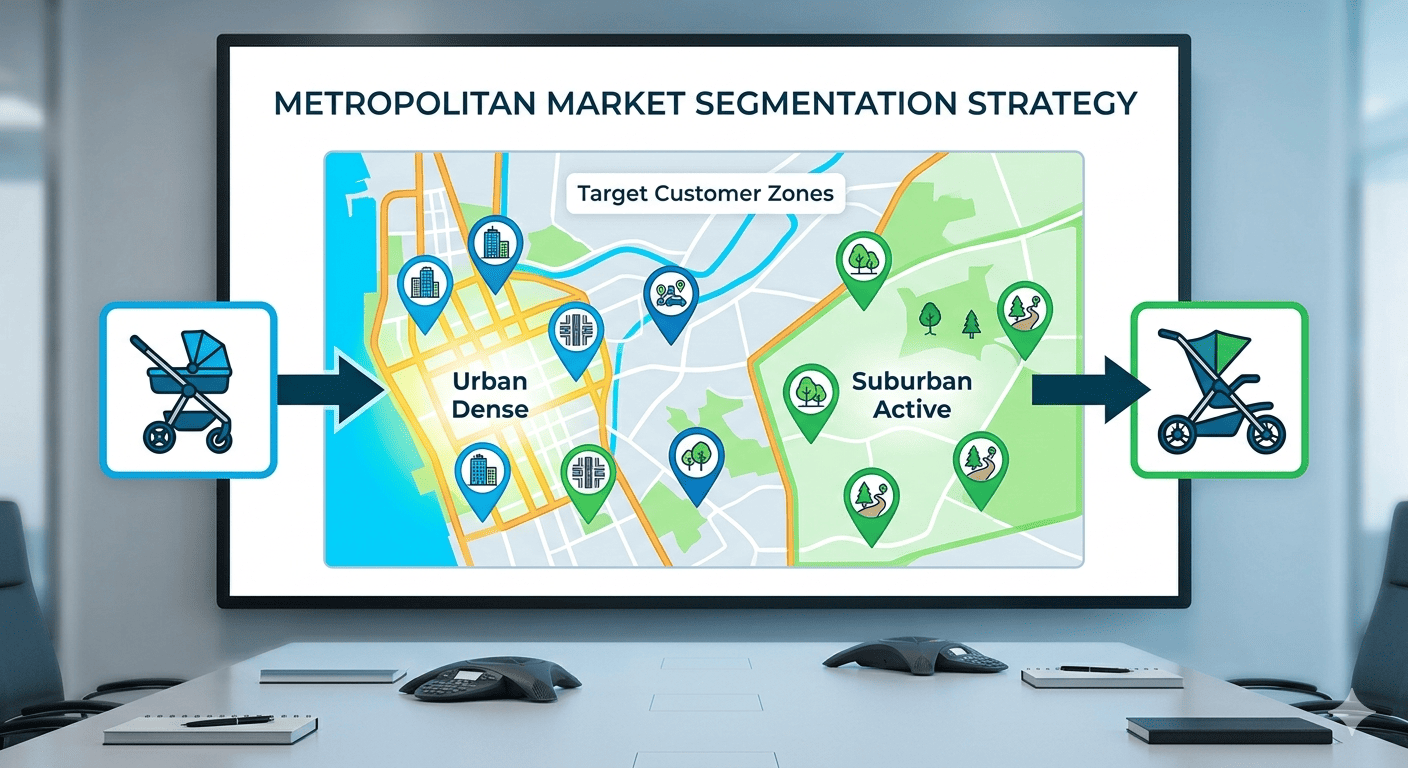
In my work, I see the same costly errors repeated by buyers, from large supermarket chains to new online sellers. These mistakes almost always fall into one of three categories. Understanding them is the first step to avoiding them.
The 'Fashion vs. Function' Fallacy
The biggest trap is choosing a stroller based on looks. A sleek, 3-wheel jogging stroller might look great in a catalog, but it's a poor fit for a customer living in a city center high-rise. They need a stroller that fits in a small elevator, navigates crowded shop aisles, and folds easily for public transport. I once had a client who insisted on stocking a very sporty 3-wheel model for their urban market in Europe. The returns came flooding in with complaints about its large footprint and difficulty in stores. The stroller was high quality, but it was functionally wrong for the end-user's environment. Function must always come before fashion.
The 'Which is Better?' Trap
Buyers constantly ask me, "Which is better, 3-wheel or 4-wheel?" My answer is always the same: "Better for what? Better for whom?" The question itself is flawed because it lacks context. It's like asking if a sports car is better than a truck. It depends entirely on whether you're trying to win a race or haul furniture. Instead of asking which is better, you should be asking which is the best fit for the specific life scenarios of your customers.
| Scenario | Key Need | Better Choice | Why It Matters for Your Business |
|---|---|---|---|
| Urban City Life | Stability, Storage, Small Footprint | 4-Wheel | Sells well in dense cities; lower returns from complaints about size. |
| Suburban/Outdoor Life | Maneuverability, All-Terrain | 3-Wheel | Appeals to active families; a key differentiator in these markets. |
| Price-Sensitive Market | Low Cost, Basic Functionality | 4-Wheel | Simpler 4-wheel frames are often cheaper to produce and sell5. |
The Stability Myth
Many buyers, especially those new to the industry, carry a bias that 3-wheel strollers are unstable and prone to tipping. While a very cheap, poorly designed 3-wheeler can be a risk, this is not an inherent flaw of the design. During factory audits, I've seen high-quality 3-wheel strollers with a low center of gravity and a wide wheelbase that are incredibly stable6. Stability comes from good engineering and quality materials, not the number of wheels. A flimsy, poorly constructed 4-wheel stroller can be far more dangerous. The real issue is build quality, not wheel configuration.
How Do You Match Stroller Structure to Your Target Market?
Are you unsure which stroller model will actually sell in your specific region? Guessing can leave you with a warehouse full of products your customers don't want or need.
To make the right choice, you must analyze your customer's environment. For urban markets with flat pavements and a reliance on public transport, 4-wheel models with generous storage are a much safer bet. For suburban or rural markets with parks, trails, and uneven sidewalks, the maneuverability of a 3-wheeler becomes a major selling point.
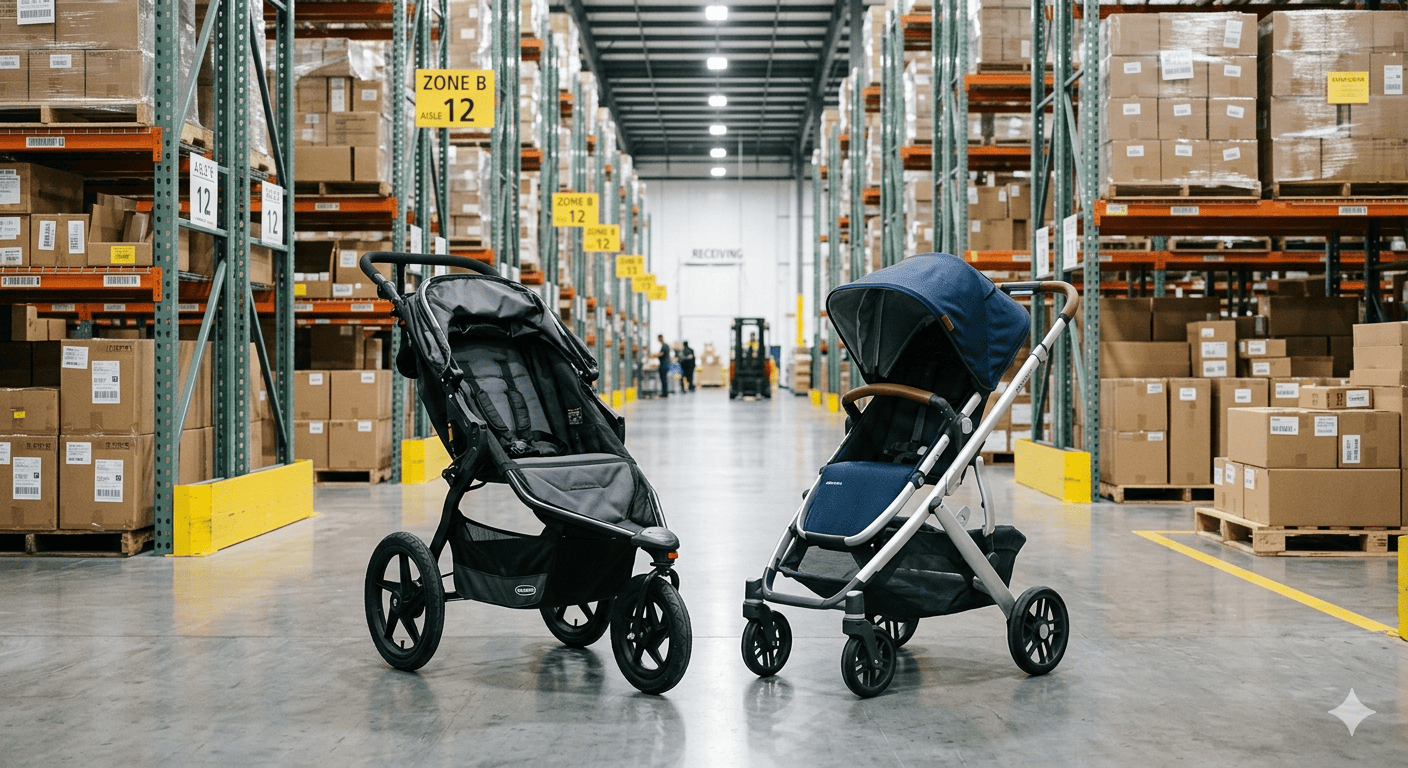
The core of a successful sourcing strategy is shifting from "product features" to "customer scenarios." Before you even look at a supplier's catalog, you should have a clear picture of your end customer. Where do they live? What does their daily routine look like? What are their biggest frustrations with getting around? Answering these questions will point you directly to the right product. Let's create a decision framework based on two primary customer profiles I encounter frequently.
The Urban Customer Profile
This customer lives in a city. They navigate crowded sidewalks, use elevators and public transport7, and often run errands on foot. Storage space is a huge priority for them; they need a large basket for groceries, a diaper bag, and other essentials8. They also need a stroller that is stable in a straight line and can be steered with one hand while they hold a coffee or a toddler's hand. For this profile, a compact, stable 4-wheel stroller is almost always the superior choice. Its four points of contact provide excellent stability on smooth surfaces, and the frame design often allows for a larger, more accessible storage basket. Sourcing a heavy, wide 3-wheel jogger for this market is asking for trouble.
The Outdoor & Suburban Customer Profile
This customer has a more active, outdoor-oriented lifestyle. They live in suburban or rural areas where they drive to their destinations, such as parks, nature trails, or neighborhood festivals. They need a stroller that can handle a variety of terrains—grass, gravel, uneven pavement, and curbs. For them, maneuverability is the top priority. The single front wheel of a 3-wheel stroller allows it to pivot effortlessly9, making it much easier to navigate obstacles. The often larger, air-filled tires on these models also provide better suspension10, creating a smoother ride for the baby on bumpy ground. For this customer, the agility of a 3-wheeler is a feature worth paying for.
What Do Factory Audits Reveal About Stroller Quality?
You've finally decided on a stroller style for your market. But how can you be sure the quality will meet your customers' expectations and not lead to costly returns?
From my experience inspecting factories, the biggest risk is not design, but inconsistent quality. For 3-wheelers, I focus on the front wheel's locking mechanism and the suspension system. For 4-wheelers, I check frame integrity and wheel alignment to prevent wobbling. Sourcing the cheapest option is often the most expensive mistake.
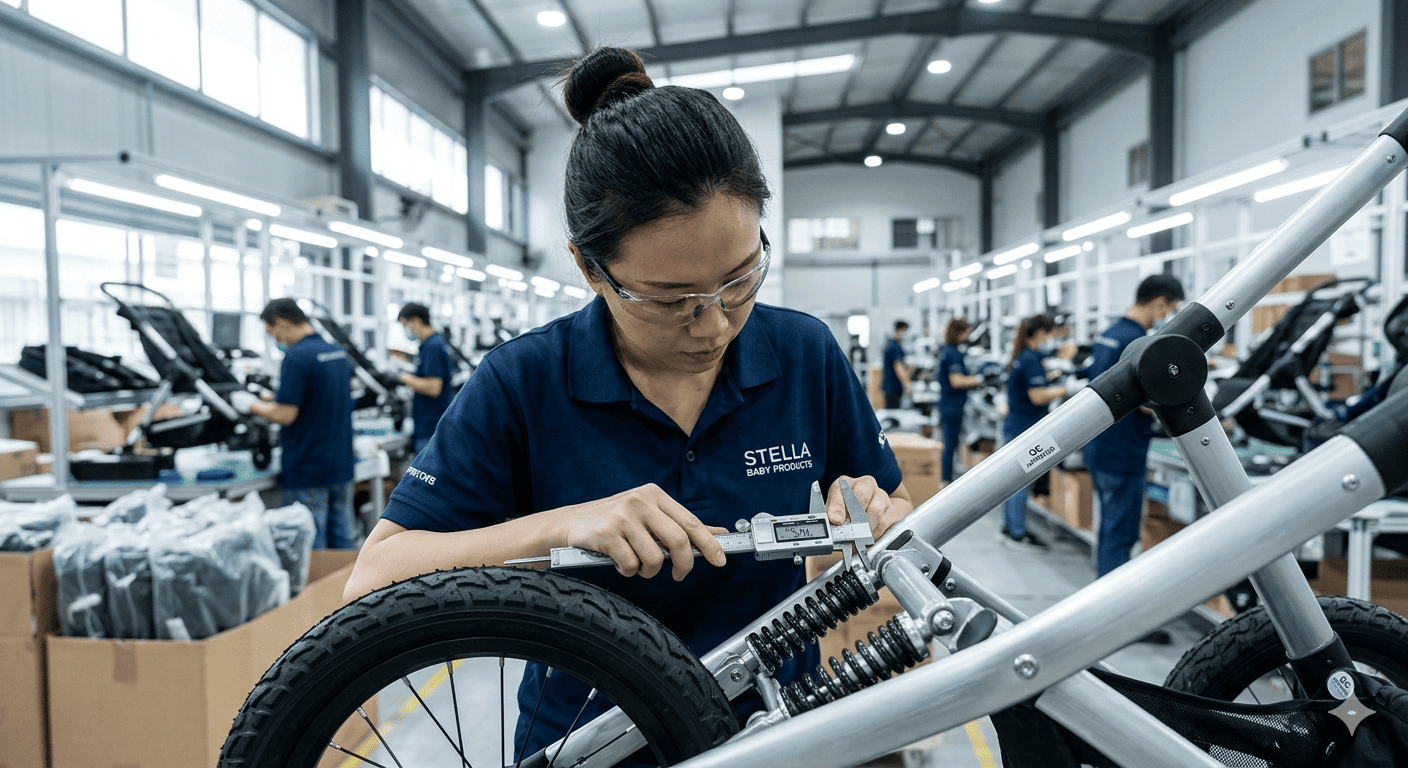
What you see in a marketing photo and what arrives in your container can be two very different things. This is where hands-on sourcing experience and rigorous quality control become your best defense against risk. When I'm on the factory floor, the wheel count is the last thing on my mind. I'm focused on the specific points of failure I know can lead to customer complaints. The "right" design is useless if it's poorly executed.
3-Wheel Stroller Inspection Points
With 3-wheel strollers, the entire design hinges on the quality of the front wheel assembly. The first thing I test is the swivel lock. This mechanism allows the wheel to either pivot freely for maneuverability or lock straight for stability at higher speeds (like jogging). A cheap, plastic lock can break easily or fail to engage properly, which is a major safety concern. Next, I check the suspension. Many low-cost factories will include a spring that is purely for looks and offers no real shock absorption. A quality 3-wheeler will have a functional suspension system that you can feel compress, ensuring a smoother ride for the child and a better experience for the parent.
4-Wheel Stroller Inspection Points
For 4-wheel strollers, the biggest quality issue I see is frame integrity. In the race to make them lightweight and cheap, some factories use thin metal tubing and weak plastic joints. When I audit these, I put weight in the stroller and push it around. A poor-quality frame will flex and twist, causing the wheels to go out of alignment11 and making the stroller difficult to steer straight. It creates that annoying "wobbly wheel" problem that drives parents crazy. I also inspect the wheel bearings. Quality bearings ensure a smooth, silent roll, while cheap ones can grind and wear out quickly12, leading to customer complaints about the stroller feeling "stiff" or "rickety" over time. This is a detail that separates a reliable product from one destined for the returns pile.
Conclusion
Choosing between 3 and 4-wheel strollers isn't about features; it's about matching the product to your market's terrain and lifestyle to ensure sales and reduce customer complaints.
"The modularization design and autonomous motion control of a new ...", https://pmc.ncbi.nlm.nih.gov/articles/PMC9562475/. Single front wheel configurations reduce the turning radius and allow tighter pivots compared to dual front wheel designs, a principle documented in wheeled mobility device engineering studies. Evidence role: mechanism; source type: research. Supports: the mechanical advantage of single front wheel designs in turning radius and pivot capability. Scope note: General engineering principles may not specifically address consumer stroller performance in varied terrain conditions ↩
"Effects of a low-center-of-gravity backpack on the trunk stability of ...", https://pmc.ncbi.nlm.nih.gov/articles/PMC4668178/. Four-point contact systems distribute weight across a wider base, increasing static stability according to basic mechanical engineering principles taught in vehicle design courses. Evidence role: mechanism; source type: education. Supports: the stability principles of four-point contact configurations. Scope note: This addresses static stability principles but does not account for dynamic stability during actual use or specific stroller design variations ↩
"[PDF] ESSENTIAL INTERVENTIONS, COMMODITIES AND GUIDELINES", https://cdn.who.int/media/docs/default-source/documents/publications/essential-interventions-commodities-and-guidelinesc4d67e1d-b277-4c2b-b673-199647faee40.pdf. The maternal and infant products industry employs specialized sourcing professionals who conduct factory audits and quality assessments, as documented by industry trade associations. Evidence role: general_support; source type: institution. Supports: the existence of professional sourcing roles in the maternal and infant products industry. Scope note: This supports the existence of the professional role but does not verify the specific individual's credentials or experience ↩
"[PDF] Consumer Returns in Electronic Commerce", https://voljournals.utk.edu/cgi/viewcontent.cgi?article=13083&context=utk_graddiss. Consumer product return rates vary significantly by geographic market and product category, with durable goods showing regional preference patterns according to retail industry research. Evidence role: statistic; source type: research. Supports: geographic and demographic variation in consumer product return rates. Scope note: General retail research may not specifically address stroller return patterns or provide market-specific data for this product category ↩
"Building Economic Flywheels - Brookings Institution", https://www.brookings.edu/articles/building-economic-flywheels/. Manufacturing costs generally correlate with design complexity and component count in consumer durable goods, a relationship documented in production economics research. Evidence role: general_support; source type: research. Supports: the relationship between design complexity and manufacturing costs. Scope note: This addresses general manufacturing principles but does not provide specific cost data for 3-wheel versus 4-wheel stroller production ↩
"Center of Gravity | Glenn Research Center - NASA", https://www1.grc.nasa.gov/beginners-guide-to-aeronautics/center-of-gravity/. A lower center of gravity and wider wheelbase increase resistance to tipping by expanding the stability polygon, fundamental principles in vehicle dynamics covered in mechanical engineering curricula. Evidence role: mechanism; source type: education. Supports: the physics principles relating center of gravity and wheelbase to stability. ↩
"[2501.02299] The parenthood effect in urban mobility - arXiv", https://arxiv.org/abs/2501.02299. Urban families in dense metropolitan areas demonstrate higher rates of public transportation use and face space constraints in residential and commercial settings, patterns documented in urban planning and demographic research. Evidence role: general_support; source type: research. Supports: urban families' reliance on public transportation and space-constrained environments. Scope note: This supports general urban mobility patterns but may not specifically quantify stroller usage in these contexts ↩
"Parents' perception of stroller use in young children: a qualitative study", https://pmc.ncbi.nlm.nih.gov/articles/PMC4546049/. Storage capacity ranks among the top considerations in stroller purchase decisions according to consumer product research, particularly for families who combine errands with childcare transportation. Evidence role: general_support; source type: research. Supports: storage capacity as a significant factor in stroller purchase decisions. Scope note: This addresses general consumer preferences but may not specifically isolate urban versus suburban differences in storage priorities ↩
"Ackermann steering geometry - Wikipedia", https://en.wikipedia.org/wiki/Ackermann_steering_geometry. Single-point pivot systems require less force to initiate rotation compared to dual-point systems due to reduced friction and a single center of rotation, principles documented in mechanical engineering textbooks on caster design. Evidence role: mechanism; source type: education. Supports: the mechanical principles of single-point pivot systems. ↩
"[PDF] Mechanics of pneumatic tires - NIST Technical Series Publications", https://nvlpubs.nist.gov/nistpubs/Legacy/MONO/nbsmonograph122.pdf. Pneumatic tires absorb impact energy through air compression, providing superior shock absorption compared to solid tires, a principle fundamental to tire engineering and documented in vehicle dynamics courses. Evidence role: mechanism; source type: education. Supports: the shock absorption mechanism of pneumatic tires. ↩
"The Importance of Precision Frame Alignment in Collision Repairs", https://www.bjbody.com/the-importance-of-precision-frame-alignment-in-collision-repairs/. Frame rigidity is essential for maintaining wheel alignment in wheeled vehicles, as excessive flex under load causes geometric changes that affect steering and rolling resistance, principles documented in vehicle chassis design engineering. Evidence role: mechanism; source type: education. Supports: the effect of frame rigidity on maintaining wheel alignment. ↩
"[PDF] ROLLER BEARING FAILURE MECHANISMS TEST AND WHEEL ...", https://railroads.dot.gov/sites/fra.dot.gov/files/fra_net/15067/Roller_Bearing_Failure.pdf. Bearing quality, determined by precision manufacturing and material grade, directly affects rolling friction and wear rate, principles covered in mechanical engineering courses on tribology and machine elements. Evidence role: mechanism; source type: education. Supports: the relationship between bearing quality, friction, and operational lifespan. ↩