Why Are Safety Seats a “Must-Have” Not an “Option”?
- Motor vehicle crashes are one of the leading causes of death for children aged 1–13.
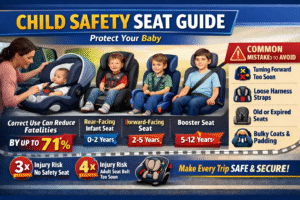
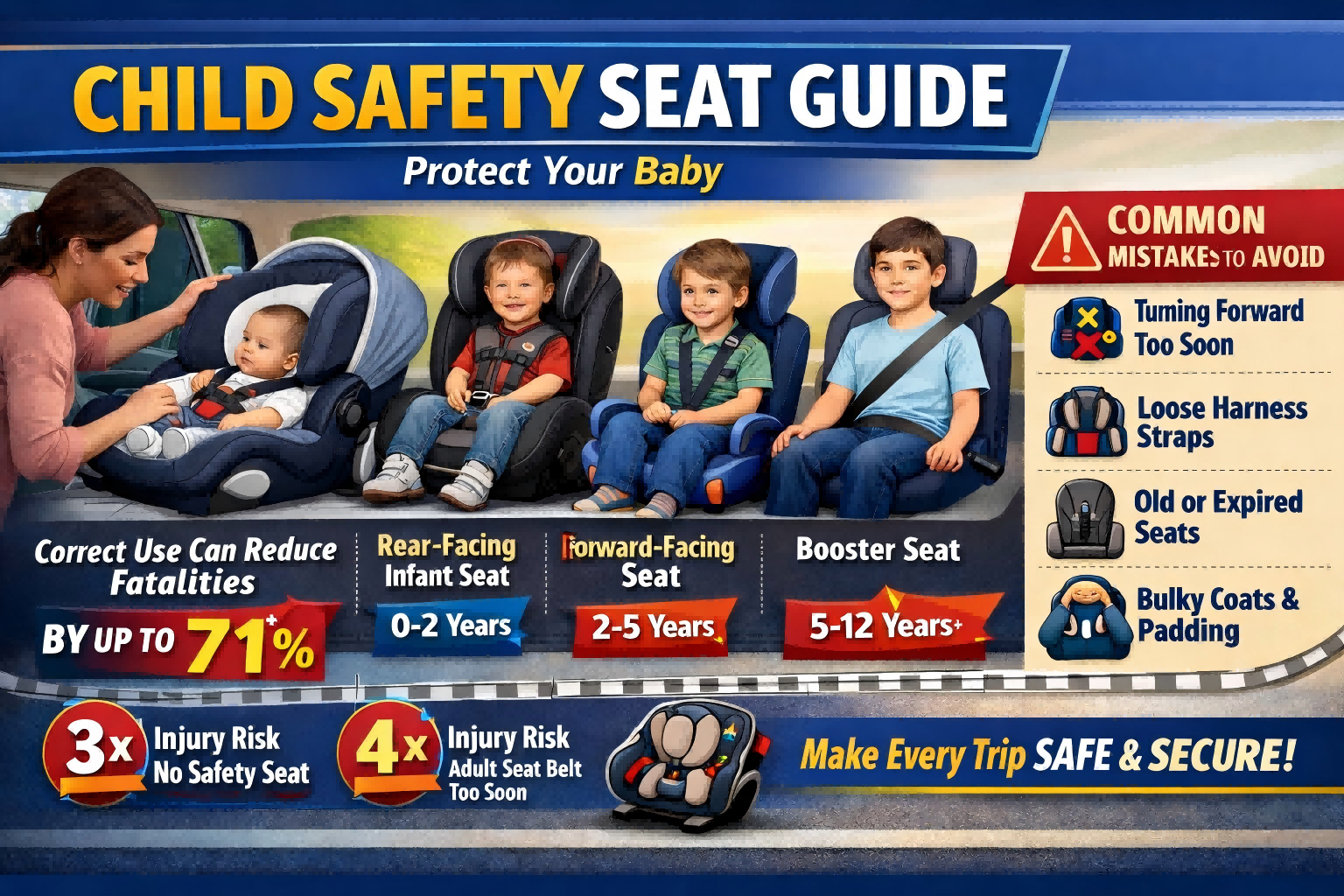
- Children who do not use safety seats have a 3-times higher risk of injury in accidents.
- Children who switch to adult seat belts too early from safety seats face a 4-times higher risk of injury.
Stage-by-Stage Selection: Safety Seats That Grow With Your Child
Stage 1: Rear-Facing Infant Seats (0–2 Years and Older)
Stage 2: Forward-Facing Safety Seats (Typically 2–5 Years)
Stage 3: Booster Seats (Approximately 5–12 Years)
Stage 4: Adult Seat Belt
Six-Step Self-Check for Correct Installation: Eliminate Common Mistakes
- Choose the Right Position: The middle of the back seat is usually the safest (unless prohibited by the vehicle manual). Keep away from side airbags.
- Secure Installation:
- Use either the Lower Anchors and Tethers for Children (LATCH system) or the vehicle seat belt—do not use both methods simultaneously (unless explicitly allowed by the seat manual).
- After installation, shake the seat base firmly—forward, backward, left, and right movement should not exceed 2.5 centimeters.
- Correct Angle (especially for rear-facing installation):
- Most infant seats need to be kept at a 30–45 degree incline to ensure the infant’s head does not tilt forward and compress the airway.
- Use the built-in angle indicator or adjustment device.
- Harness Wearing:
- The five-point harness should be snug and tight, with the chest clip placed at armpit level.
- Remove thick winter coats before buckling the harness to avoid creating false slack.
- Chest Clip Usage: Ensure the chest clip is at chest level, near the armpits, and avoid sliding it to the abdomen or neck area.
- Regular Inspections: Perform a quick check of the tightness once a month, and adjust the harness height promptly as the child grows.
Experts Reveal the Top 5 Most Common Mistakes and Corrections
- Mistake: Converting the seat to forward-facing too early.
Correction: Keep rear-facing for at least 2 years, or until the child reaches the rear-facing weight/height limit of the seat.
- Mistake: Harness is too loose.
Correction: Tighten until no excess fabric can be pinched at the shoulder straps.
- Mistake: Using expired, crash-damaged, or second-hand seats of unknown origin.
Correction: Plastic ages over time, and hidden damage may affect protective performance. Follow the general service life of 6–10 years and check the expiration date of specific models.
- Mistake: Allowing children to ride while wearing thick coats.
Correction: Place the coat over the buckled harness, or use a thin, safety-seat-specific warm cover.
- Mistake: Ignoring the vehicle manual and seat instructions.
Correction: Read both together—the vehicle manual guides the use of installation interfaces, and the seat instructions provide specific operation details.
Call to Action: Make Every Trip Safe and Peaceful
Safety is not a “close enough” matter. Spending 15 minutes on a professional inspection may ensure your child’s lifelong safety. Please share your safety seat usage experiences or questions in the comment section, and we will invite industry experts to provide special answers in subsequent content.