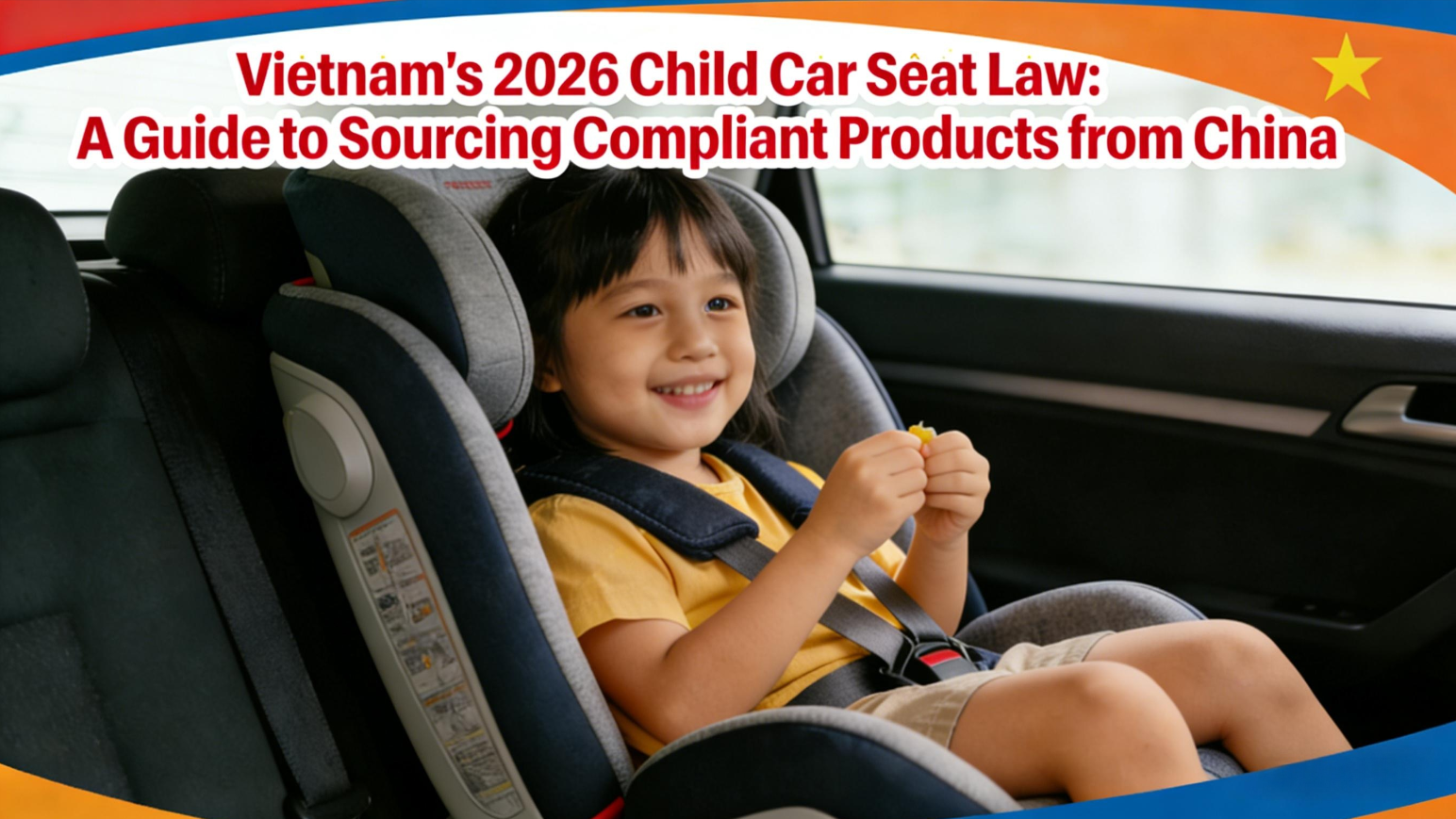
Vietnam’s 2026 Child Car Seat Law: A Guide to Sourcing Compliant Products from China
The countdown to the new regulations has begun, and the window for importers to adapt their supply chains is closing fast.
January 1, 2026—this date will mark a watershed moment for Vietnam’s child car seat market. With the Vietnamese government set to formally implement new child car seat regulations, any business wanting to sell these products in Vietnam must ensure their offerings fully comply with the new standards.
Vietnamese businesses sourcing car seats from China now face an urgent task: how to find reliable suppliers that meet both the requirements of Vietnam’s new law and cost-effectiveness within a limited timeframe?
01 Regulatory Breakdown: The New Market Entry Threshold
Vietnam’s latest child car seat regulations, amendments to the “Law on Road Traffic Order and Safety,” will officially take effect on January 1, 2026. This change impacts not only end consumers but, more directly, all businesses selling car seats in the Vietnamese market.
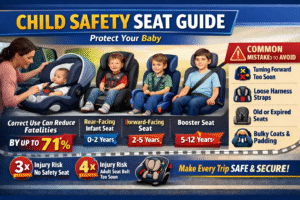
The core requirements of the new law include: providing and using an appropriate Child Restraint System for children under 10 years old or shorter than 1.35 meters in height; strictly prohibiting such children from sitting in the same row as the driver (typically the front seat); and establishing clear fines and penalty points for violating drivers.
It is important to note that the law treats private cars and commercial passenger vehicles differently. Private cars must strictly comply, while commercial passenger vehicles are exempt.
Beyond usage rules, the Vietnam Directorate for Standards, Metrology and Quality (STAMEQ) is drafting a national technical regulation for “Child Occupant Restraint Systems.” This means that in the future, car seats sold in Vietnam must not only comply with usage laws but also meet specific technical and safety standards.
This change will directly impact procurement decisions. Vietnamese importers must ensure that products imported from China comply not only with Chinese standards but, more critically, with Vietnam’s upcoming technical specifications.
02 Supplier Vetting: Finding Qualified Chinese Manufacturers
Facing Vietnam’s new regulations, selecting the right Chinese supplier becomes crucial to procurement success. Vietnamese buyers need a systematic method to evaluate potential partners.
The first step in finding a supplier is identifying key locations. China’s main child car seat manufacturing clusters are in Zhejiang, Jiangsu, Guangdong, and Fujian provinces.
The Ningbo and Taizhou areas in Zhejiang are particularly renowned for car seat manufacturing, boasting complete industrial chains. Attending industry trade fairs is an effective way to discover quality suppliers.
When evaluating suppliers, beyond price and production capacity, close attention must be paid to their compliance capabilities and certification status. A competent supplier should provide complete product test reports, demonstrating their understanding and implementation of international safety standards.
Initial communication with suppliers should focus on their quality control systems, R&D capabilities, and experience supplying to other markets with strict regulations. Manufacturers that already supply to European, Australian, or North American markets are generally more likely to meet Vietnam’s new requirements.
03 Compliance Verification: Ensuring Products Meet Vietnamese Standards
When sourcing car seats from China, ensuring product compliance with Vietnamese regulations is the most critical step. This requires importers to have fundamental compliance knowledge and assessment skills.
The core of product compliance is certification. Vietnam implements a mandatory product certification (CR Certification) for child car seats, managed by STAMEQ. Products must pass tests in designated laboratories and bear the CR mark before entering the Vietnamese market.
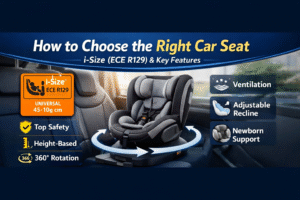
Vietnam’s upcoming national technical regulation is likely to reference or adopt mainstream international standards, such as UN Regulation No. 44 (R44) or the newer UN Regulation No. 129 (i-Size). Importers should prioritize Chinese manufacturers whose products already hold these international certifications.
When verifying compliance, it is essential to request complete test reports and certification documents from the supplier. These documents should clearly state the specific standards met, test results, and validity periods.
Beyond paperwork, the safety design of the product itself requires careful evaluation. Focus on key safety features such as five-point harness systems, side-impact protection, and adjustable headrests and backs. Products compliant with Vietnamese regulations typically adhere to strict design standards in these areas.
04 The Procurement Process: From Negotiation to Logistics
After identifying suitable suppliers and products, the procurement execution phase determines the project’s overall efficiency and cost control. This stage requires systematic management and clear communication.
Contract negotiations with suppliers should explicitly include compliance guarantee clauses. Agreements should stipulate that the supplier guarantees the products meet Vietnamese regulatory requirements and assumes liability for returns, fines, etc., caused by non-compliance. During price negotiations, balance cost and quality to avoid compromising safety for excessive cost-cutting.
Key stages of procurement execution include sample testing, production monitoring, and pre-shipment inspection. First, request samples from the supplier for preliminary evaluation, sending them to a third-party lab if necessary. During production, consider arranging a mid-production inspection to ensure the process meets requirements. A final pre-shipment product inspection is an indispensable step before shipment.
Logistics and customs clearance are the final hurdles in cross-border procurement. Choosing a freight forwarder with relevant experience can help navigate complex cross-border shipping and Vietnamese customs clearance procedures. Ensure all necessary documents are complete, including commercial invoices, packing lists, certificates of origin, and product certification paperwork.
Given the implementation timeline of Vietnam’s new law, establishing a clear project timeline and contingency plans is especially important. Allow sufficient buffer time for each stage, from order confirmation to product launch, to handle potential delays.
05 Market Outlook: The Future of Vietnam’s Car Seat Industry
Vietnam’s child car seat market is at a critical inflection point. The implementation of the 2026 law will fundamentally reshape the market landscape, presenting significant opportunities for importers prepared for this change.
In the short term, some market imbalance between supply and demand may occur. As the enforcement date approaches, demand for compliant products will surge sharply, while supply chains may need time to fully adapt to the new requirements.
In the long term, compliance will become the baseline for market competition, not a differentiating advantage. Product quality, brand value, channel relationships, and after-sales service will become key factors for businesses to stand out.
For Vietnamese importers, building long-term strategic partnerships with quality Chinese suppliers is increasingly important. Such relationships not only ensure a stable supply of products but also provide faster technical support and product adaptation from suppliers when regulations are updated or the market shifts.
If you are in Vietnam and need car seats, you can contact us: morethingsell