In the booming world of cross-border e-commerce, the global baby and maternal products market is exploding—especially in Southeast Asia and the Middle East. With high fertility rates driving demand in SEA and affluent parents splurging on premium items in the Middle East, savvy procurement managers are optimizing strategies to stay ahead.
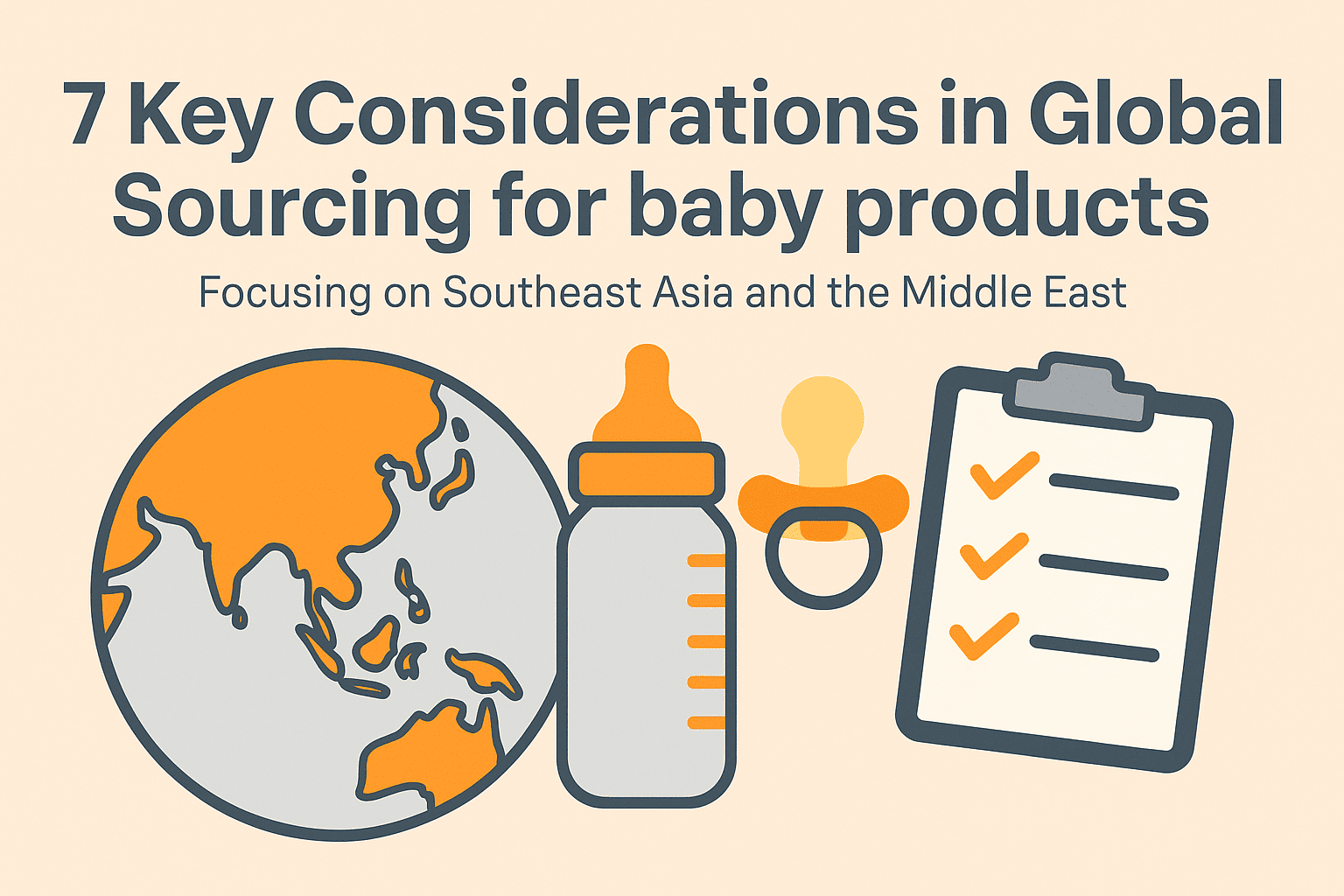
But success isn’t just about sourcing cheap goods. It’s about mastering regulatory compliance, quality control, and cultural nuances to avoid costly pitfalls. In this SEO-optimized guide, we reveal the 7 essential elements of global mother and baby product procurement, tailored for Southeast Asia (Indonesia, Malaysia, Thailand, Philippines) and Middle East (Saudi Arabia, UAE, etc.) markets.
Why Focus on Southeast Asia and Middle East for Baby Product Sourcing?
- Southeast Asia Baby Market Growth: High birth rates + rising middle class = explosive demand for diapers, formula, and toys.
- Middle East Premium Baby Products: High-income families prioritize luxury, safety, and Halal-certified items.
- Cross-Border E-Commerce Boom: Platforms like Shopee, Lazada, and Amazon.ae make global sourcing easier—but riskier.
Ready to dominate? Let’s dive into the 7 procurement pillars every brand must nail.
1. Regulatory Compliance: Avoid Fines, Delays & Product Seizures
Non-compliance = disaster. A single missing certificate can lead to customs rejection, product recalls, or hefty fines.
Southeast Asia Compliance Tips:
- Thailand & Malaysia: Labels must include production license, ingredients, expiry date.
- ASEAN standards: Strict rules on child safety, materials, and flammability.
Middle East Compliance Must-Haves:
- Saudi Arabia (SASO/SABER): Requires PCoC, Saleh certificates, energy labels.
- Halal Certification: Mandatory for consumables and textiles.
- GCC/GSO Standards: Uniform across UAE, Qatar, Kuwait.
Pro Tip: Use local compliance agents. Translate labels into Malay, Thai, Indonesian, Arabic.
2. Quality Control: Build Trust with Lab-Tested Safety
Parents don’t compromise on baby health. One contamination scandal can destroy your brand.
Key Quality Standards:
| Product | Required Certifications |
|---|---|
| Infant Formula | GMP, Organic, FDA/CE |
| Diapers | Oeko-Tex 100, pH-neutral, absorbency tests |
| Toys | ISO 13485, EN71 safety |
Best Practices:
- Demand third-party lab reports (SGS, Intertek).
- Implement batch tracking + pre-shipment inspections.
- Use blockchain traceability for transparency.
3. Supply Chain Transparency: From Farm to Family
Modern parents want proof—not promises.
Build a Transparent Supply Chain:
- Raw material origin tracking
- Factory audits & cleanroom standards
- QR code traceability for consumers
Example: Let customers scan a diaper pack to see cotton source → factory → test results.
4. Delivery Time Management: Beat Stockouts & Seasonality
Timing is everything in baby products—demand spikes don’t wait.
Logistics Hacks:
- Use bonded warehouses in Singapore, Dubai, Jakarta → 72-hour delivery.
- Avoid SEA rainy season delays (Indonesia: +15% transit time).
- Plan around Ramadan & Eid: Middle East ports slow by 30–40%.
Multi-Channel Strategy:
- Sea freight (cost-effective)
- Air freight (urgent restocks)
- Local platforms: Shopee SLS, Lazada Express
5. Cultural Differences: Sell What Parents Want, Not What You Have
One size does not fit all.
Southeast Asia Insights:
- Indonesia & Malaysia: Halal-first. Bright colors, modest designs.
- Philippines: Catholic holidays → Christmas toy surges.
- Thailand/Vietnam: Natural, herbal-based skincare.
Middle East Insights:
- Male decision-makers: Focus on durability, tech (smart monitors).
- Luxury appeal: Gold-trimmed strollers? Yes, please.
- Ramadan timing: Slow negotiations—build relationships early.
Localization Wins: Use TikTok moms in Indonesia, Instagram influencers in Dubai.
6. Price Negotiation Strategies: Lower Costs Without Cutting Corners
Smart negotiation = higher margins.
Region-Specific Tactics:
| Market | Buyer Behavior | Negotiation Tip |
|---|---|---|
| Philippines | Price-sensitive | Offer tiered bulk discounts |
| Indonesia | Relationship-driven | Start with small trial orders |
| Middle East | Multi-quote, trust-based | Use case studies + cost transparency |
Win-Win Framework:
- Anchor high with value proof
- Offer payment terms (LC, 30-day credit)
- Bundle logistics + certification support
7. Sustainability & Green Certifications: The Future of Baby Brands
Eco-conscious millennial parents are voting with their wallets.
Top Certifications to Prioritize:
- GOTS → 100% organic cotton clothing
- OEKO-TEX → Toxin-free textiles
- ISO 14001 → Eco-friendly manufacturing
Packaging Wins:
- Biodegradable diaper bags
- Recycled cardboard boxes
- Minimal plastic
Brand Boost: Promote “Carbon-neutral baby line” on Amazon & Shopee.
Final Thoughts: Master These 7 Elements to Win Global Baby Markets
The Southeast Asia and Middle East baby product markets are goldmines—but only for brands that:
- Comply 100% with local laws
- Deliver lab-certified safety
- Respect cultural & religious values
- Move fast with smart logistics
Whether you’re sourcing organic formula from Australia, Halal diapers from Turkey, or smart monitors from China, these 7 pillars will future-proof your procurement strategy.
Ready to scale? Start auditing your suppliers today.