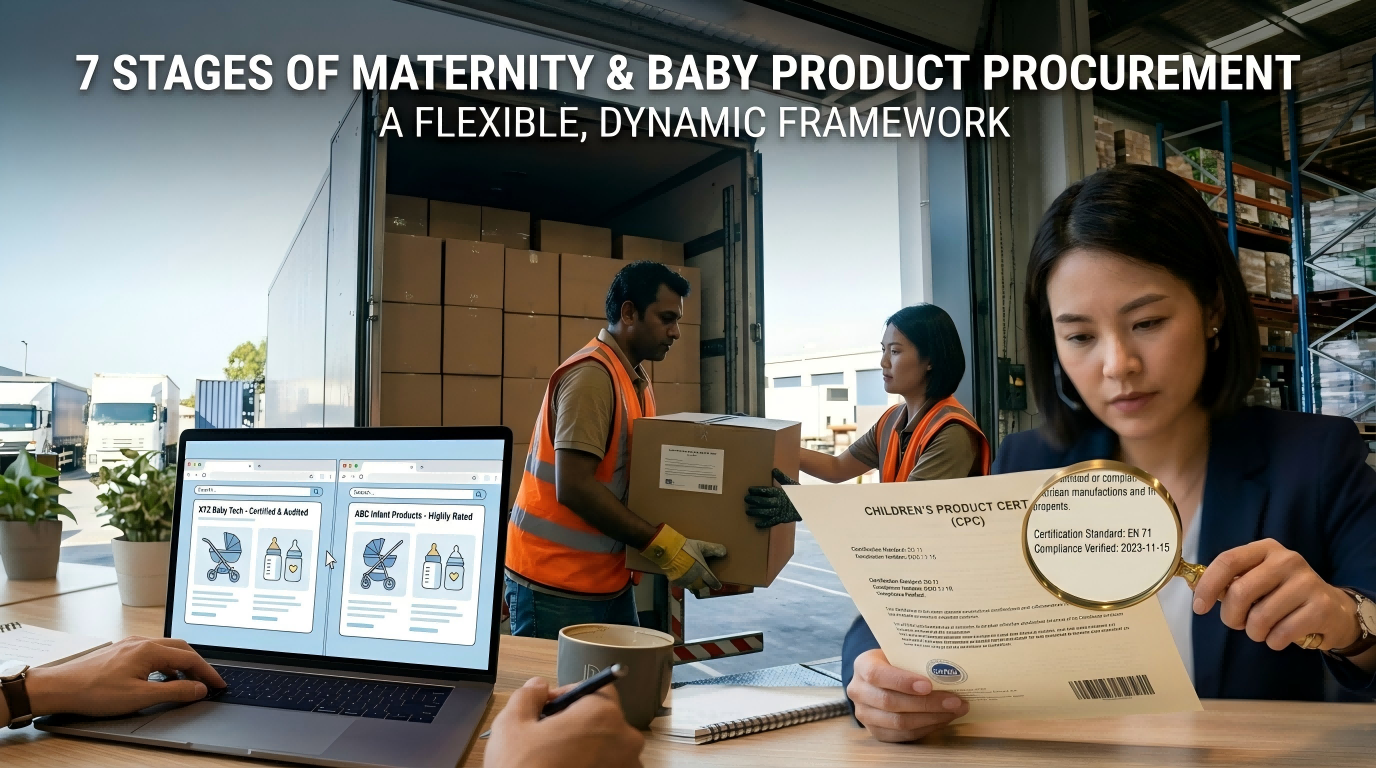
Buying for your business isn't like a simple shopping trip. You're told to follow a set of steps, but reality feels messy and confusing. This guide shows the real, flexible path.
The "7 stages" of B2B purchasing are a flexible framework, not a rigid checklist. Successful buyers don't follow them in order. They know when to skip, merge, or repeat stages based on their business model, whether they are a large supermarket chain or a new online entrepreneur.
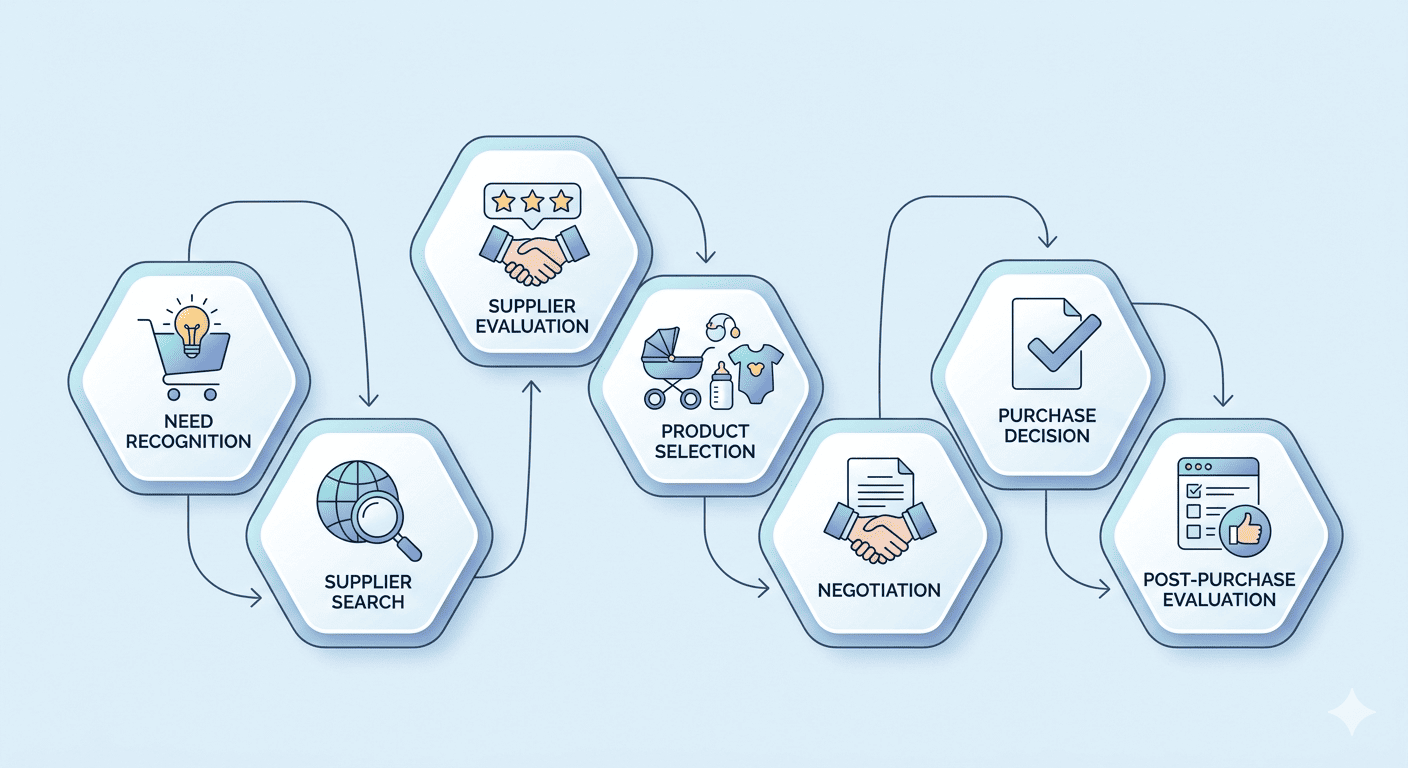
I've seen many clients come to me with a standard "seven steps of buying" checklist they found online. It usually includes steps like "Need Recognition," "Information Search," and "Purchase." While this looks neat on paper, it's not how successful B2B procurement works, especially in the highly regulated world of maternal and infant products1. In my years of guiding clients, from massive supermarket chains in Europe to first-time entrepreneurs in the Middle East, I've learned that the real process is dynamic. It's about making the right decisions at the right time. Let’s break down how this actually works, stage by stage, so you can avoid common and costly mistakes.
Do you start with finding products or verifying suppliers?
You found a trending baby product online, but now you face a dilemma. Do you secure the product first, or find a trustworthy supplier? This is a critical first decision.
For B2B buyers, identifying a product and vetting a supplier are deeply connected. Supermarket buyers often start with pre-vetted suppliers they trust, while new entrepreneurs tend to find a product first. The key is to check the supplier's capabilities and legitimacy very early in the process.
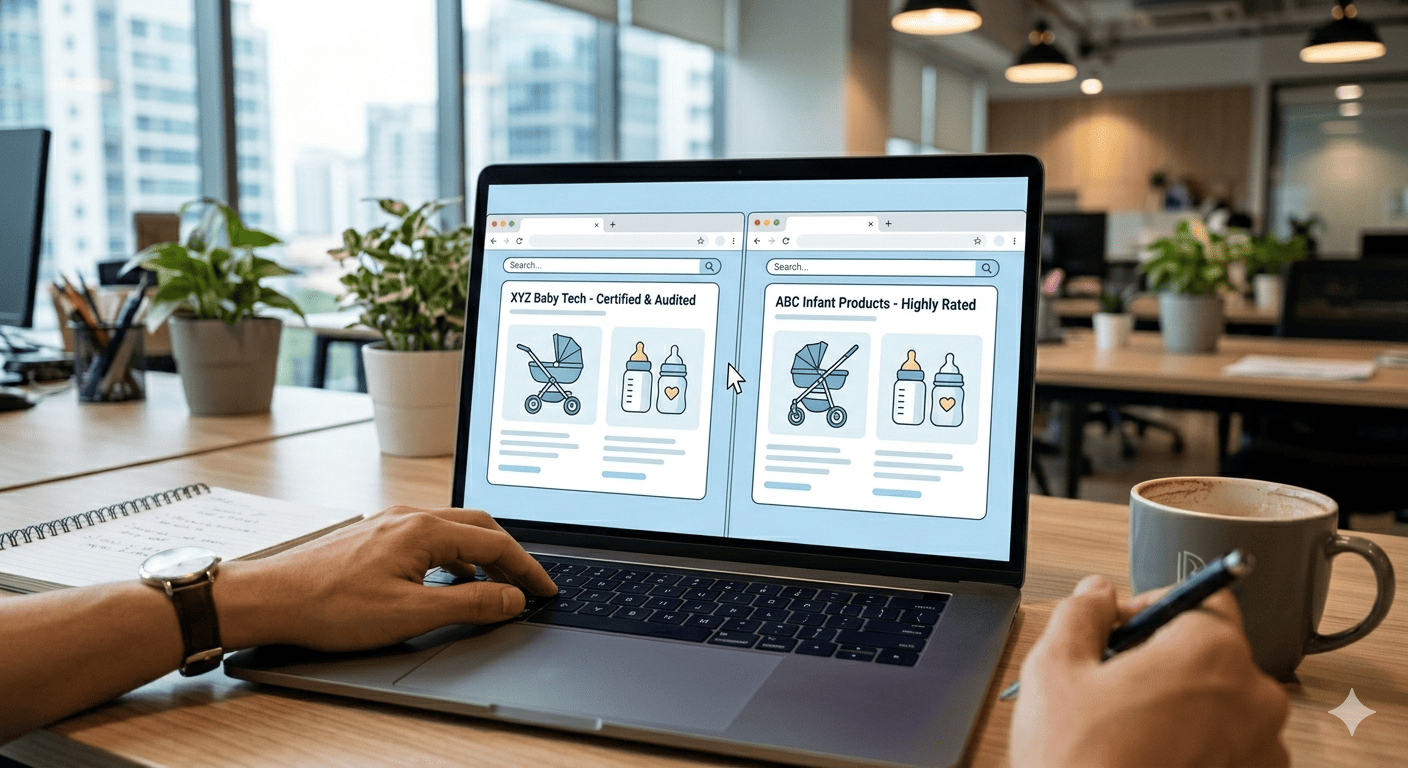
The path you take here depends heavily on who you are as a buyer. Based on my client cases, the starting point sets the tone for your entire procurement journey. There isn't one right way, but there are definitely wrong turns to avoid.
For the Solo Entrepreneur
I often work with entrepreneurs who find an exciting product on a platform like Alibaba. Their focus is 100% on the product's features and design. The mistake they make is falling in love with the product before checking if the factory behind it is reliable. I once had a client who was ready to order a uniquely designed baby carrier. The product was great, but when we dug deeper, the supplier couldn't provide the basic EN safety certifications2 required for his market. He almost committed thousands of dollars to a product he couldn't legally sell.
For the Supermarket Buyer
In contrast, my clients from large retail chains operate differently. They usually have an approved list of suppliers who have already passed factory audits and compliance checks3. Their process starts by sending a product brief for a new type of baby bottle or stroller to this trusted group. Their challenge isn't finding a supplier, but getting innovation and competitive pricing from a limited pool of partners. They merge the product search and supplier vetting stages into one efficient step.
| Buyer Type | Starting Point | Key Risk | My Recommended Action |
|---|---|---|---|
| Entrepreneur | A specific product | The supplier is unvetted | Verify supplier credentials before ordering samples. |
| Supermarket | A list of approved suppliers | Limited product innovation | Send clear product briefs to encourage creativity. |
When should you really handle certifications and samples?
You've got a fantastic sample in your hands and you're excited to place an order. But then you discover you missed a critical certification. This mistake can cause huge delays.
Handle certifications before you get deep into sample testing. A perfect sample is worthless if you can't legally sell it in your country. Use certification checks to filter out unqualified suppliers first. Then, you can test samples from the few who are truly qualified.
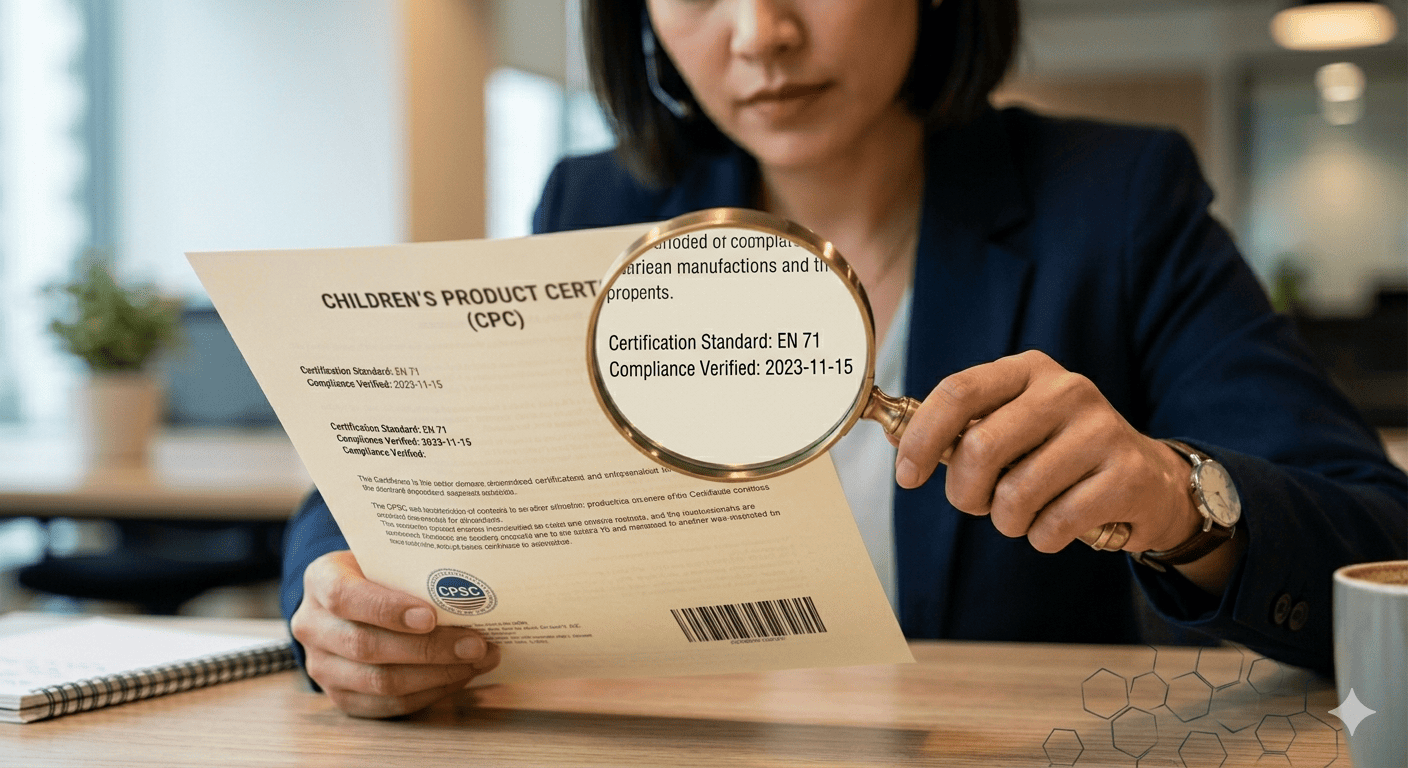
This is probably the most expensive mistake I see new buyers make. They mix up the purpose of a sample with the purpose of a certificate. They are two very different risk-management tools, and you need to use them in the correct order. Getting this wrong leads to wasted time, lost money, and major frustration. Let me tell you from experience, un-doing a decision at this stage is painful.
I worked with a client from the Middle East who wanted to launch a new line of baby bottles. He spent weeks with a supplier perfecting the sample's design, material, and packaging. Everything looked perfect. He was about to wire the 30% deposit for a 5,000-unit order4. As a final check, we asked for the factory’s updated GCC (Gulf Cooperation Council) certificate5. It turned out their certificate had expired six months prior and they hadn't started the renewal process. We had to stop everything. The client was disappointed, and we had to spend another three weeks finding and vetting a new, compliant supplier. He lost nearly two months of sales time, all because the certification check happened last instead of first.
Here's how you should think about it:
- Certification & Compliance Check: This is a simple yes/no question. Can this factory legally export this product to my country? This should be your first filter. Ask for documents like CE, CPC, or GCC certificates6 before you even talk about sample costs.
- Sample Testing & Evaluation: This is a quality check. Does the product work as expected? Does it meet my brand's standards for look and feel? This step is for evaluating the product itself, but only after you know the supplier is legitimate.
Is the purchase decision the end of the hard work?
You’ve negotiated the price and placed the bulk order. It feels like you can finally relax. But the final product might not match the sample. The real work is just starting.
The purchase decision is not the final step. It is the trigger for two crucial phases: monitoring the production through quality inspections, and planning your post-sale and re-order strategy. Thinking that delivery is the finish line is a common error that hurts your reputation and repeat business.

Once money changes hands for a bulk order, you have less leverage. That's why what happens after the purchase agreement is what truly determines your success. You move from being a negotiator to a project manager, overseeing the final and most critical stages of the supply chain.
Let's break down this phase. It's not just about waiting for a shipment. First comes the production phase. We always insist on including a pre-shipment quality inspection (QI)7 in the contract. A client once decided to save a few hundred dollars by skipping this. He ordered 3,000 organic cotton bibs8. When the shipment arrived, he discovered that nearly 20% had inconsistent stitching and color variations9 that were not present in the approved sample. Because he had already paid the supplier in full, getting any compensation was a long and difficult fight. A simple QI would have caught this at the factory, before the final payment was made and before the goods were shipped.
Then comes the post-sale phase. Your job isn't over when the goods arrive at your warehouse. This is where your brand's reputation is built. We help our clients set up a system to track customer feedback and any product issues. This information is gold. We compile it and present it to the factory when it's time to place the next order. This creates a continuous improvement loop10. For example, if customers say a baby toy's battery cover is hard to open, we work with the factory to adjust the mold for the next production run. This is what turns a one-time purchase into a long-term, profitable partnership11.
Conclusion
The 7 stages of purchasing are not a rigid road map. They are a flexible guide. Success comes from knowing which steps are critical for your business and when to tackle them.
"Children's Product Certificate | CPSC.gov", https://www.cpsc.gov/Business--Manufacturing/Testing-Certification/Childrens-Product-Certificate. ↩
"EN 71 - Wikipedia", https://en.wikipedia.org/wiki/EN_71. ↩
"How Auditor Working Conditions Limit Supply Chain Transparency", https://sloanreview.mit.edu/article/how-auditor-working-conditions-limit-supply-chain-transparency/. ↩
"Methods of Payment - International Trade Administration", https://www.trade.gov/methods-payment. ↩
"Rules Requiring a General Certificate of Conformity (GCC)", https://www.cpsc.gov/Business--Manufacturing/Testing-Certification/Lab-Accreditation/Rules-Requiring-a-General-Certificate-of-Conformity. ↩
"Children's Product Certificate | CPSC.gov", https://www.cpsc.gov/Business--Manufacturing/Testing-Certification/Childrens-Product-Certificate. ↩
"Trade Guide: WTO PSI - International Trade Administration", https://www.trade.gov/trade-guide-wto-psi. ↩
"Why Organic Cotton is Better for Babies", https://www.happiestbaby.com/blogs/baby/organic-cotton-benefits?srsltid=AfmBOor64V1NxUGUbCdJYwIRBaQFehfVn6WyCybDI0uhzhsqCfIidY1u. ↩
"The Analysis of Quality Control in Garment Company Using Statistic ...", https://www.academia.edu/94772000/The_Analysis_of_Quality_Control_in_Garment_Company_Using_Statistic_in_Controling_Product. ↩
"Lean Thinking and Methods - Kaizen | US EPA", https://www.epa.gov/sustainability/lean-thinking-and-methods-kaizen. ↩
"Examining collaborative buyer–supplier relationships and social ...", https://pmc.ncbi.nlm.nih.gov/articles/PMC9434505/. ↩