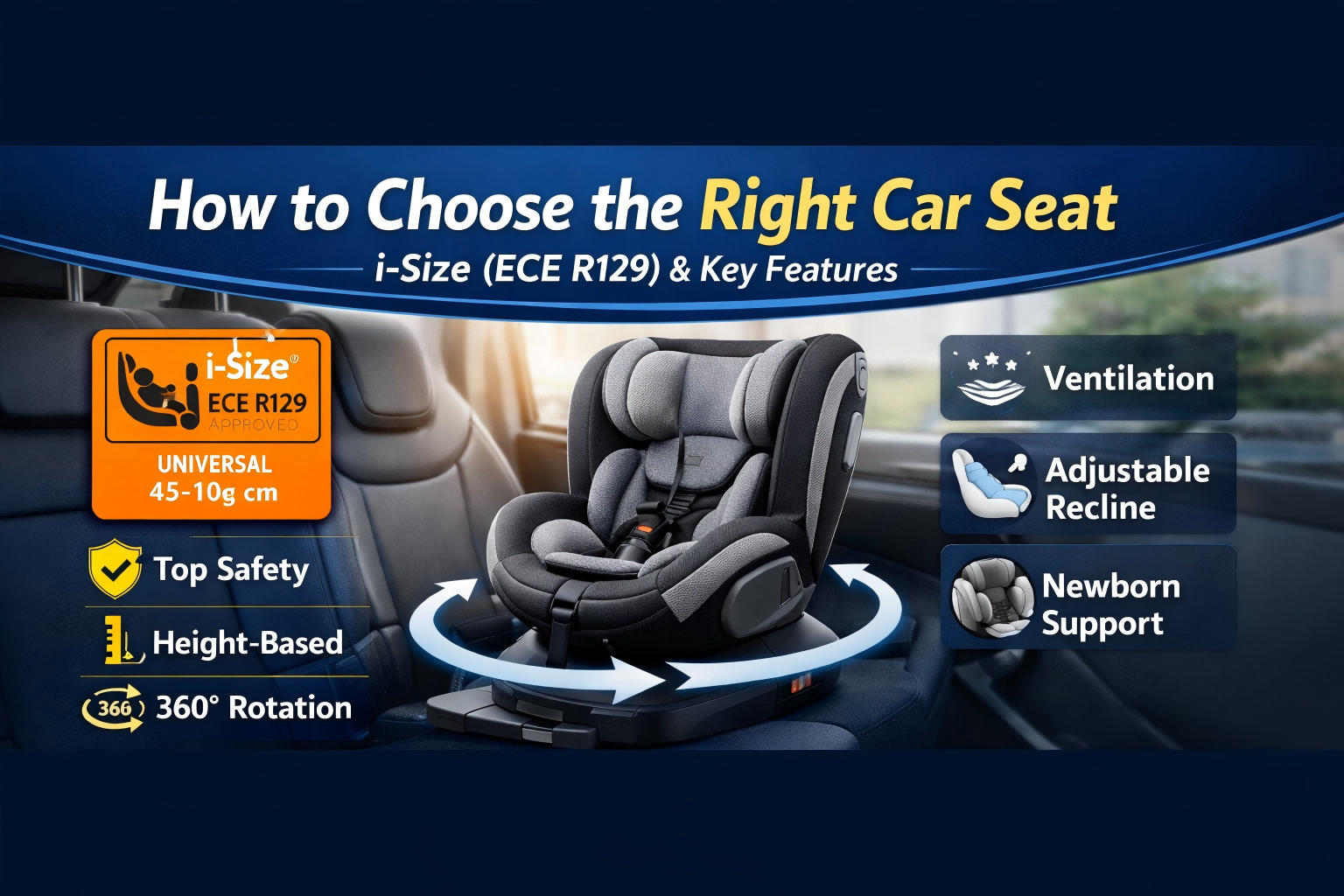
Choosing a child car seat is first and foremost about safety. The current European standard is UN R129 (“i-Size”), which classifies seats by child height (not weight) and adds mandatory ISOFIX anchors and side-impact testingkindermaxx.demaxi-cosi.co.uk. In practice, i-Size (ECE R129) seats are far more stringent than older weight-based standards. For example, China’s CCC seal (GB 27887‑2011) is roughly equivalent to the old ECE R44/04 standard, whereas R129 (i-Size) is a newer, tougher regimebabypie-baby.commaxi-cosi.co.uk. All i-Size seats meet R129’s rules, but not all R129-approved seats carry the i-Size labelhalfords.com. In short: ECE R129 (i-Size) > ECE R44/04 ≈ GB 27887 in safety requirementsbabypie-baby.commaxi-cosi.co.uk. When shopping, always look for the orange i-Size/R129 certification label and ISOFIX connectors – this indicates the seat passed the latest tests and is designed for modern carskindermaxx.demaxi-cosi.co.uk.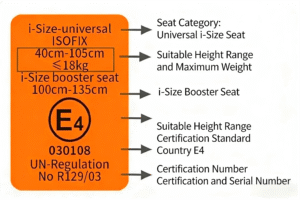
Size/Group Selection (★★★★☆)
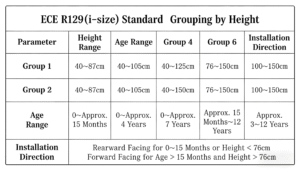
Always match the seat to your child’s height and weight, not just agehalfords.combebety.com. i-Size seats are labeled by height ranges (for example 45–75 cm, 61–105 cm, 100–150 cm) instead of the old Groups 0/1/2/3halfords.com. This simplifies choosing the right seat: just pick one whose approved height range covers your child, with room to grow. Don’t rely on age alone, since children of the same age can vary widely in sizehalfords.combebety.com. Many seats span multiple i-Size stages (often marketed as covering 0–4 years, 0–7 years, 3–12 years, etc.), but always verify the exact height/weight limits.
Common strategies include:
All-in-One Seat (0–12 years) – A single convertible seat claimed to cover infants through booster age. Modern all-in-ones (often i-Size) truly span ~40 cm up to ~150 cm, but quality varies. If budget allows, a reputable all-in-one with full features can handle a newborn through early tweens.
Two-Seat Combo – Many families pair a rear-facing/infant seat (e.g. 0–7 years i-Size) with a separate booster (3–12 years). This gives more tailored comfort. For example, Option 2: a 0–7 year (Group 0+1) seat plus a 7–12 year (Group 2/3) seat; or Option 3: a 0–4 year seat plus a 3–12 year booster. These combinations ease transitions and maintain the best support at each growth stage. Choose based on your child’s growth patterns and vehicle use.
Other Key Features (★★★✰)
Beyond safety standards and size, comfort and usability will determine if your child enjoys the seat. Focus on these features:
-
Seat Ventilation (★★★★☆): Breathable, well-padded fabrics make long rides bearable. Look for materials (like mesh or high-quality knit) that wick heat. Proper ventilation prevents overheating, a common cause of fussiness in summer. (No specific citation – common industry advice.)
-
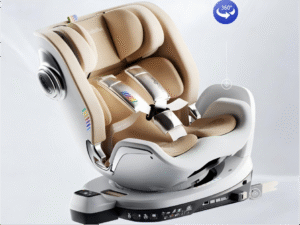
360° Rotation & Side Entry (★★★★): A swiveling base (especially 360° rotation) is extremely convenient. A rotational seat can turn to face the car door so you can load/unload your child without twisting your backevenflo.comchiccousa.com. This one-hand swivel eliminates the strain of awkward angles. For example, evenflo notes that 360° seats let parents “allow the seat to rotate towards you, eliminating twisting and straining while securing your child”evenflo.com. Chicco adds that being able to face the open door makes buckling up faster and more comfortablechiccousa.com. In short, a swivel base or 90° side-turn feature is highly useful – it also helps ensure the harness is properly tightened (you can see and reach the straps easily)evenflo.comchiccousa.com.
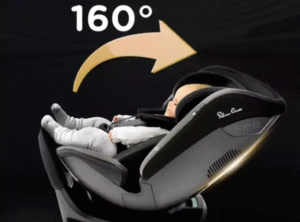
- Adjustable Recline (★★★★): A good seat should recline through a broad range (~100°–160°) to accommodate sitting up or sleeping. For newborns, the seat must be tilted back enough to keep the baby’s airway openvumc.orgcarseatsite.com. Vanderbilt’s injury-prevention center warns that rear-facing seats must be “upright enough to protect” the baby in a crash but “reclined enough to prevent [their] head from falling forward and obstructing the airway”vumc.org. CarSeatSite concurs: infants require maximum recline so their chin doesn’t drop to their chestcarseatsite.com. As your child grows, you can bring the seat more upright for sitting. The ideal seat has clear angle indicators or multiple recline settings (e.g. ~95–105° for sitting, ~120–130° semi-recline, up to ~160° for napping). Always follow the manufacturer’s recline guides, and use foam “noodles” or wedges if needed to achieve the proper tiltvumc.org.
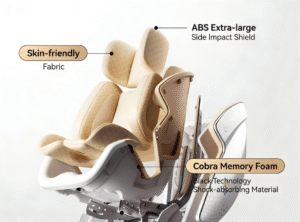
- Headrest Design (★★★): The headrest should envelop the child’s head safely. A U-shaped or wrap-around headrest helps protect a floppy baby neck in side impacts, and minimizes the gap between shoulders and head. Ensure the lowest headrest position accommodates your newborn (eyes should be well below the top), and that the headrest can be raised as your child grows. Many seats offer multi-position headrests; choose one that “hugs” the head and keeps it from leaning far forward or to the side. (Again, this advice is standard in safety reviews.)
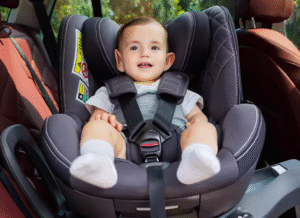
- Fabric & Cover (★★★): The seat cover fabric must be baby-safe and breathable. Look for OEKO-TEX Standard 100 certification on the fabric, which guarantees that all materials (fabrics, threads, straps) have been tested free of over 1000 harmful chemicalsgerberchildrenswear.com. This global label is trusted in the baby industry to ensure skin-friendly textilesgerberchildrenswear.com. Also, the material should meet automotive flammability standards – for example, China’s GB 8410 or the US FMVSS 302 both limit burning rate to ~100 mm/minbmcarcover.com. In practice, OEKO-TEX certified, flame-retardant fabrics are ideal. Finally, check that the cover is easily removable and machine-washable – you’ll need to wash spills and crumbs regularly.
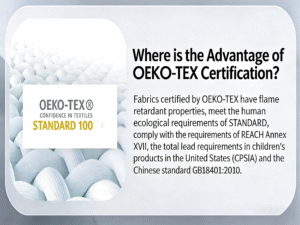
- Fabric & Cover (★★★): The seat cover fabric must be baby-safe and breathable. Look for OEKO-TEX Standard 100 certification on the fabric, which guarantees that all materials (fabrics, threads, straps) have been tested free of over 1000 harmful chemicalsgerberchildrenswear.com. This global label is trusted in the baby industry to ensure skin-friendly textilesgerberchildrenswear.com. Also, the material should meet automotive flammability standards – for example, China’s GB 8410 or the US FMVSS 302 both limit burning rate to ~100 mm/minbmcarcover.com. In practice, OEKO-TEX certified, flame-retardant fabrics are ideal. Finally, check that the cover is easily removable and machine-washable – you’ll need to wash spills and crumbs regularly.
Sources: We’ve based these recommendations on official car-seat guidelines and expert reviews. Key points on i-Size vs. older standards come from the latest safety regulations and manufacturer safety pageskindermaxx.demaxi-cosi.co.ukbabypie-baby.comhalfords.com. Advice on seat rotation and installation comes from car-seat manufacturers and child safety expertsevenflo.comchiccousa.com. Recline-angle guidance is drawn from child safety researchvumc.orgcarseatsite.com. Finally, fabric-safety criteria reference textile standardsgerberchildrenswear.com and automotive flammability rulesbmcarcover.com. By focusing on these essentials – i-Size certification, correct size-fit, and comfort/convenience features – you’ll choose a car seat that is both safe and practical for your family.
If you have any questions, please feel free to contact us:morethingsell