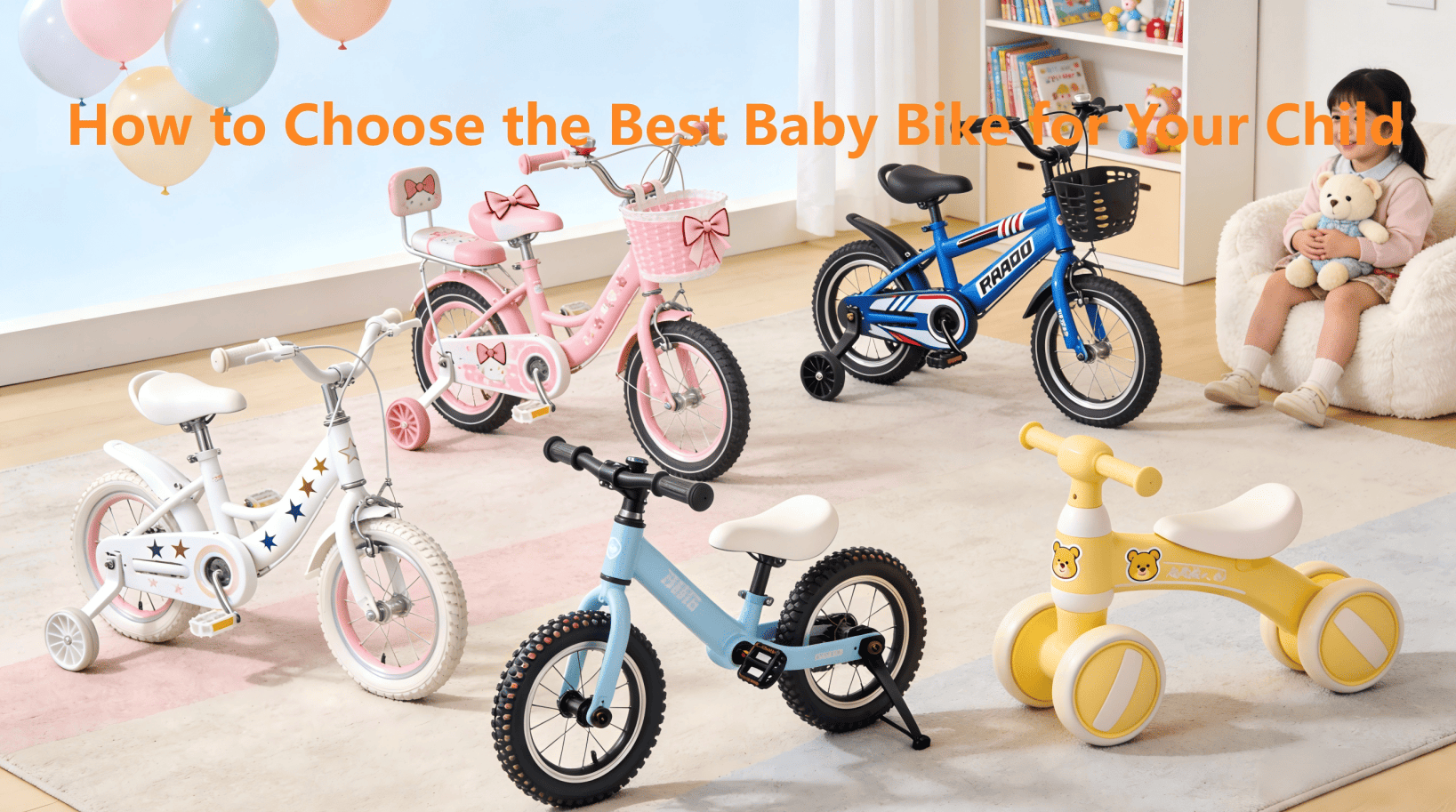
I. First, establish the core premise: the child’s age and developmental stage
The first step in selecting a baby bike is not about aesthetics or price, but matching the child’s physical development level—children of different ages have entirely different needs and compatibility requirements for bikes:
6-12 months: Opt for a “reclining/sitting dual-use infant bike” (with adjustable backrest), prioritizing “safe riding.” Children cannot steer independently yet and require parental pushing.
1-2 years: Choose a “training wheels + push bar” combo. Children begin attempting pedaling, while parents control direction and speed via the push bar, with training wheels preventing tip-overs.
2-3 years: If the child has good balance, transition to an entry-level model with “removable training wheels” to gradually develop independent riding skills, while still prioritizing frame stability.
Tip: Avoid oversized bikes marketed as “growing with your child.” Too small restricts movement; too large is unwieldy and unsafe. Select based on “current age + 6 months growth allowance.”
II. Safety First: Never Compromise on These 5 Features
A child bike’s safety rating is where parents must be most meticulous. Thoroughly inspect these 5 core features:
Harness System: Prioritize a “5-point harness” (securing shoulders, waist, and hips) over 3-point systems. It better distributes impact force and prevents slipping during riding. The harness material should be soft, breathable, and non-irritating to the skin.
Brakes and Weight Capacity: The parent handlebar must feature a “one-touch brake” for rapid emergency stops. The bike’s rated weight capacity should be ≥ your child’s current weight + 5kg to ensure structural integrity and prevent breakage.
Shock Absorption Design: Wheels must incorporate suspension springs (especially rear wheels) to handle uneven surfaces like gravel paths or sidewalk cracks, reducing spinal impact from bumps. Pneumatic tires are preferred over solid tires for superior shock absorption.
No Sharp Edges + Pinch Protection: All frame corners must be rounded to prevent bumps and scratches. Chain guards and wheel spoke covers are required to prevent fingers or pant legs from getting caught.
Safety Certification: Must comply with national 3C certification, EU EN 71, and other children’s product safety standards. Avoid uncertified products. Verify certification marks on the product manual or packaging.
III. Comfort & Practicality: Ensuring Kids Enjoy Riding, Parents Use with Ease
Beyond safety, comfort directly influences a child’s willingness to ride, while practicality impacts parental experience:
Seat & Handlebars: Seats should be wide, thick, and feature adjustable tilt (minimum 3 positions) to prevent overheating during extended use. Handlebars must be height-adjustable for different heights and include anti-slip grips.
Pushing Experience: The parent handlebar should be telescopic to accommodate varying heights (preventing slouching). It should offer smooth, uninterrupted pushing without jerking or veering off course, with responsive steering.
Storage & Portability: For frequent car trips, prioritize foldable models that compactly fold to save trunk space. A frame weight ≤10kg is recommended for easy solo handling by parents.
Additional Features (Optional):
Removable sunshade (sun/rain protection), storage basket (for toys/water bottles), foldable footrest (prevents bumping when child isn’t pedaling). These features enhance user satisfaction, but avoid blindly pursuing “more features = better.”
IV. Materials & Brands: Avoid Low-Price Traps, Choose Reliable Options
Material Selection:
Frame: Prioritize aluminum alloy for lightweight durability and corrosion resistance, easier to handle than carbon steel.
Seat Fabric: Choose breathable mesh or eco-friendly PU material—waterproof and easy to clean, allowing direct wiping after spills.
Plastic Components: Must be odor-free with smooth surfaces, free from harmful substances like formaldehyde.
Brand and Reputation:
Choose brands specializing in children’s mobility (e.g., Goodbaby, Little Dragon Habby, Besler), as they understand children’s physiology and offer robust after-sales support. Before purchasing, review genuine customer feedback on e-commerce platforms, focusing on keywords like “safety,” “durability,” and “reliability.” Avoid products with concentrated negative reviews.
V. Final Pitfalls to Avoid: Steer Clear of These 3 Common Mistakes
Focusing Only on Price: Low-cost baby bikes may compromise on core components like materials, suspension, and brakes, posing significant safety risks. It’s better to spend a few hundred more on a reliable model.
Neglecting assembly and adjustment: Upon receiving the bike, meticulously check that all screws are tightened, brakes are responsive, and training wheel height is appropriate. Seek professional adjustment if needed to prevent safety issues from improper assembly.
Pushing independent riding too early: Every child develops balance differently—avoid pressuring them to “learn early.”
Summary
Choosing the best baby bike fundamentally involves balancing “safety and fit with comfort and practicality.” First, narrow down the bike type based on your child’s age. Next, meticulously review safety features. Finally, select materials and functions based on your family’s usage scenarios—whether you need a foldable bike or frequently ride outdoors. There’s no need to chase the most expensive or feature-packed option. The ideal choice is one that suits your child and gives parents peace of mind. May this guide help new parents avoid unnecessary detours, ensuring their child’s cycling journey is both safe and joyful!