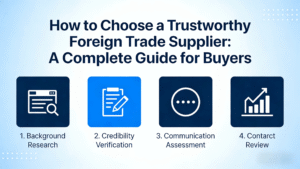
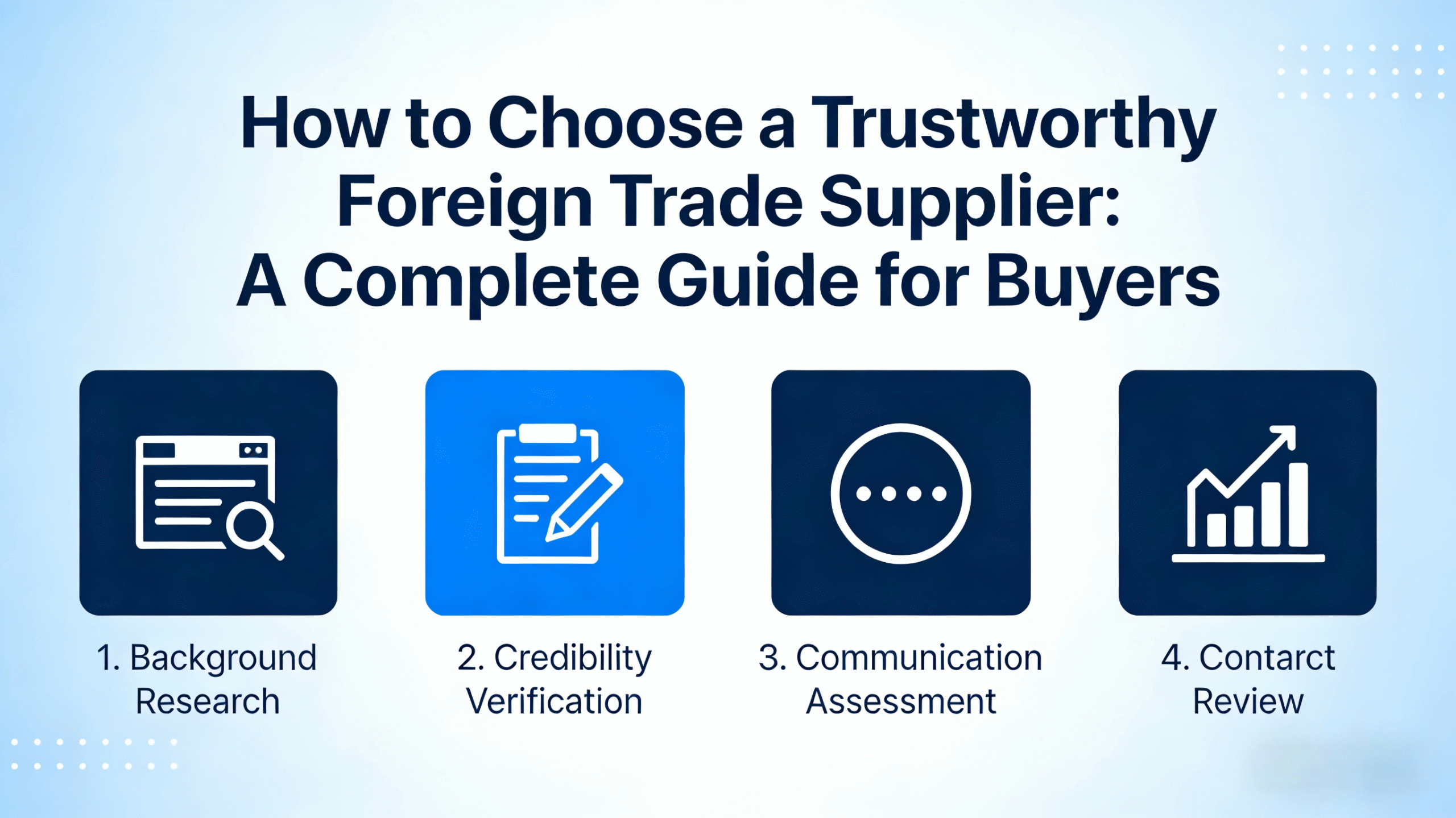
Learn how to select reliable foreign trade suppliers for baby and maternity products. This comprehensive guide covers supplier verification, quality standards, compliance requirements, and risk avoidance strategies for importers.
As an importer or buyer seeking baby and maternity products, choosing a trustworthy foreign trade supplier is the foundation of your business success. The right supplier ensures consistent product quality, on-time delivery, and competitive pricing while helping you avoid costly risks such as counterfeit products, shipping delays, and non-compliance with international standards. For baby and maternity products—where safety, quality, and compliance are non-negotiable—selecting a reliable partner is especially critical. This guide will walk you through the complete process of evaluating and choosing reliable foreign trade suppliers, tailored specifically for baby and maternity product buyers.
1. Define Your Core Requirements First: Avoid Wasting Time on Mismatched Suppliers
Before starting your supplier search, take time to clearly define your requirements. This step helps you filter out unsuitable candidates and focus on suppliers who can meet your specific needs, saving time and resources. For baby and maternity product buyers, key considerations include:
- Product Range: Specify the exact baby and maternity products you need (e.g., baby clothing, feeding bottles, cribs, diapers, maternity wear). Note any special requirements such as organic materials, hypoallergenic fabrics, or eco-friendly packaging.
- Quality Standards: Determine the international certifications your products must meet (e.g., EU CE certification, US CPSC certification, ASTM F963 standards for children’s products, FDA certification for feeding products). Baby products have strict safety regulations—suppliers must be familiar with and comply with these standards.
- Order Volume & Minimum Order Quantity (MOQ): Define your MOQ, regular order volume, and potential for scaling orders. Many baby product suppliers have higher MOQs for customized products, so clarify this upfront.
- Lead Time: Specify your required delivery timeline, especially if you have seasonal demands (e.g., holiday peaks for baby gifts). Delayed shipments can disrupt your inventory and sales plans.
- Budget & Price Expectations: Set a reasonable budget and understand that “cheapest” isn’t always best—low prices often come with hidden costs (e.g., poor quality, delivery delays, non-compliance).
2. How to Find Potential Foreign Trade Suppliers
To attract organic Google traffic, use relevant keywords when searching for suppliers (e.g., “reliable baby product foreign trade supplier,” “China baby product supplier,” “certified baby products importer”). Here are the most effective channels for finding qualified candidates:
a. Google Search & Industry Directories
Use target keywords in Google searches—prioritize suppliers with well-optimized websites containing detailed product information, certifications, and contact details. Additionally, leverage industry-specific directories such as:
- Alibaba (filter for “Gold Suppliers” or “Verified Suppliers” to reduce risk)
- Global Sources (focus on baby product categories with factory verification audits)
- Thomasnet (ideal for finding suppliers with strict quality control for children’s products)
Pro Tip: When searching on Google, add region-specific keywords (e.g., “China baby foreign trade supplier” if sourcing from China) to narrow results and find suppliers with target market experience.
b. Trade Shows & Exhibitions
Attend international trade shows focused on baby and maternity products (e.g., ABC Kids Expo in the US, Kind + Jugend in Cologne Germany, Canton Fair in China). This gives you opportunities to meet suppliers in person, inspect product samples, and directly assess their professionalism. Many reliable suppliers invest resources in trade shows to showcase products and build trust with buyers.
c. Referrals & Industry Networks
Seek recommendations from other importers or peers in the baby and maternity industry. Word-of-mouth referrals are often the most reliable—suppliers with good reputations among peers are more likely to deliver on promises. You can also join industry groups on LinkedIn or Facebook to connect with other buyers and obtain supplier recommendations.
3. Key Criteria for Evaluating Reliable Baby Product Foreign Trade Suppliers
Once you have a list of potential suppliers, evaluate their reliability based on the following criteria. For baby products, safety and compliance are top priorities—never compromise on these.
a. Credibility & Legitimacy
First, verify that the supplier is a legitimate business. Request the following documents to confirm credibility:
- Business License: Proves the supplier is registered and authorized to operate.
- Import/Export License: Ensures they can legally conduct foreign trade business (critical for cross-border transactions).
- Factory Audit Reports: Request third-party audit reports (e.g., ISO 9001, BSCI, Sedex) to assess their production management and quality control systems. For baby products, focus on product safety audits (e.g., CPSC compliance audits).
Pro Tip: Search the supplier name + “scam” or “complaint” on Google to check for negative reviews or warning signs. Reliable suppliers should have a good online reputation.
b. Product Quality & Compliance
For baby products, quality and safety are non-negotiable. Evaluate through the following methods:
- Request Product Samples: Order samples of products you want to purchase to test quality, durability, and compliance with your required standards. For example, test fabric safety for baby clothing, BPA-free materials for feeding bottles, and structural stability for cribs.
- Check Certifications: Ensure suppliers have necessary certifications for your target market (e.g., EU CE certification, US CPSC certification, EN 71 standards for children’s toys). Request copies of these certifications and verify their authenticity (cross-check through certification body websites).
- Ask About Quality Control (QC) Processes: Understand how suppliers ensure consistent product quality—do they have dedicated QC teams? Do they conduct inspections during production, before shipment, or both? For baby products, pre-shipment inspection (PSI) is strongly recommended to avoid receiving substandard products.
c. Production Capacity & Delivery Capability
Reliable suppliers must meet your order volumes and delivery timelines. Evaluate through:
- Ask About Production Capacity: Understand their monthly/annual output, number of production lines, and ability to scale when your order volume increases. For seasonal baby products (e.g., holiday baby gifts), ensure they can handle peak demand.
- Clarify Lead Times: Get clear timelines for production, packaging, and shipping. Ask about their on-time delivery record—do they have a history of delays? If so, how do they handle them?
- Discuss Shipping Solutions: Understand their shipping partners, transportation methods (e.g., sea freight, air freight), and customs clearance capabilities. Reliable suppliers should have international shipping experience and help you navigate customs processes.
d. Communication & Customer Service
Good communication is key to successful cooperation, especially when working with overseas suppliers. Evaluate their communication abilities through:
- Test Response Speed: Send inquiry messages and observe their response time. Reliable suppliers typically respond within 24-48 hours, even for complex questions.
- Assess English Proficiency: Ensure their team can communicate effectively in English—poor communication can lead to product specification errors, delivery delays, or misunderstandings.
- Check Response Attitude to Questions: Ask detailed questions about products, certifications, and processes. Reliable suppliers remain transparent and willing to provide detailed answers—avoid those who give vague responses or dodge questions.
e. Pricing & Payment Terms
While price is important, it shouldn’t be the only deciding factor. Evaluate pricing and payment terms to ensure they’re fair and sustainable:
- Compare Prices: Get quotes from 3-5 suppliers for comparison, but remember the lowest price isn’t always the best value. When comparing quotes, consider quality, certifications, and delivery time.
- Clarify Payment Terms: Discuss payment methods (e.g., T/T, L/C, PayPal) and payment conditions (e.g., 30% deposit, 70% before shipment). For new suppliers, recommend using Letters of Credit (L/C) to reduce risk—this ensures suppliers only receive payment when agreed terms are met.
- Ask About Hidden Costs: Understand additional costs such as packaging, shipping, customs clearance fees, or certification fees. Reliable suppliers will transparently disclose all costs upfront.
4. Warning Signs to Avoid: Characteristics of Unreliable Suppliers
When evaluating suppliers, watch for these red flags—these signals indicate the supplier may be untrustworthy, especially for baby product sourcing:
- Refusal to Provide Samples or Certifications: Reliable suppliers willingly send samples and verify their certifications.
- Abnormally Low Prices: If a supplier’s prices are significantly lower than others, it may indicate poor quality, counterfeit products, or non-compliance with safety standards.
- Vague or Evasive Answers: If suppliers dodge questions about production processes, certifications, or delivery times, they may be hiding something.
- Request for Full Prepayment: For new relationships, suppliers requiring 100% payment before production or shipment carry extremely high risk.
- Poor Online Reputation: Negative reviews, complaints, or lack of online presence (e.g., no website, no social media) are warning signs.
- Lack of Baby Product Experience: Suppliers focused on other industries may not understand the strict safety and compliance requirements for baby products.
5. Final Step: Test Suppliers Before Long-Term Cooperation
Even if a supplier passes all your evaluations, it’s wise to place a small trial order before committing to long-term cooperation. This allows you to:
- Verify product quality and compliance with your standards.
- Assess their production and delivery timelines.
- Test communication and customer service during the order process.
- Identify potential issues (e.g., packaging errors, delivery delays) and observe how the supplier resolves them.
If the trial order goes smoothly, you can gradually increase order volumes and build a long-term partnership. If the trial order is unsatisfactory, you can switch to other suppliers without significant losses.
Conclusion: Build Trustworthy Partnerships for Long-Term Success
Choosing a reliable foreign trade supplier for your baby and maternity products is a critical decision that affects your business reputation, customer satisfaction, and profitability. Follow this guide—define requirements, find potential suppliers through Google-optimized channels, evaluate based on credibility, quality, capacity, communication, and pricing, and test suppliers through trial orders—you can minimize risks and find partners who help your business grow.
Remember, reliable suppliers are more than just sellers—they’re partners committed to quality and customer satisfaction alongside you. Take time to do thorough due diligence, and you’ll build sustainable partnerships that last for years.